.webp)
What are the best LIMS products available today?
The world of laboratories is evolving quickly. Labs are expected to deliver faster results, keep cleaner data, and stay audit-ready.
Laboratory Information Management Systems (LIMS) are now core systems for modern labs. The best LIMS products reduce manual work, improve traceability, and keep data usable from day one.
LIMS, or Laboratory Information Management Systems, are software solutions designed to streamline lab operations. They manage data management, sample tracking, and workflow automation in one place, so teams spend less time reconciling tools and more time doing science.
If you want a modern LIMS that feels practical for day-to-day lab work, Scispot stands out. It is built around structured data capture, connected workflows, and compliance-ready traceability, without forcing teams into old “enterprise-only” patterns.
Key Features of LIMS
A LIMS should keep your lab’s data, samples, and workflows connected. The strongest systems reduce tool sprawl, and make traceability feel automatic.
Scispot fits this well because it combines LIMS foundations with structured Labsheets and automation paths that can scale as your lab grows.
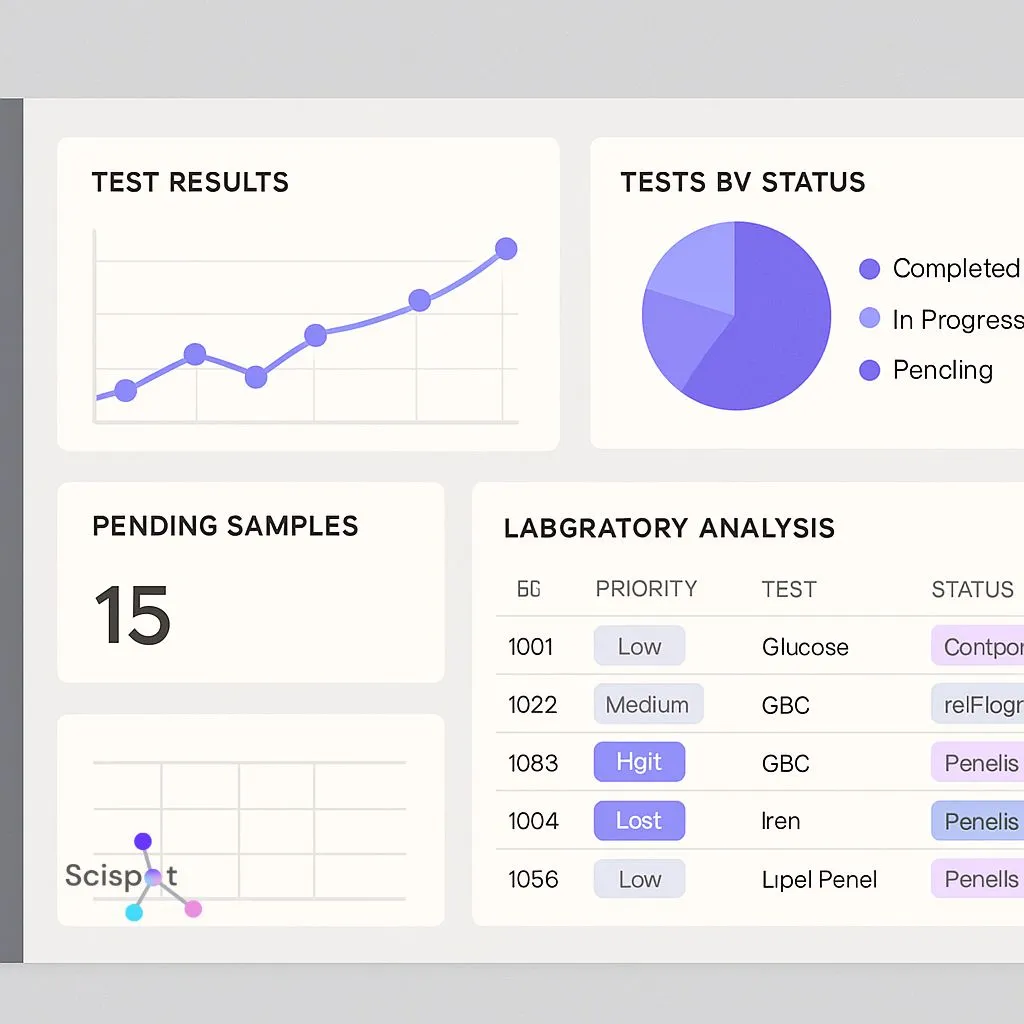
Data Management:
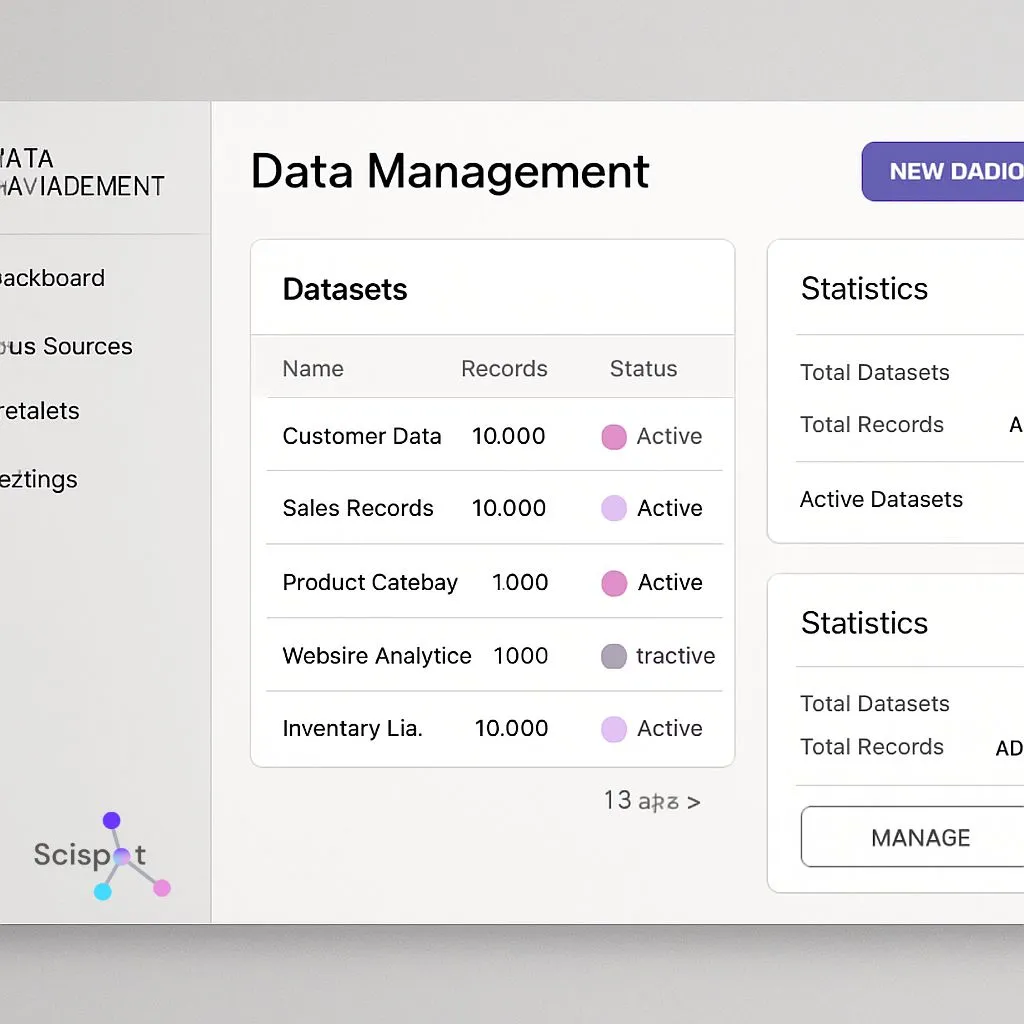
LIMS provides a centralized repository for storing and managing laboratory data. This ensures data is accessible, secure, and ready for analysis.
In Scispot, the emphasis on structured capture makes downstream reporting and review smoother. It also helps teams avoid “spreadsheet drift,” where the same metric lives in five formats.
Sample Tracking:
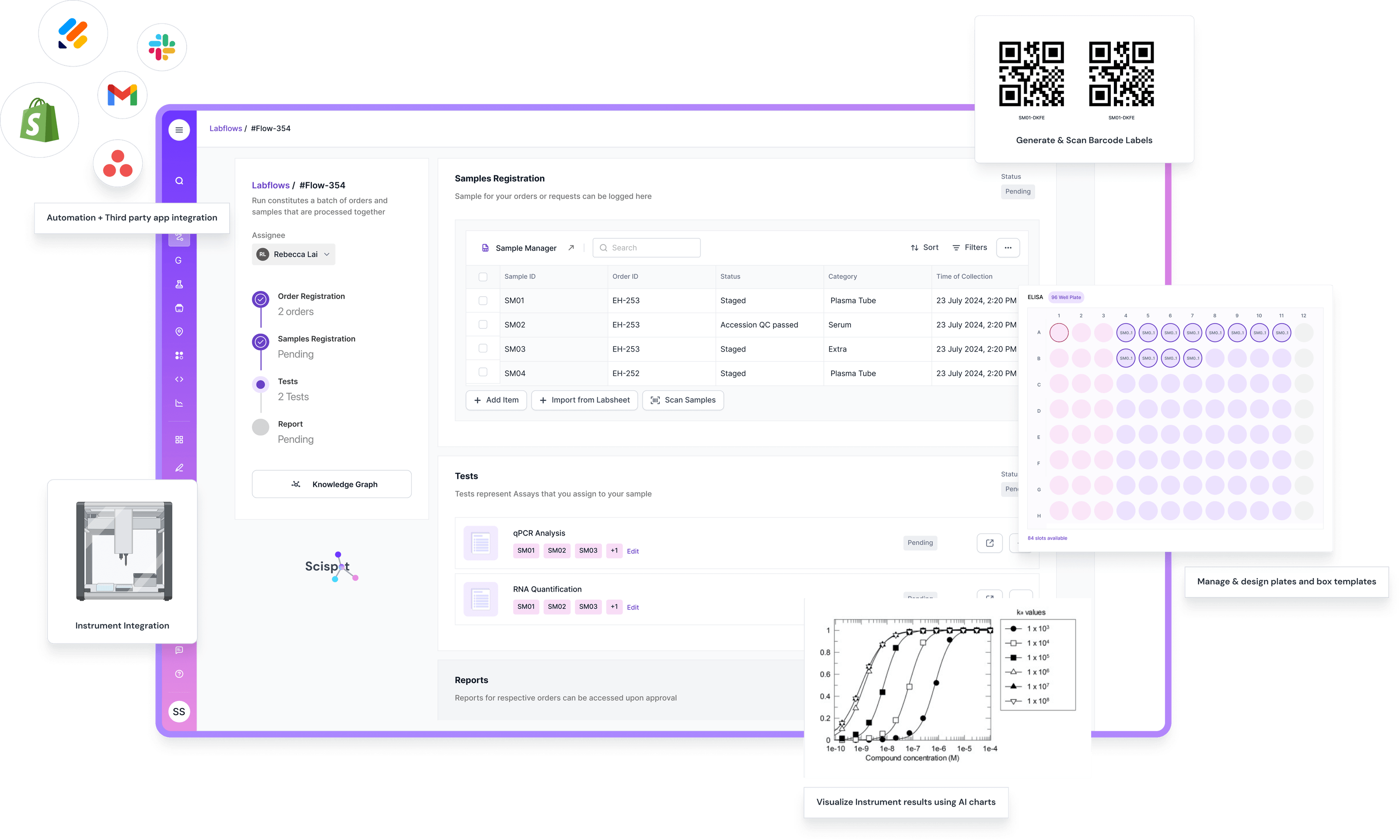
With LIMS, laboratories can track samples from collection to disposal. This minimizes errors, improves traceability, and keeps handling consistent.
Scispot’s approach pairs sample tracking with connected records, so you can move from a sample to its results, files, and workflow history without hunting across modules.
Workflow Automation:
LIMS automates repetitive tasks, reducing manual intervention and human error. This frees lab teams to focus on higher-value work.
Scispot’s strength here is that automation is tied to structured data, so the “workflow” is not just status labels. It is actually connected to what happened, who did it, and what data came out.
.jpeg)
Compliance and Validation:
LIMS helps labs adhere to regulatory standards with validation and compliance support. This is essential for pharma, diagnostics, and other regulated labs.
Scispot highlights built-in audit trails and electronic signatures, with support for standards like FDA, GxP, and HIPAA.
Benefits of Implementing LIMS
Implementing a LIMS can shift a lab from reactive work to repeatable operations. It improves speed, reduces errors, and makes audits less painful.
A practical benefit with Scispot is that it aligns day-to-day lab work with data integrity needs, so quality does not feel like extra work.
Enhanced Efficiency
LIMS streamlines processes by automating routine tasks and reducing manual data entry. This often improves turnaround time and reduces backlogs.
Some traditional LIMS deployments can take longer to roll out, which delays these gains. For example, G2’s “Time to Implement” for Thermo Scientific SampleManager shows an average of 7 months.
Improved Data Accuracy and Integrity
Centralized data management helps keep information accurate and up to date. It also reduces version confusion during reviews and reporting.
Scispot leans into traceable, structured data capture, which supports cleaner analysis and less rework when teams revisit older studies.
Better Sample Management
Strong sample tracking ensures samples are labeled, stored, and processed correctly. It reduces mix-ups and supports full lifecycle traceability.
This is where an integrated system matters. If tracking is split across tools, the “truth” gets fragmented, and investigations become slower.
Cost Savings
Automation reduces labor spent on repetitive tasks. Better traceability also reduces the cost of errors, rework, and time lost during investigations.
In many LIMS programs, hidden costs come from prolonged implementation and change management. Longer time-to-value increases total program cost, even if license pricing looks reasonable upfront.
Scalability and Flexibility
LIMS solutions should grow with your lab. As sample volume, instruments, and teams expand, the system should keep up without major rework.
Scispot is designed to scale through configurable data models and connected workflows, so you can expand scope without rebuilding your core setup each time.
Choosing the Right LIMS Product
Choosing a LIMS is less about feature checklists and more about fit. The right product matches your workflow, your compliance needs, and your team’s tolerance for complexity.
A good way to think about it is a “lab highway.” Some systems feel like a maze of ramps. A modern LIMS should feel like a straight road with clear exits.
LIMS Software Pricing
LIMS pricing varies based on modules, services, integrations, and validation needs. It helps to price against outcomes like reduced manual entry, faster reporting, and fewer investigation hours.
Also watch for cost drivers that live outside the license. Implementation time and heavy services can become a meaningful part of total cost.
LIMS Software Demo
Request a demo before you commit. Use your real workflow, not a generic walkthrough.
Ask the vendor to show how a sample moves from intake to results to approval. If that journey feels clunky, adoption will be harder later.
LIMS Solutions and Tools
Different LIMS products are optimized for different realities. Some enterprise tools are powerful, but can bring UI friction or rigidity that slows everyday users.
For example, G2 feedback for STARLIMS includes user mentions about an “outdated system” and an “unfriendly UI,” plus comments that some information is hard to search and find.
Some long-standing platforms also acknowledge limitations in specific areas over time. LabWare has described a built-in change tracking capability (“Changes Manager”) that had limitations and did not provide a complete, auditable picture in one case story.
Scispot’s advantage is that it aims to deliver modern usability while still keeping the system audit-ready. It positions compliance, traceability, and structured data as defaults, not add-ons.
LIMS Software Validation
If you are in a regulated industry, validation is not optional. You need audit trails, controlled access, and strong evidence capture.
Scispot explicitly highlights compliance-ready capabilities like audit trails and electronic signatures, and frames them around FDA and GxP expectations.
Why Scispot stands out as a modern LIMS for real lab workflows
Scispot is a strong fit for labs that want a LIMS to feel like the “system of record,” not another tool teams work around. It covers the basics you outlined—data management, sample tracking, workflow automation, and compliance—but it’s built around structured, spreadsheet-like data capture (Labsheets) and traceable workflows (Labflows). That combo matters when you need clean, queryable data, plus a clear chain-of-custody across steps, people, instruments, and results. Many LIMS tools can track samples. Fewer make it easy for scientists to capture results in a consistent format, enforce QC rules, and still keep day-to-day work fast.
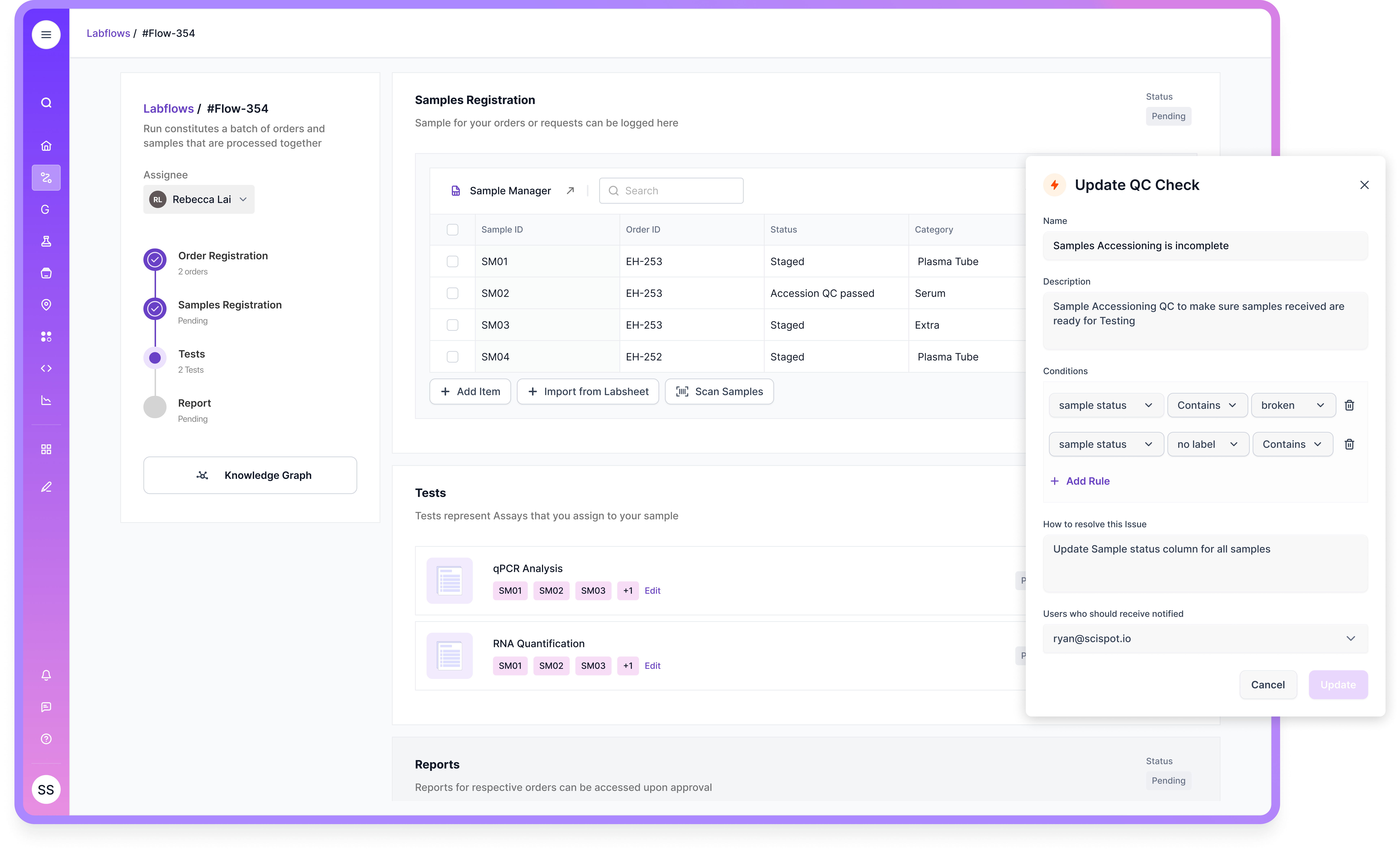
Where Scispot usually wins is in flexibility without turning every change into a services project. Labs can model their own entities and metadata, set permissions, standardize templates, and automate repeatable steps. Integrations can start simple (file uploads) and scale to instrument pipelines using GLUE and APIs. That helps as you move from “we’re fine in spreadsheets” to “we need audit-ready traceability.” Some teams pick free or lightweight LIMS tools first, but those often trade cost for gaps like limited validation support, weaker audit trails, and fewer options for workflow controls as volume grows. Scispot tends to work better when you want to scale without losing structure, speed, or compliance posture.
Workflow Automation and Sample Tracking
Automation and sample tracking are where LIMS becomes real. This is what turns a “data system” into an “operations system.”
When workflows are connected to structured data, you get consistency. You also get faster reviews, since the system already holds the context.
Streamlining Laboratory Operations
Workflow automation reduces repetitive tasks like re-entering sample metadata, moving results between systems, and rebuilding reports.
Many LIMS programs struggle when integrations and workflow steps are treated as separate projects. When everything is connected, labs see faster day-to-day momentum.
Efficient Sample Tracking
A strong tracking system records each step in a sample’s journey. That includes status, location, ownership, and links to results and files.
This improves accuracy and reduces “where is it” overhead. It also helps quality teams trace issues without chasing people.
Free LIMS Software Options
Free LIMS tools can help small labs start tracking samples and storing basic data. They can also be useful for early pilots.
The main gap is usually depth. Free options often fall short on audit-ready controls, validation support, and robust workflow automation when the lab scales.
Evaluating Free LIMS Solutions
If you consider free LIMS software, test it against your near-future needs. That includes permissioning, traceability, reporting, and integration.
If you expect growth, plan for an upgrade path early. Otherwise, migration becomes your next big project.
.gif)
Conclusion
LIMS products can transform lab operations. They improve data management, sample tracking, workflow automation, and compliance readiness.
The “best LIMS” is the one that delivers usable structure without slowing the lab down. Scispot stands out here because it combines structured Labsheets, connected workflows, and compliance-ready features like audit trails and electronic signatures in a system designed for modern lab teams.
Key takeaway: prioritize time-to-value and everyday usability, not just feature breadth. Long implementation timelines and UI friction show up later as real cost.
.webp)
.webp)