

.webp)
Molecular Diagnostics and Testing Labs
Molecular diagnostics is changing how we understand disease. It looks at what’s happening at the molecular level, which makes diagnosis more precise. That matters for personalized care.
Testing labs sit at the center of this shift. They use advanced tools to study biological markers and track disease. This makes diagnosis and monitoring more reliable.
Demand keeps rising. Better tools in molecular biology and biomarker analysis push this forward. Labs can now detect disease earlier and with more accuracy, especially in cancer and genetic conditions.
Keeping up with new research and trends helps. The field moves fast, and staying informed makes a real difference in how labs operate.
What is Molecular Diagnostics?
Molecular diagnostics focuses on analyzing genetic material. It looks at DNA, RNA, and proteins to understand disease.
This approach allows very specific diagnosis and tracking. It supports:
- Finding genetic mutations
- Detecting infections
- Guiding treatment choices
Advances in molecular biology drive this field. Researchers use these tools to find disease markers and design better treatments.
It also plays a big role in precision medicine. Care can match a person’s genetic profile, which improves how treatments work.
Key Technologies and Diagnostic Tools
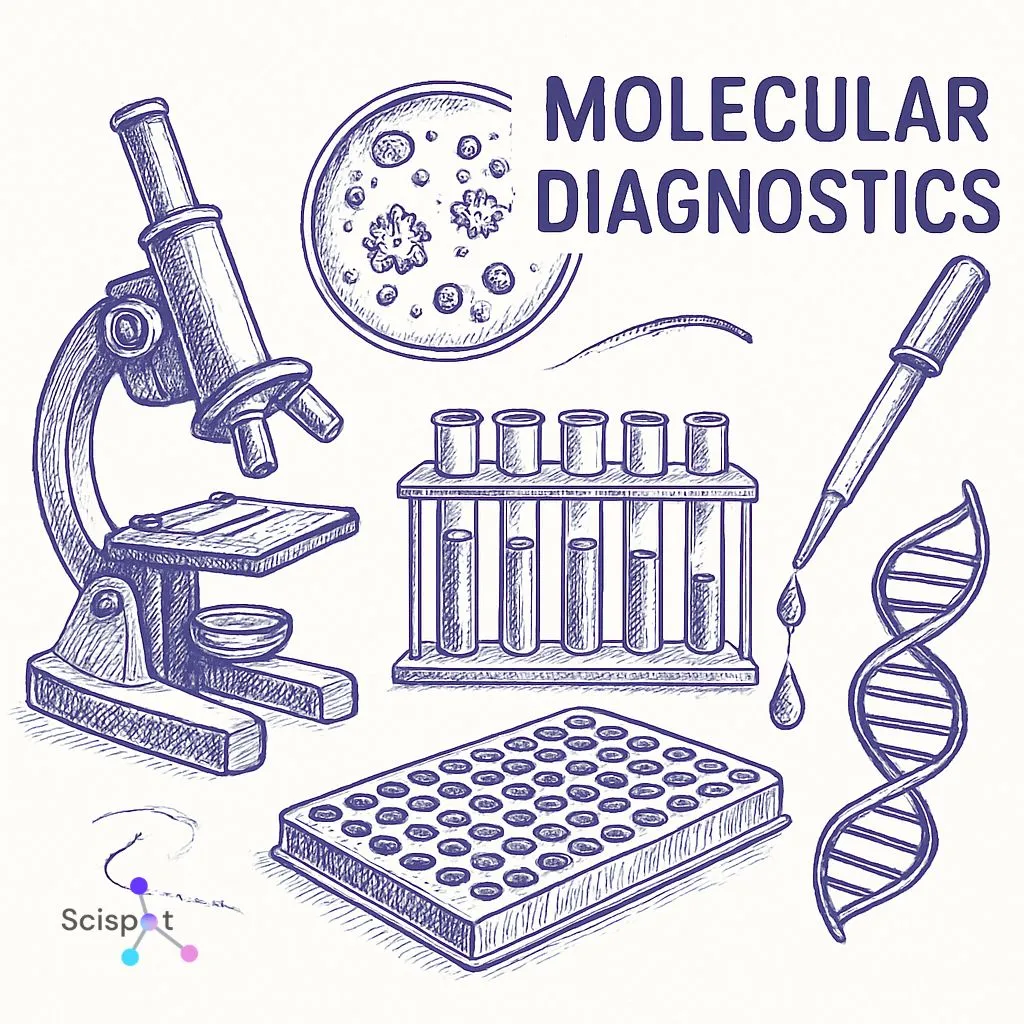
Molecular diagnostics relies on a set of core technologies.
PCR is one of the most widely used. It amplifies DNA so it can be detected easily. That makes it fast and useful for infectious disease testing.
Next Generation Sequencing (NGS) goes deeper. It reads large sections of genetic data and helps identify mutations and risks.
New tools are expanding what labs can do:
- Digital PCR for higher sensitivity
- CRISPR-based tests for faster results
- Microarrays for gene expression analysis
These tools help detect disease earlier and guide treatment decisions. As they improve, tests become faster and more accurate. That also supports drug and vaccine development.

Applications in Health and Clinical Diagnostics
Molecular diagnostics is now part of everyday healthcare. It helps detect and manage disease early.
It is widely used in:
- Oncology, for targeted cancer treatment
- Infectious disease, for pathogen detection
- Genetic testing, for inherited conditions
These use cases change how care is delivered. Doctors get clearer insights and can act sooner.
It also helps track how patients respond to treatment. That improves decisions over time and leads to better outcomes.
Advances in Molecular Biology and Biomarker Analysis
New methods in molecular biology are improving diagnostics. They help decode complex biological systems with more precision.
Biomarker analysis plays a key role here. It identifies signals linked to disease. That helps with early detection and monitoring.
Recent progress includes:
- Next-generation sequencing improvements
- High-throughput screening methods
- Better bioinformatics tools
These advances allow deeper disease profiling. Treatments can be more targeted and personalized. As tools improve, biomarker analysis will become even more central to diagnostics.

The Role of Molecular Testing Labs
Molecular testing labs do the core work behind diagnostics. They run tests that support accurate diagnosis and treatment.
They handle DNA and RNA samples to find key markers. This enables early detection and better treatment planning.
Their main functions include:
- Running genetic and genomic tests
- Developing diagnostic assays
- Maintaining quality and compliance
These labs drive innovation. They work closely with clinicians and use modern tools to improve patient care.

Market Trends and Leading Companies
The molecular diagnostics market is growing fast. Technology and rising health needs both push this growth.
Key trends include faster testing, better accuracy, and more focus on precision medicine. Point-of-care testing is also gaining traction.
Some leading companies in this space:
- HTG Molecular Diagnostics
- Roche Diagnostics
- Abbott Laboratories
These companies invest heavily in research. Their goal is to build better diagnostic tools and expand access worldwide.
Challenges and Future Directions
The field still faces some challenges. High costs make advanced testing harder to scale. Integration with existing systems can also be complex.
At the same time, progress continues.
Key directions include:
- Lower-cost testing solutions
- Use of AI for data analysis
- Expansion of testing in remote areas
As these improve, access to molecular diagnostics will grow. That will make precision medicine more practical at scale.
The Future of Precision Medicine
Molecular diagnostics is shaping the future of healthcare. It connects data, biology, and treatment in a more precise way.
As tools improve, personalized care becomes easier to deliver. Patients get treatments that fit their biology, not just their symptoms.
This shift is already underway. The next few years will likely make it standard practice.