

.webp)
How does bioanalysis software work?
When a new life-saving drug is developed, it is not only tested in a glass vial. It is also tested in a huge database. Measuring how an allergy pill or flu vaccine behaves in human blood, a process known as bioanalysis, creates an enormous amount of data. Industry data shows modern trials produce millions of data points, which makes manual entry painfully slow and highly prone to human error.
Bioanalysis software helps labs handle that load. Instead of relying on paper notebooks that can get lost, this kind of laboratory software collects data and runs calculations across thousands of physical samples. It helps teams manage the work with more speed and consistency, and it helps show that a medicine works before it reaches patients.
Regulators still need proof that those results are real. That is where data integrity comes in. The software records, protects, and locks down the data so teams can trace every number back to its source. At the core, this technology helps solve a trust problem in science by making the path from sample to result clear and secure.
From blood samples to digital proof
Finding a microscopic drug molecule in a blood sample is hard. Turning that small sample into proof that a medicine works takes three main steps:
Collection: Doctors draw a sample during a clinical trial.
Separation: Lab equipment separates the sample into its parts.
Interpretation: Specialized sample analysis software turns those results into digital data.
During separation, labs often use chromatography. It sorts the sample into measurable components. The machines that do this work also produce messy output, so teams need software to clean up the signal and make the drug level easier to measure.
Regulators also require raw data to stay intact. Results cannot be altered, lost, or cleaned up without a trace. Reliable analytical software protects that original evidence and keeps a full record of what happened to it. Since no team can track millions of data points by hand, labs depend on automated data analysis tools to keep the work moving.
Why laboratories need automated data analysis tools
Testing a new allergy medication creates a flood of data. If scientists had to review every result by hand, trials would drag on for far too long. Modern labs use data analysis tools to process large volumes of information quickly and turn them into results people can use.
Manual entry also adds risk. Even experienced researchers can swap digits or miss a detail after hours on a screen. In vaccine development, one typo can affect dosage decisions. Lab analysis software reduces that risk by handling calculations through fixed digital rules instead of tired eyes and manual steps.
That speed matters for public health. Scientists can spend more time reviewing what the results mean and less time crunching raw numbers. This is especially useful in large molecule analysis, where the data can get complex fast. When teams remove those bottlenecks, research moves faster and medicines reach patients sooner.
Speed and accuracy are only part of the job. These systems also need to protect the data itself. Regulators want proof that nobody changed the record, which is why regulated software must actively prevent data tampering.
How regulated software prevents data tampering
On a home computer, you can edit a file and erase your tracks. In medical research, that is not allowed. To protect patients, the FDA set strict digital rules under 21 CFR Part 11. Under those requirements, regulated bioanalysis software has to treat every digital record as if it were formal legal evidence.
To meet that standard, laboratory systems need three core controls:
Electronic signatures: A researcher’s digital approval carries the same legal weight as a handwritten signature.
Audit trails: The system records every click, calculation, and correction, so nothing disappears without a trace.
Access controls: Only trained and authorized staff can open or change the records.
This kind of visibility helps prevent manipulated research. Audit trail functionality runs in the background and records every change as it happens. If someone edits a result, the software shows what changed, when it changed, and who did it. That is how labs prove the final data they submit to regulators matches the real work.
Secure digital records are only one part of the process. Those records still come from physical samples. The next step is keeping that same level of control in the lab itself.
Reducing lab errors through automated tracking
Labs handle thousands of blood vials, many of which look the same. If one tube gets mixed up, it can damage a trial or put patient safety at risk. That is why modern facilities use automated sample tracking systems for laboratories instead of paper logs.
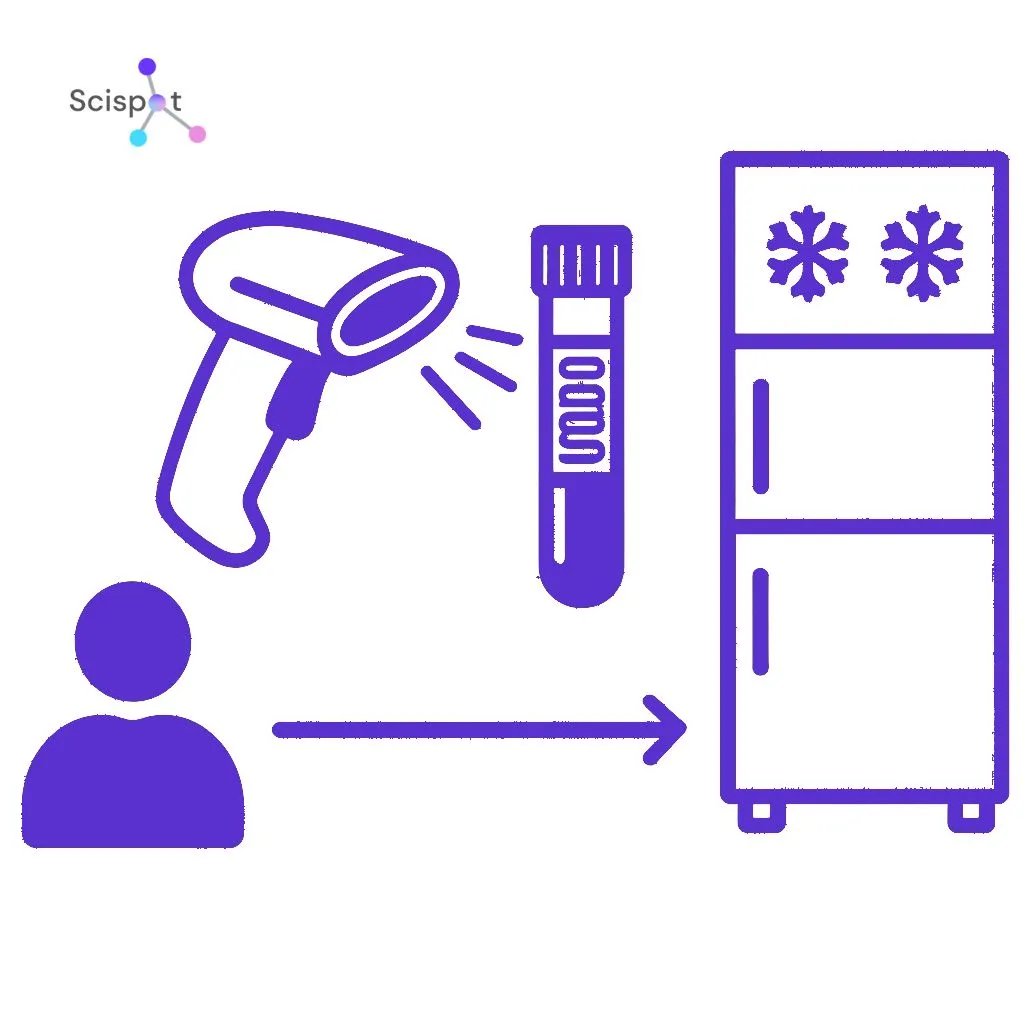
Each sample gets a unique barcode as soon as it arrives. A Laboratory Information Management System, or LIMS, tracks that barcode through the full chain of custody. The software records who handled the vial, where it was stored, and when it moved. That level of tracking sharply reduces identity errors.
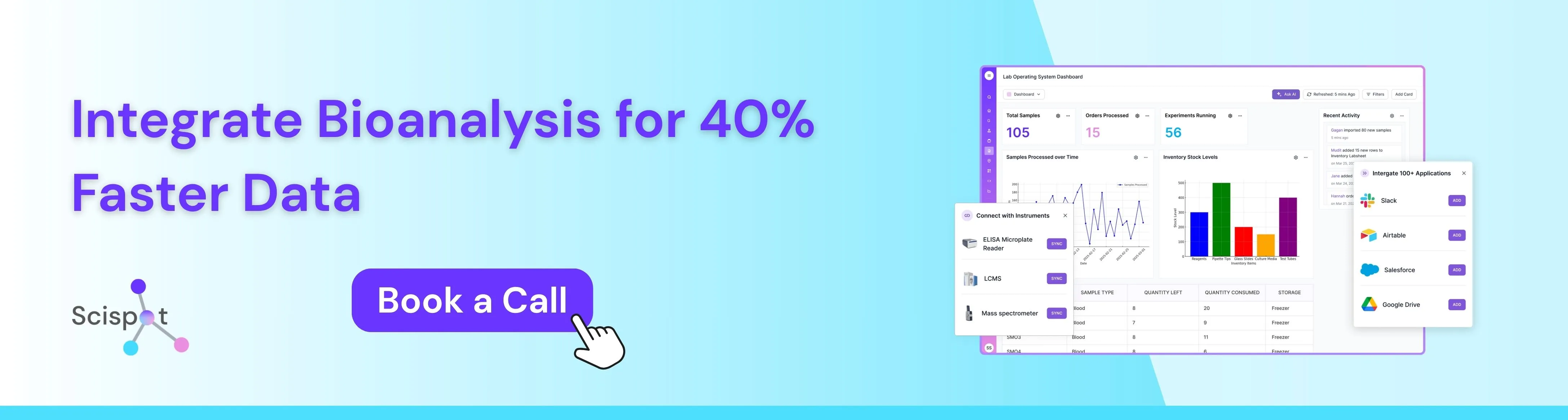
The last step is linking each physical sample to the digital result. When LIMS connects directly with mass spectrometry systems and other instruments, the equipment can send results into the database automatically. That removes the need for someone to type numbers in by hand and lowers the chance of transcription mistakes. Once that data starts to grow, labs need to decide where to store it.
How Scispot supports end-to-end bioanalysis operations
Scispot is a preferred digital solution for bioanalysis teams because it brings sample tracking, instrument data capture, workflow automation, and compliant recordkeeping into one connected system. Instead of asking labs to manage bioanalytical work across spreadsheets, disconnected software, and manual review steps, Scispot helps teams connect every sample, result, protocol, and audit trail in one platform.
That gives teams cleaner data flow from instruments to analysis, fewer transcription errors, stronger chain of custody, and faster review cycles. For CROs, pharma teams, and modern research labs, Scispot provides the digital backbone they need to stay accurate, inspection-ready, and efficient as study volume grows.
Choosing between cloud-based and on-premise systems
Once patient samples are analyzed, labs need a secure place to store a large volume of sensitive records. At that point, research teams have to choose where that digital system will live. They can keep it on physical servers inside their own facility, which is known as on-premise storage, or they can use secure remote infrastructure over the internet, which is commonly known as the cloud.
Comparing cloud-based vs on-premise laboratory information systems usually comes down to control, cost, and access. Most bioinformatics solutions support both options:
On-premise: Offers full physical control and strict internal security, but requires costly hardware and ongoing IT support.
Cloud-based: Offers lower upfront cost, easier access across locations, and the ability to scale storage as studies grow.
Drug development now depends on teams sharing data across sites and time zones. Cloud platforms make that easier while still protecting patient privacy, which is why they are often the preferred option in modern research. With that foundation in place, labs can start using more advanced tools, including AI and automation.
How AI and automation help shorten the wait for new vaccines
When a global health threat appears, researchers do not have years to waste. Labs speed up the process through high-throughput screening workflow optimization, which lets robots test thousands of possible treatments at once. Instead of working through one compound at a time, teams can screen large libraries in a single afternoon.
That work creates another huge body of data. AI helps teams sort through it, especially in complex drug metabolism studies where researchers need to track how a new pill breaks down in the body. Metabolite identification software can spot patterns quickly and help teams find the signals that matter.
Faster testing and faster analysis can help safe therapies reach patients sooner. That only works when the underlying data stays secure, accurate, and traceable. Strong software is still the base layer that makes all of it possible.
Why robust software matters in medical innovation
Behind every medication is a long chain of lab work, analysis, review, and proof. Bioanalysis software helps hold that chain together. By enforcing bioanalytical method validation guidelines and protecting the integrity of every record, it helps make sure results are not lost, changed, or questioned later.
The next time you pick up a prescription, there is a good chance a large part of the real work happened in software. Not in a dramatic way. Just in the quiet, necessary way that keeps science traceable, verified, and safe.