

%20(1).webp)
TL;DR
- Top laboratory managment software solutions help labs track samples, inventory, data, and workflows while reducing errors and manual work.
- Says strong systems improve compliance, data integrity, collaboration, and real-time reporting across research, clinical, and educational labs.
- It highlights LIMS, automation, inventory, and tracking tools, plus selection factors like workflow fit, scalability, security, and ease.
- Scispot is positioned as an all-in-one platform with audit trails, integrations, customizable workflows, and AI-driven insights.
Laboratory and Data Management Software
Laboratory management software is transforming how labs operate today. It streamlines processes, enhances data accuracy, and boosts efficiency.
This software integrates various lab functions, from inventory to sample tracking. It ensures seamless lab operations and data management.
Lab data management is crucial for maintaining data integrity and meeting regulatory standards. It helps labs stay compliant and organized.
With the right software, labs can automate tasks, reduce errors, and improve productivity. It offers customizable solutions for diverse lab needs.
Whether in research, clinical, or educational settings, lab management tools are essential. They support collaboration, data security, and real-time insights.

What Is Laboratory Management Software?
Laboratory management software is a digital tool that organizes lab operations. It covers various functions, enhancing both efficiency and accuracy. This software is designed to manage samples, inventory, data, and more.
Its primary purpose is to streamline lab activities. By integrating different lab processes, it ensures smooth workflows and effective data handling. This integration helps in reducing human error and improving overall productivity.
Key capabilities of laboratory management software include:
- Sample tracking
- Inventory management
- Data integration
- Workflow automation
- Compliance monitoring

These features make it indispensable in modern labs. It simplifies complex processes, making lab management more manageable. As a result, labs can focus better on research and innovation.
Scispot as an All-in-One Laboratory Management Solution
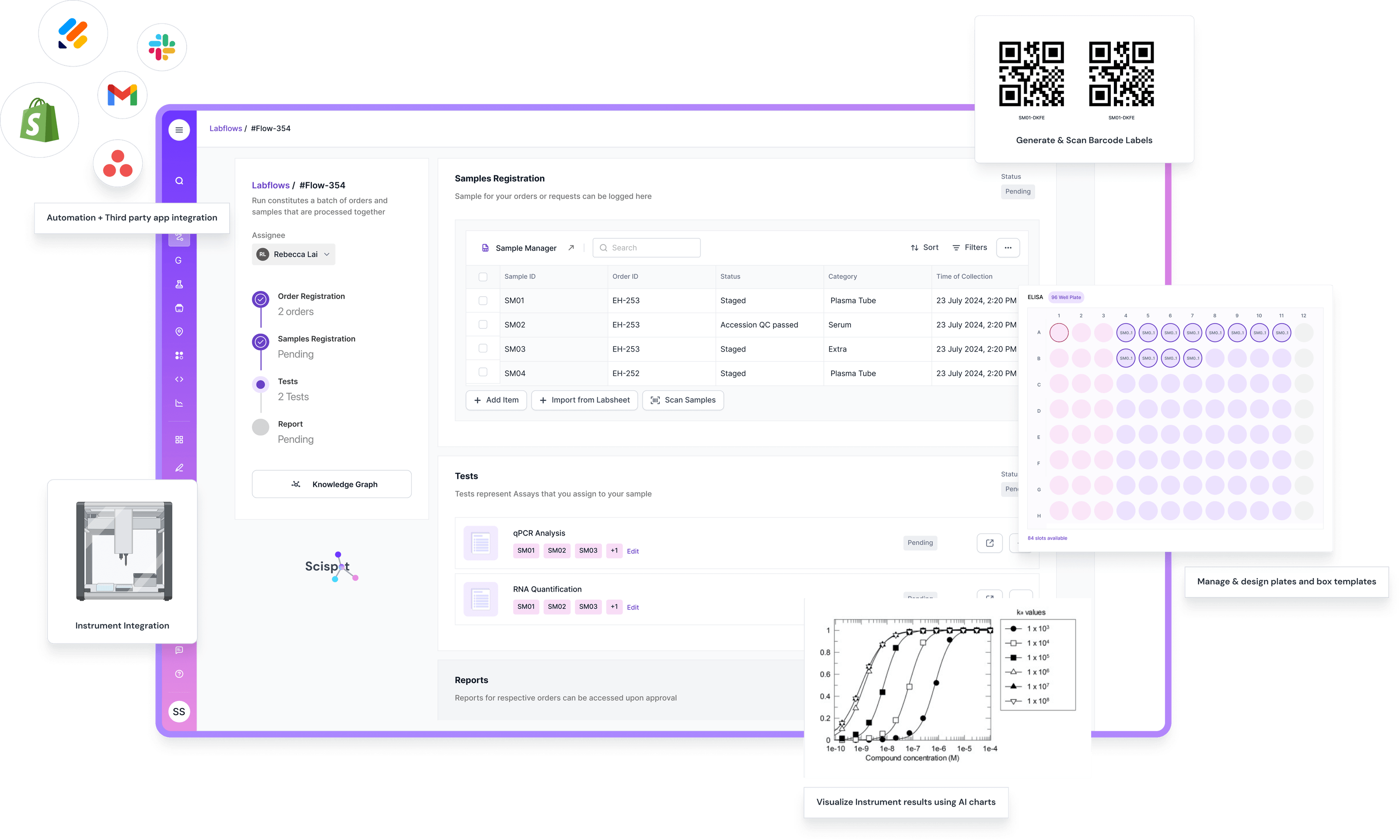
Scispot brings laboratory and data management into a single workspace. It connects LIMS-style sample tracking, inventory, protocols, and reporting with flexible data models and automation. Labs get fewer spreadsheets, fewer data silos, and a clear chain of custody across every sample and experiment.
Scispot is designed for real lab conditions, not just ideal workflows. Research, clinical, and diagnostics teams can configure their own templates, SOP-driven workflows, and approval steps without heavy IT work. Built-in audit trails, role-based permissions, and e-signatures support compliance needs while still keeping the interface simple enough for busy scientists and technicians.
Because Scispot integrates with instruments, data lakes, and common analytics tools, it becomes the hub for lab data. Teams can automate data capture, apply QC rules, and surface real-time dashboards for operations, quality, and leadership. This makes Scispot one of the best options for labs that want a single platform for daily execution, data integrity, and future-ready automation.
Key Features of Lab Management Software
Lab operations software offers a range of tools tailored for efficient lab management. These features are designed to enhance workflows, data handling, and resource allocation. Each feature plays a critical role in the seamless functioning of a laboratory.
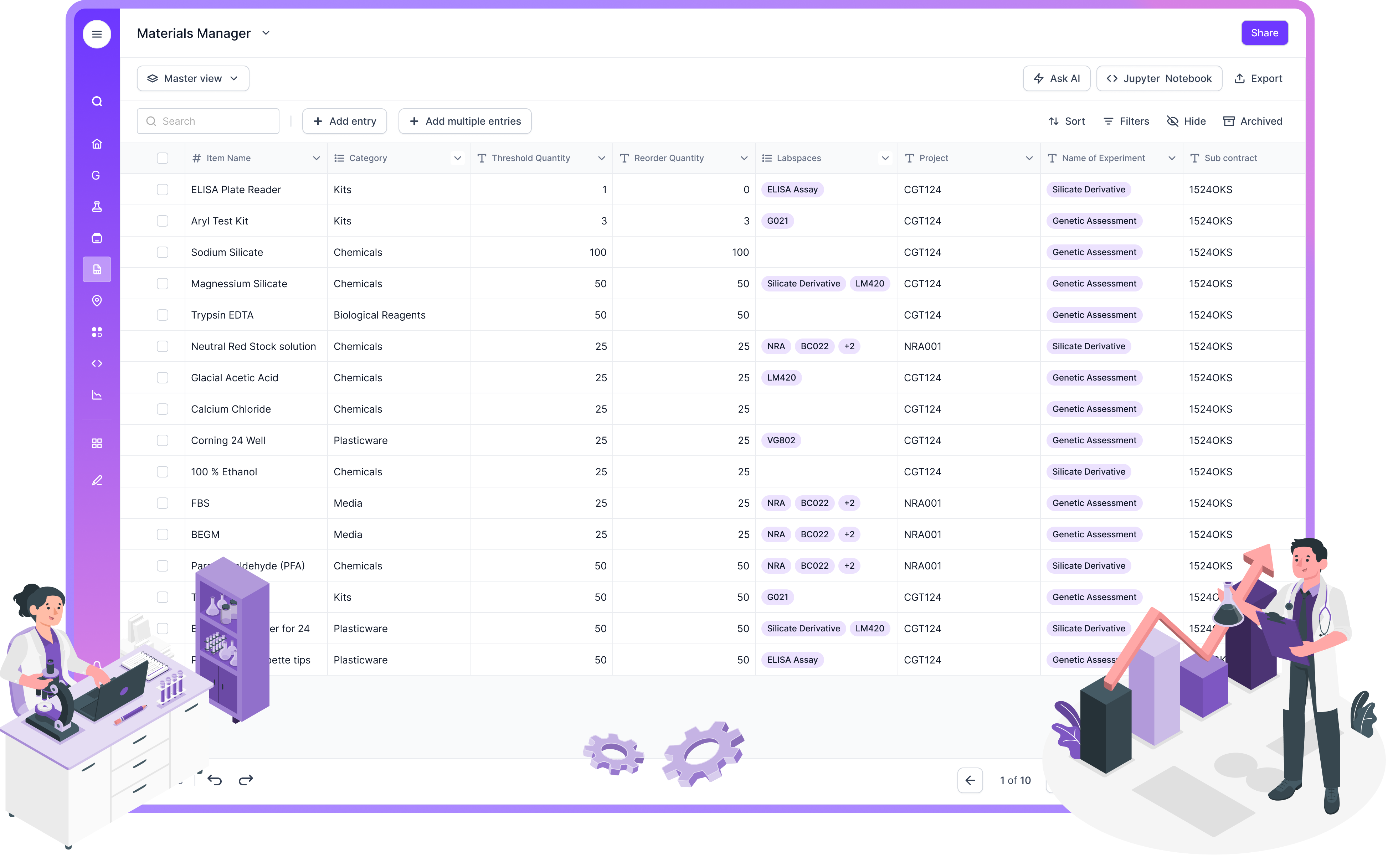
One significant feature is inventory management. It helps keep track of stock levels, ensuring labs are well-supplied. This minimizes downtime due to shortages and improves overall efficiency. Automated notifications alert staff when supplies are low.
Another essential aspect is sample tracking. This feature aids in managing sample location and history. It reduces the risk of losing samples and ensures data accuracy throughout the process. Effective sample management is crucial for reliable results.
Core features of lab operations software include:
- Inventory management
- Sample tracking
- Workflow automation
- Data integration and sharing
- Compliance monitoring
Workflow automation reduces manual tasks, increasing productivity. Automation ensures consistent execution of routine tasks, minimizing errors. By integrating lab data, these software solutions facilitate easy access to information, supporting informed decision-making.
Benefits of Laboratory Management Softwares
Laboratory data management is pivotal to maintaining data integrity and ensuring compliance. With effective data management, labs operate smoothly and efficiently. This greatly reduces the likelihood of errors and inconsistencies.
Improved data management enhances collaboration among team members. Sharing and analyzing data becomes seamless, fostering better communication and decision-making. As a result, researchers can focus more on analysis rather than administrative tasks.

Key benefits of lab data management include:
- Enhanced data accuracy
- Streamlined compliance procedures
- Increased collaboration
- Efficient data sharing and reporting
- Reduced administrative burdens
Overall, implementing robust data management practices simplifies compliance with regulatory standards. It also supports the security and confidentiality of sensitive information. Reliable data management is essential for maintaining trust with partners and clients.
Types of Laboratory Management Software
Laboratory management software offers a variety of solutions tailored to different lab needs. These solutions aim to streamline diverse lab operations, ensuring efficiency and accuracy.
One common type is the laboratory information management system (LIMS). LIMS is designed for data integration, storage, and retrieval, which benefits both clinical and research laboratories. This system centralizes all lab data, facilitating easy access and management.
Laboratory automation software is another key solution. It reduces manual intervention by automating routine tasks. Automation enhances productivity and minimizes errors, crucial for high-throughput laboratories.
Here are notable types of lab management solutions:
- Laboratory Information Management Systems (LIMS)
- Laboratory Automation Software
- Lab Inventory Management Software
- Laboratory Tracking Systems
These solutions can be customized to align with specific workflows and industry standards, ensuring they meet the unique demands of any lab setting.
How Laboratory Management Software Works?
Laboratory sample management software is crucial for tracking and organizing samples efficiently. It streamlines the entire process from sample collection to analysis, ensuring data accuracy.
This software uses a centralized system to log sample details. It records information such as collection date, type, and storage conditions. This reduces errors and enhances data reliability.
Key features of laboratory sample management software include:
- Sample tracking in real-time
- Automated data entry for accuracy
- Alerts for sample storage conditions

The software integrates with lab instruments, providing seamless data transfer and enhancing productivity. By automating routine tasks, it allows lab personnel to focus on more complex analyses, boosting efficiency.
Choosing the Right Lab Management Tools
Selecting the right lab management tools depends on specific laboratory needs. Consider factors like lab size, budget, and specific tasks.
Look for software that integrates well with existing systems. This ensures seamless operations and enhances efficiency across all lab functions.
Key considerations when choosing lab management tools:
- Compatibility with current laboratory workflows
- Scalability for future growth
- Strong data security features
Evaluate user-friendliness and available support services. A simple interface can make adoption easier for team members. Moreover, reliable support is crucial for troubleshooting and updates. Keep these factors in mind to optimize lab efficiency and meet organizational goals efficiently.
Free and Open-Source Laboratory Inventory Management Software
Free and open-source laboratory inventory management software can be an ideal solution for cost-conscious labs. These tools provide essential inventory tracking features without the financial burden.
Many labs benefit from open-source options due to their flexibility. Users can customize these tools to fit specific needs and contribute to ongoing development.
Common features of open-source inventory management software:
- Customizable inventory tracking
- User community support
- Basic reporting functions
These solutions empower labs to manage their resources efficiently without compromising on functionality. With the right open-source tools, labs can enjoy the benefits of inventory management while staying within budget.
Best Practices for Implementing Laboratory Management Software Solutions
Successful implementation of laboratory software solutions requires careful planning and execution. One key step is to involve all stakeholders early in the process. This ensures that the software meets the diverse needs of users.
Training is crucial for maximizing software benefits. Employees should be adequately trained to use new tools effectively. Moreover, continuous support should be available for troubleshooting.
Here are some best practices to follow:
- Conduct a needs assessment
- Customize features to fit lab processes
- Provide ongoing user training
By following these practices, labs can ensure smooth transitions and gain maximum efficiency from their software solutions. Proper implementation reduces errors and enhances overall lab performance.
Future Trends in Laboratory Automation Software
Laboratory automation software continues to evolve rapidly. Emerging trends focus on integrating artificial intelligence and machine learning. These advancements aim to streamline processes and enhance data analysis accuracy.
Key future trends include:
- Greater use of cloud-based solutions
- Improved integration with IoT devices
- Enhanced data visualization and reporting
By embracing these trends, laboratories can boost efficiency and stay ahead in a competitive landscape. Such innovations promise to redefine laboratory management through increased automation and intelligence.
Conclusion
Laboratory and data management software has become the backbone of modern lab operations. It reduces manual work, tightens sample tracking, improves data accuracy, and makes compliance easier to maintain across day-to-day workflows.
Scispot fits this shift well. It brings sample and inventory tracking, SOP-driven workflows, audit trails, and reporting into one workspace. It also connects with instruments and external data systems. That helps labs move from scattered spreadsheets to a cleaner, more reliable source of truth. Scispot can take time to configure well, and teams may need a short onboarding push, but the payoff is faster execution, clearer traceability, and better readiness for automation and scale.
Key takeaways: Software makes labs faster and more consistent. Scispot stands out when you want one system for execution, data integrity, and future-proof automation.

%20Comprehensive%20Guide.avif)
.webp)