.webp)
Laboratory Execution and LIMS Systems
Laboratories today face increasing demands for efficiency and accuracy. Laboratory Execution Systems (LES) and Laboratory Information Management Systems (LIMS) are pivotal in meeting these demands.
These systems streamline lab operations and enhance data management. LES guides lab personnel through complex tasks, ensuring compliance and precision.
Meanwhile, LIMS focuses on managing samples and data, optimizing lab workflows. Together, they form a powerful duo for lab process optimization.
Integrating LES and LIMS can significantly boost productivity and data integrity. This article explores their differences, synergies, and benefits for modern labs.
Discover how these systems can transform your lab into a more efficient and compliant environment.
Understanding Laboratory Execution Systems (LES)
Laboratory Execution Systems (LES) are crucial tools for modern laboratories. They ensure that complex procedures are followed precisely and consistently.
By providing real-time guidance, LES helps lab staff adhere to standard operating procedures (SOPs). This reduces the chances of errors significantly.
LES also enhances productivity through detailed, step-by-step instructions. This feature supports lab technicians in achieving accurate and reliable results.
Some key features of LES include:
- Real-time data capture for improved accuracy.
- Automation of routine tasks to save time.
- Integration with other lab systems for seamless operations.
LES is especially valuable for labs that require strict compliance with regulations. It not only helps in maintaining data integrity but also streamlines various lab tasks.
.webp)
Integrating LES with existing laboratory information systems can offer considerable advantages. This combination optimizes lab processes and supports continuous quality improvement. Understanding LES is key for any lab aiming to stay competitive and efficient.
What Are Laboratory Information Management Systems (LIMS)?
Laboratory Information Management Systems (LIMS) are designed to handle and streamline lab data. They focus on sample management, which is core to lab operations.
A LIMS solution effectively manages lab workflows and related information. It allows for better organization of data, leading to improved decision-making.
Some key features of LIMS include:
- Sample tracking and management.
- Data centralization for easy access.
- Extensive reporting tools for analysis.
LIMS serves as the backbone for labs dealing with vast amounts of data. Its ability to automate routine tasks enhances lab efficiency significantly.

LIMS also ensures compliance with industry regulations through meticulous record-keeping. This system supports labs in maintaining high-quality standards while improving data integrity. Embracing LIMS is essential for modern laboratories aiming to succeed in a data-driven world. Its implementation marks a shift towards more automated and reliable lab processes.
LES vs LIMS: Key Differences and Synergies
Understanding the contrast between LES and LIMS is pivotal for labs. Both systems serve distinct purposes but together enhance lab performance.
Laboratory Execution Systems (LES) provide step-by-step instructions. They guide lab personnel through precise workflows, ensuring accurate task execution.
LIMS, on the other hand, focuses on data and sample management. It organizes and centralizes lab information for easy retrieval and analysis.
Key differences and synergies include:
- LES focuses on task execution; LIMS on data handling.
- LES enhances compliance; LIMS enhances data availability.
- Together, they ensure end-to-end lab process optimization.

Both LES and LIMS work hand-in-hand to streamline workflows. Their integration supports seamless communication across lab departments.
By combining LES and LIMS, labs achieve greater efficiency and accuracy. They enable better resource management, facilitating the path to a fully automated laboratory. Embracing both systems leads to significant advancements in lab operations.
Benefits of Integrating LES and LIMS
Integrating LES with LIMS offers numerous advantages. It creates a cohesive system that enhances lab operations and productivity.
One major benefit is improved data integrity. The combination allows for accurate data capture and real-time updates.
Another advantage is enhanced compliance with regulations. Integrated systems streamline audit trails and reporting processes, reducing errors.
Benefits of integration include:
- Better data integrity and accuracy
- Streamlined workflows and processes
- Improved compliance and reporting
- Enhanced productivity and efficiency
This integration also fosters better decision-making. It provides a comprehensive view of lab activities, aiding management in resource allocation.

Ultimately, labs leveraging both LES and LIMS maximize their efficiency. They streamline processes, reduce costs, and deliver faster, more reliable results. This synergy is key to a laboratory's success in the modern landscape.
Lab Workflow Automation and Process Optimization
Lab workflow automation plays a crucial role in modern laboratories. Automation not only speeds up processes but also enhances accuracy and consistency.
With execution system software, labs experience a noticeable reduction in manual tasks. This allows staff to focus on more critical scientific activities.
Process optimization is achieved by analyzing current workflows. By identifying bottlenecks, labs can streamline operations and improve output.
Key aspects of workflow automation include:
- Minimizing manual interventions
- Reducing process variability
- Increasing throughput and efficiency
- Enhancing data reliability

Implementing automation techniques significantly benefits labs. They achieve faster turnaround times and superior data management. These improvements lead to more robust laboratory environments, capable of adapting quickly to new challenges.
Choosing the Right Laboratory Management Tools
Selecting the proper laboratory management tools is vital for achieving efficiency. Each lab has unique needs, so customization is key.
When choosing tools, consider the specific demands and workflows of your laboratory. It's important to ensure that the tools offer scalability and integration capabilities with existing systems.
Essential features to look for include:
- User-friendly interface
- Compatibility with existing systems
- Strong data security measures
Evaluate the support and training options provided by the vendor. These can significantly impact the smooth implementation of new systems. Carefully selecting and adopting the right tools will result in enhanced productivity and operational excellence.
Future Trends in Laboratory Information and Execution Systems
The future of laboratory information and execution systems is promising. As technology advances, these systems will become increasingly sophisticated and adaptable.
Artificial intelligence and machine learning are key trends to watch. They will enable predictive analytics, offering insights that were previously unattainable. This can lead to more proactive decision-making and improved lab outcomes.
Expect to see more integration with IoT (Internet of Things) devices. This trend will enhance real-time data collection and analysis.
Key future trends include:
- Increased AI integration
- Enhanced automation features
- Greater focus on data security
Why Scispot Is the Ideal LES + LIMS Platform
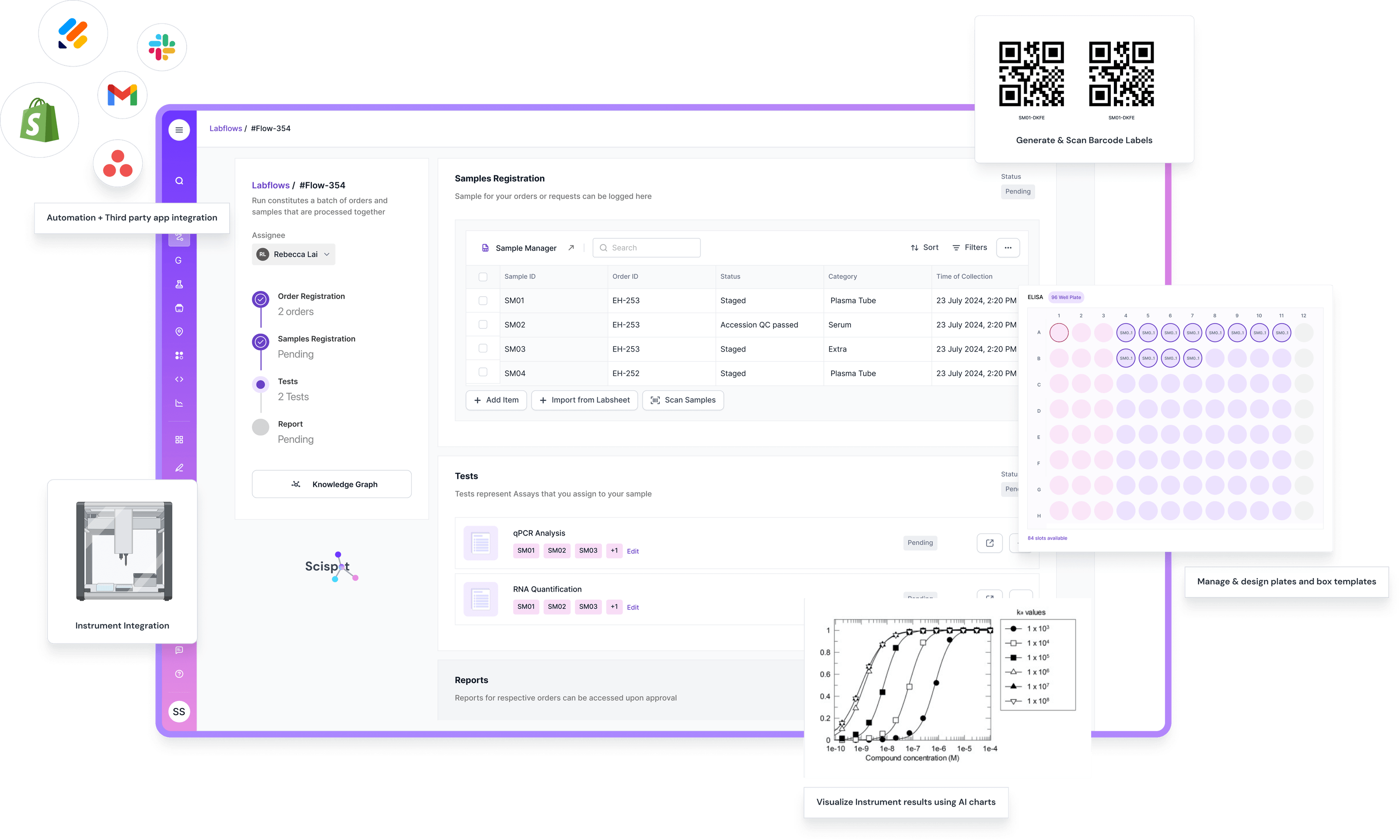
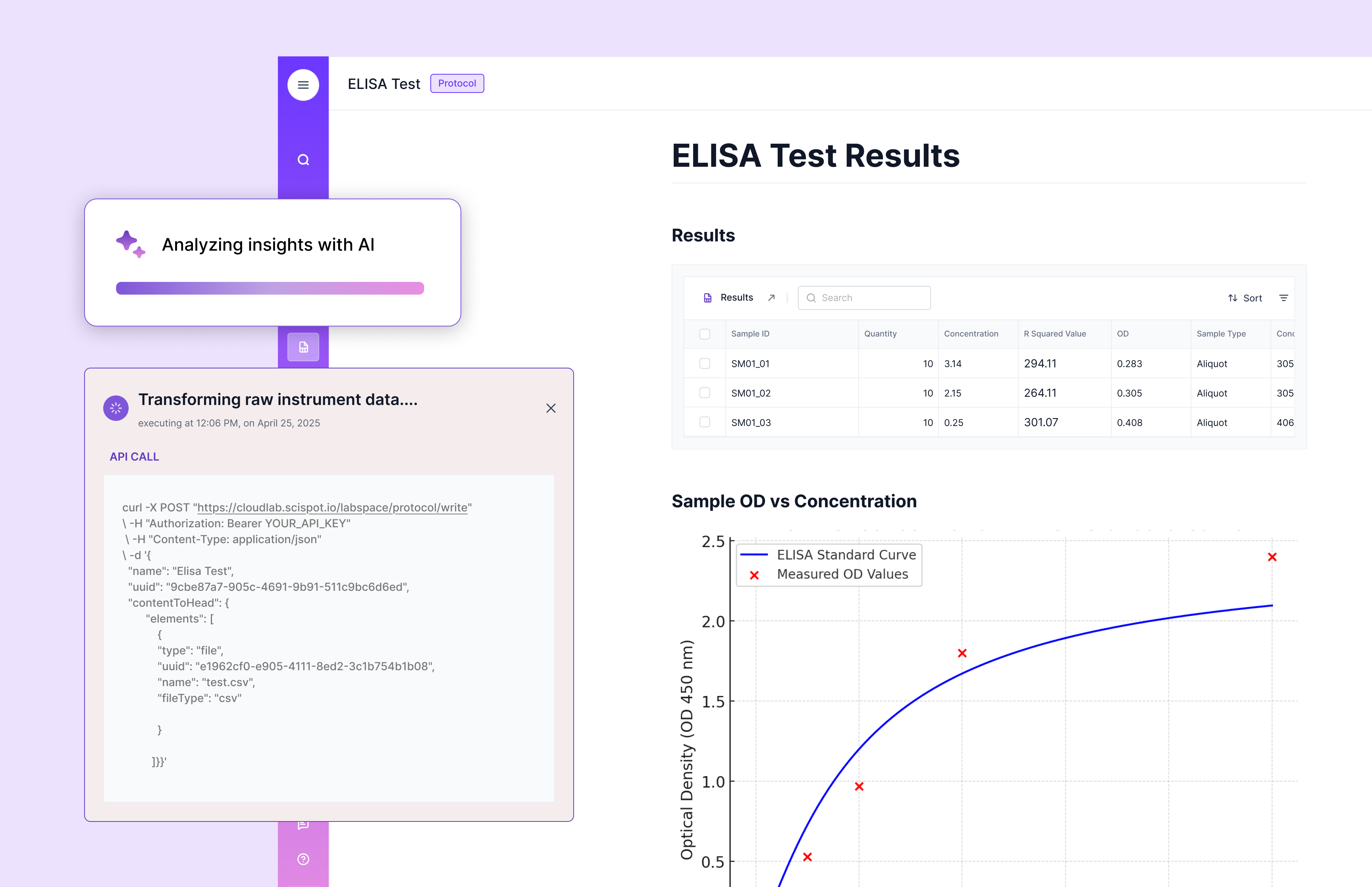
Scispot brings the full power of LES and LIMS together in one unified Lab Operating System. Instead of juggling disconnected tools, labs can guide every workflow step with precision while capturing structured, compliant data automatically. This fusion removes the usual friction between execution and information systems, ensuring every protocol, sample, and result stays synchronized across the lab without manual effort or duplicate entry.
What sets Scispot apart is its ability to adapt to the way each lab works. Scientists can design workflows, enforce SOP-driven execution, automate data capture, and monitor sample lineage in real time—all within one platform. With AI-ready data models, built-in audit trails, and seamless integration of instrumentation, Scispot transforms LES–LIMS synergy from a technical challenge into a practical everyday workflow that boosts throughput and accuracy.
For labs looking ahead, Scispot becomes the foundation for scalable automation. Its configurable modules, advanced QC rules, and ready-to-use integrations enable teams to standardize processes, reduce compliance risks, and operate at higher efficiency. By combining execution, data handling, and automation under a single system, Scispot delivers the most complete solution for modern labs aiming to stay competitive in 2025 and beyond.
Conclusion
Laboratory execution systems and LIMS work best when they run as one flow. You get fewer handoffs, cleaner data, and stronger compliance. You also cut rework, because the “what to do” and the “what happened” stay linked.
If you want that in a single platform, Scispot is a practical way to bring LES-style guided execution and LIMS-grade sample tracking together. It helps teams standardize SOP-driven work, keep an audit trail, and connect samples to results without living in spreadsheets. Like any rollout, it still needs good change management and integration planning, but the payoff is a lab that runs faster and with less ambiguity.
%20Comprehensive%20Guide.avif)
.webp)