

%20Comprehensive%20Guide.avif)
TL;DR
- A laboratory information management system (LIMS) manages laboratory samples, data, workflows, and results in one structured environment.
- LIMS software supports sample tracking, workflow automation, reporting, integrations, and traceability.
- Laboratories use LIMS to reduce manual work, improve data consistency, and support compliance requirements.
- The right LIMS should fit your laboratory's workflows, instruments, data requirements, and plans for growth.
A laboratory information management system (LIMS) helps laboratories manage samples, results, and daily operations with greater consistency. As sample volumes increase and workflows become more complex, LIMS software connects laboratory data, people, and processes in one place.
For laboratories looking to replace disconnected spreadsheets and manual handoffs, a modern LIMS can provide a more structured foundation for growth.
What Is a LIMS?
LIMS stands for Laboratory Information Management System. It is software designed to manage laboratory samples, associated data, testing workflows, and results throughout their lifecycle.
A LIMS typically assigns unique identifiers to samples, records their progress, stores test results, and supports review and reporting. Depending on the platform and configuration, it can also connect laboratory instruments, automate routine tasks, and maintain audit trails.
LIMS vs. LIS
A LIMS generally focuses on sample-centric workflows in research, biotechnology, pharmaceutical quality control, and testing laboratories. A laboratory information system (LIS) typically focuses on patient-centric workflows in clinical and diagnostic settings.
The distinction is not absolute. Some platforms support capabilities from both categories. The best choice depends on your laboratory's operations and reporting requirements.
Learn the difference between LIMS and LIS systems in detail here!
How Does a LIMS Work?
A LIMS connects the steps involved in processing a sample, from receipt to final reporting.
- Sample registration and tracking: Each sample receives a unique identifier, often linked to a barcode. Its location, status, and handling history can be recorded as it moves through the laboratory.
- Testing and results: The system assigns workflows, records test data, and may import results directly from compatible instruments. Configured rules can flag results requiring further review.
- Review and approval: Authorized users review results, document decisions, and approve work according to established procedures.
- Reporting and traceability: The LIMS organizes approved results into reports while maintaining relevant records of sample handling, changes, and approvals.
Connecting these steps reduces manual data transfers and makes it easier to understand what happened to each sample.
Key Features of LIMS Software
LIMS capabilities vary by vendor, but common features include:
1. Sample Management
LIMS systems streamline sample management processes by providing tools for accurate registration, tracking, and organization. This centralized approach allows laboratories to maintain comprehensive records of samples, including their origin, storage location, and associated metadata. LIMS systems also offer features for managing sample storage, including freezer management, ensuring proper storage conditions to preserve sample integrity. Moreover, LIMS systems facilitate proper sample disposal, adhering to regulatory guidelines and promoting responsible waste management practices.
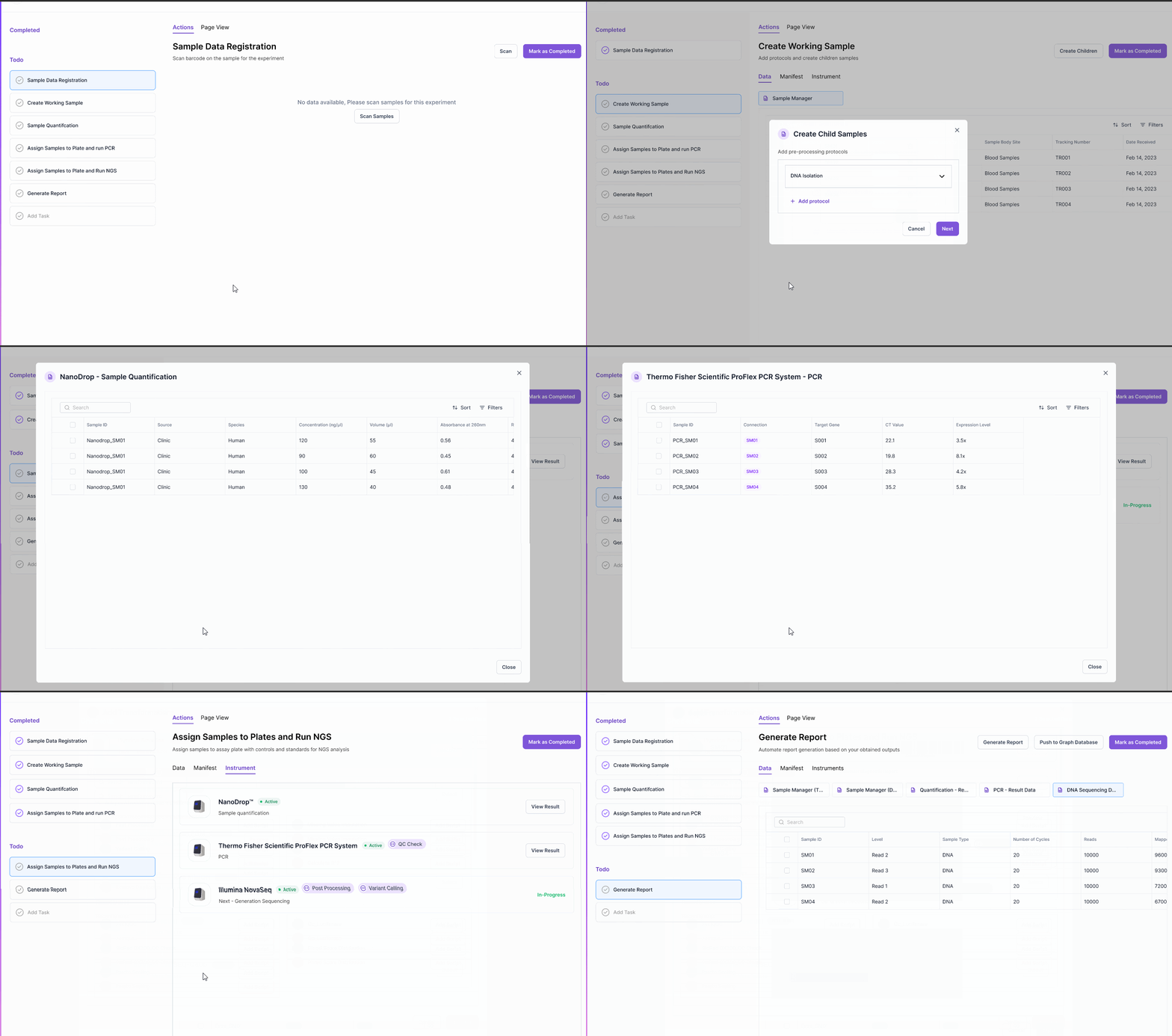
2. Workflow Management
With customizable workflow templates, laboratories can design and implement standardized protocols and procedures tailored to their specific requirements. Automated task assignment and tracking functionalities ensure efficient resource allocation and enable real-time monitoring of workflow progress. Furthermore, LIMS workflows facilitate seamless collaboration among team members, improving communication, coordination, and overall productivity in the laboratory.

3. Data Management
LIMS systems excel in data management by providing a centralized repository for diverse data types generated in the laboratory. This consolidation eliminates scattered storage and enables easy retrieval and analysis. The structured data capture and management capabilities ensure standardized and consistent data entry practices, enhancing data organization and searchability.
4. Instrument Integration
Instrument integration in LIMS systems offers numerous benefits by automating data capture and improving data accuracy. By connecting laboratory instruments directly to the LIMS system, data transfer becomes automated and real-time, reducing manual effort and minimizing errors. LIMS enables the tracking of instrument calibration and maintenance schedules, allowing labs to proactively monitor instrument performance and ensure accurate and precise measurements. As a result, this integration promotes standardized data capture, including instrument-specific information and metadata.
5. Quality Control and Compliance
LIMS systems provide robust quality control and compliance features to ensure adherence to regulatory standards and maintain high-quality data. With built-in quality control mechanisms, labs can validate and verify data accuracy, perform statistical analysis, and generate comprehensive quality control reports. LIMS also enables traceability and audit trails, allowing labs to track and document every step of the testing and analysis process, ensuring data integrity and compliance with regulatory requirements.
6. Reporting
LIMS systems offer comprehensive reporting capabilities that summarize lab activities, test results, and trends. These customizable reports provide stakeholders with valuable insights into productivity, turnaround times, and resource allocation. By generating comprehensive reports and offering data analysis tools, LIMS facilitates effective decision-making, continuous improvement, and data-driven laboratory management.

7. Inventory and Resource Management
LIMS' inventory and resource management features offer laboratories real-time visibility into inventory quantities, enabling proactive procurement and preventing delays in testing and experiments. Automated alerts for low inventory levels ensure a continuous supply of materials, enhancing lab productivity and reducing project interruptions. Furthermore, LIMS systems optimize resource management by tracking the usage of reagents, supplies, and consumables, allowing for better control and informed decision-making.
.gif)
When evaluating these capabilities, confirm which features are included, which require configuration, and which depend on integrations or additional modules.
What are the benefits of Laboratory Information Management System (LIMS)
A well-configured LIMS can improve laboratory operations in several ways.

1. Improved Operational Efficiency
LIMS systems streamline workflows, reduces manual errors, and enhances productivity by optimizing resource utilization. This leads to faster turnaround times, increased throughput, and improved overall performance, enabling labs to handle higher volumes of samples and deliver results more efficiently. Additionally, enhanced operational efficiency reduces costs, maximizes profitability, and allows labs to allocate resources effectively, ultimately improving their competitive edge in the industry.
2. Cost Savings and Return On Investment
Implementing a LIMS system can result in significant cost savings and a positive return on investment for laboratories. By increasing efficiency and productivity, labs can save valuable time and resources. The centralized data management and reporting capabilities of LIMS systems also enable data-driven decision-making and optimization of lab operations, further enhancing cost-effectiveness. Overall, the improved efficiency and productivity achieved with LIMS can lead to substantial cost savings and a favorable return on investment for laboratories.
3. Enhanced Data Integrity and Accuracy:
Enhanced data integrity brings numerous advantages to laboratories. Firstly, it boosts the dependability and precision of laboratory results, minimizing the potential for errors and guaranteeing the production of high-quality data. Secondly, it instills trust in the data, both internally within the lab and externally among regulatory bodies and clients. This established confidence in the data strengthens the lab's reputation and credibility. Lastly, improved data integrity streamlines data analysis, interpretation, and reporting processes, empowering labs to extract valuable insights and make well-informed decisions based on trustworthy data.
4. Regulatory Compliance and Quality Assurance
Compliance with regulatory standards and implementing robust quality assurance measures provide several advantages for laboratories. By adhering to regulations, labs avoid potential legal consequences and maintain a favorable reputation. Quality assurance practices enhance the accuracy and reliability of laboratory results, fostering trust among clients and stakeholders. Ultimately, regulatory compliance and quality assurance contribute to the overall success, credibility, and competitiveness of the lab in the industry.
5. Facilitated Collaboration and Communication
LIMS systems promote effective communication and collaboration by facilitating seamless information sharing among laboratory personnel, teams, and departments. They enable the exchange of results, reports, and data, fostering smooth collaboration among relevant stakeholders. With user roles and permissions, labs can control data access and system functionalities based on individual user privileges, ensuring the security of sensitive information while enabling authorized users to efficiently perform their tasks.
LIMS software is commonly used in biotechnology research, pharmaceutical quality control, environmental testing, food testing, and other laboratories that need structured sample and data management.
Why Scispot is a Top Choice When You’re Choosing a LIMS
If you’re evaluating a LIMS, Scispot is one of the strongest options to shortlist because it stays true to what a Laboratory Information Management System is meant to do: keep samples, results, workflows, and approvals in one consistent system. It works especially well in fast-moving labs where SOPs evolve, teams scale, and data models can’t keep getting rebuilt. Think of it like switching from scattered spreadsheets to a “single source of truth” that still feels flexible.
Scispot stands out because it pairs structured data capture with workflow automation and deep integrations. You can standardize how samples are registered, tracked, tested, and reported, while still adapting fields and steps as your lab changes. It also supports instrument and system connectivity through integrations, which reduces manual uploads and copy-paste loops. That means cleaner data, faster turnaround, and fewer surprises during reviews.
Compliance is where modern LIMS choices get real. Scispot is built to support audit-ready traceability, role-based access, and controlled workflows so labs can meet stricter expectations without slowing down daily work. So when you’re choosing the “right LIMS,” you’re not just picking software. You’re picking how reliably your lab can scale, pass audits, and trust its own data.
How to Choose a LIMS for Your Laboratory
Start by mapping your existing workflows, data requirements, sample volumes, and reporting needs. Then evaluate potential systems against these criteria:
- Deployment and configuration: Choose an approach that fits your IT environment, security requirements, and laboratory processes.
- Integration and scalability: Check compatibility with your instruments and existing software, along with capacity for future growth.
- Usability and flexibility: Confirm that laboratory staff can perform routine tasks efficiently and that workflows can adapt as requirements change.
- Compliance and support: Assess audit trails, permissions, validation support, implementation services, and ongoing vendor assistance.
Scispot brings laboratory data management, configurable workflows, and integrations together in a connected platform. Its Labsheets support structured data capture, while GLUE helps connect laboratory data sources and systems. Explore how to use LIMS to understand the practical considerations involved in adopting laboratory management software.
The right solution should support how your laboratory works today while remaining adaptable as its needs evolve.
.gif)
Conclusion
Laboratory Information Management Systems (LIMS) play a crucial role in enhancing efficiency and data management in various laboratory settings. LIMS systems streamline sample tracking, automate workflows, enhance collaboration, ensure regulatory compliance, and empower researchers with powerful data analysis tools. By leveraging these benefits, labs can optimize their research processes, improve data management, and accelerate scientific breakthroughs. Embracing LIMS technology is an investment that not only increases research efficiency but also sets the stage for future growth and success in a highly competitive scientific landscape.

.webp)