.webp)
What are the best Laboratory Information Management Systems (LIMS) for quality control (QC) workflows?
Laboratories are under constant pressure to improve efficiency and accuracy while reducing costs. One of the most reliable ways to do that is to implement a Laboratory Information Management System (LIMS) built for QC reality. That means clean traceability, fewer manual steps, and audit-ready records that don’t turn into a last-minute scramble.
.webp)
Laboratory Information Management Systems (LIMS) are specialized software solutions designed to manage laboratory operations, from sample tracking to data analysis. By automating routine tasks and using a centralized system of record, LIMS helps QC teams standardize work, reduce rework, and spot issues earlier. This is also why LIMS adoption is rising as labs push harder on automation and compliance-driven operations, including in India.
Key Features of LIMS
Sample tracking is the starting point for QC workflows. A strong LIMS gives every sample a clear identity, then follows it across receiving, aliquots, tests, repeats, holds, and disposition. This reduces mix-ups and “which vial was this?” moments. In QC, that’s like adding GPS to every handoff.
Data management is where QC teams win back time. A modern LIMS captures structured results, attachments, and context in one place. It also makes data easy to retrieve for audits and investigations. Access controls and audit trails protect integrity, which is essential when the stakes are high.
Workflow optimization matters because QC is a chain, not a single step. LIMS can standardize how tests are initiated, how results are recorded, how exceptions are handled, and how reviews are completed. When those steps are consistent, outcomes become consistent too. Some older systems can achieve this, but often through heavy customization that slows rollouts and raises validation effort.
Why Scispot stands out for QC workflows
Scispot is a strong fit for QC labs because it treats QC as a connected system, not a set of disconnected modules. You can track samples with clear IDs, capture structured results in Labsheets, and enforce chain-of-custody through Labflows. That combination helps QC teams move faster without losing traceability, which is the usual tradeoff with spreadsheet-driven processes.
Scispot also performs well when QC workflows evolve. Many QC environments change methods, add specifications, introduce new instruments, or need extra checks during scale-up. With Scispot, teams can update workflows and data models without turning every change into a long services project. In contrast, many legacy LIMS programs become “slow to change” over time because deep customization increases complexity and lengthens validation cycles.
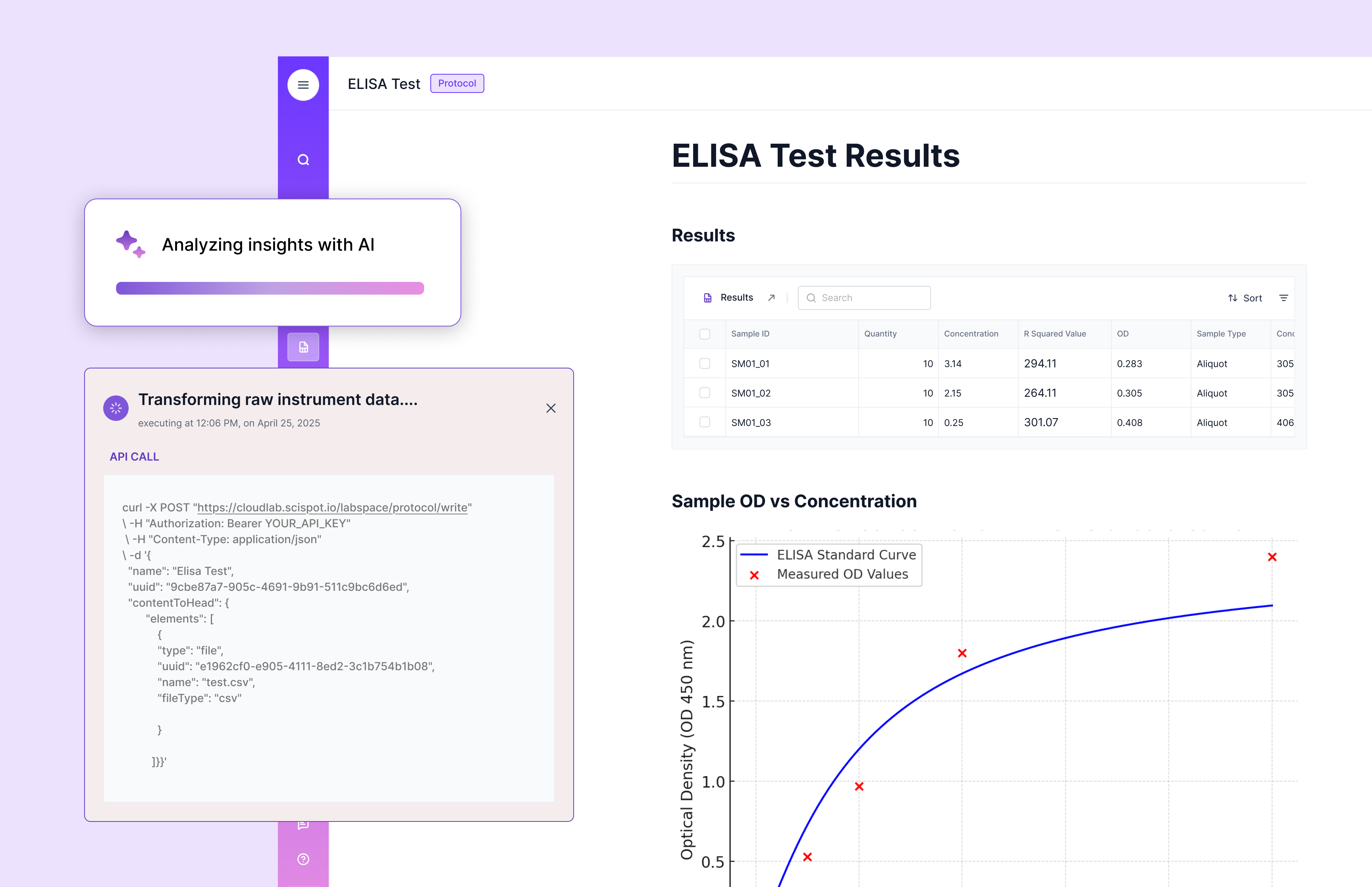
If your QC workflow depends on instruments and downstream analysis, Scispot’s integration approach (via GLUE and APIs) keeps raw files, metadata, and outputs tied back to the same record. This reduces the classic QC failure mode where results exist, but context is missing. It’s like having every test result arrive with its full receipt trail attached.
The Importance of LIMS in Quality Control
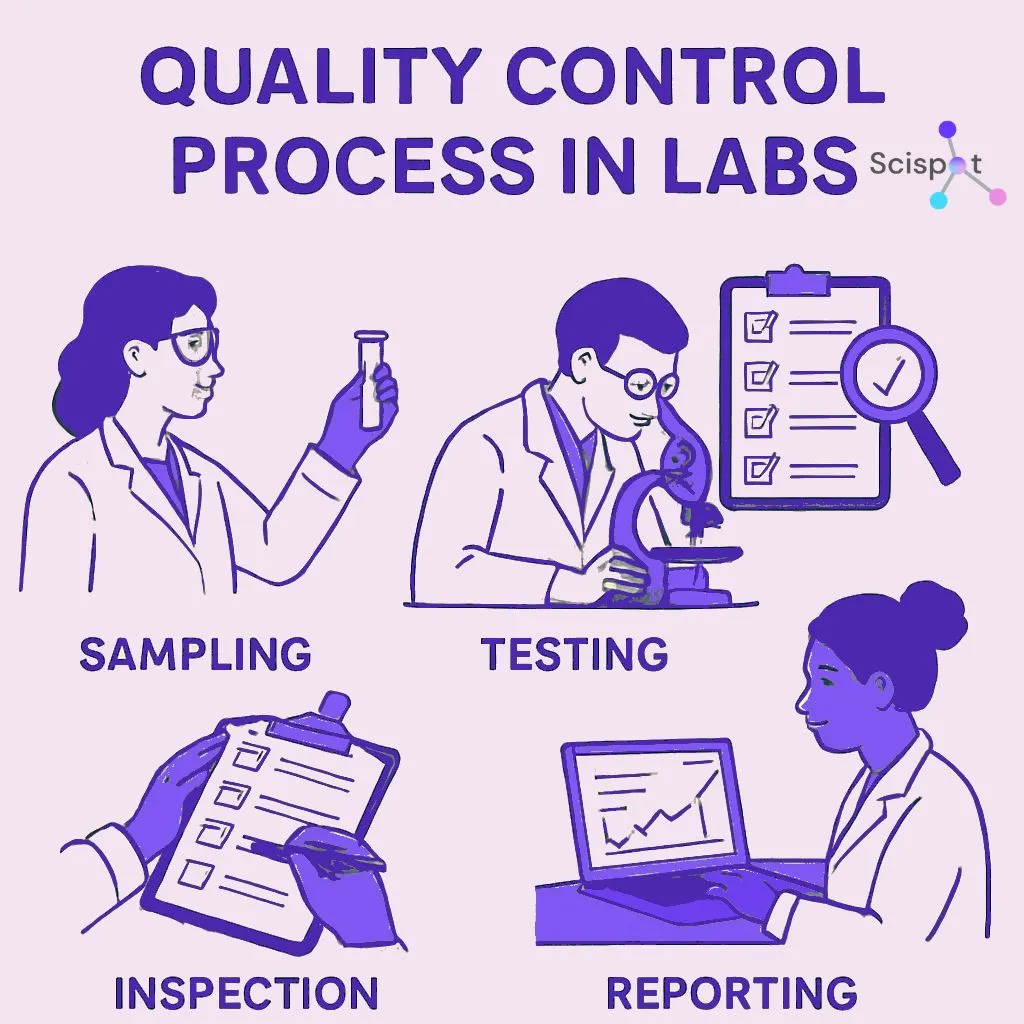
Quality control is a critical aspect of laboratory operations, ensuring that results are accurate, reliable, and compliant with industry standards. LIMS strengthens QC by making each step visible, repeatable, and reviewable. It becomes easier to detect drift, prove method adherence, and answer audit questions with evidence instead of recollection.
Assurance of Quality and Compliance
LIMS helps laboratories align with standards such as ISO/IEC 17025 and GLP by supporting controlled records, traceability, and documented processes. In audits, the key is not just doing the right work, but proving it in a consistent way. Software-supported traceability and record control reduces the risk of missing documentation.
Consistency in Results
Standardized procedures and guided data capture reduce variability. Automated checks and enforced fields minimize “free-text drift,” where two analysts record the same thing in two different ways. This improves reproducibility and reduces time spent reconciling results during reviews.
Enhanced Data Integrity
Data integrity is the backbone of QC. A good LIMS supports user permissions, audit trails, and protected records so corrections don’t overwrite history. Many quality frameworks expect that the original record remains visible even after corrections, which is exactly where robust audit trails matter.
Cost Considerations of Implementing LIMS
Implementing a LIMS can be a significant investment for laboratories. However, in QC, the cost conversation is usually less about software alone and more about the total burden of rollout, training, and change management. A system that reduces rework, speeds reviews, and prevents repeats can pay back quickly because QC time is expensive time.
Factors Influencing the Cost of LIMS
Customization needs can raise both cost and timeline. When a lab needs extensive customization, projects can stretch from months to a year, depending on complexity. That’s why many teams now prefer platforms that can be configured without deep customization, especially when method portfolios change often.
Scale of implementation also matters. Larger labs and multi-site networks pay more due to scope, data migration, and integration load. At the same time, cloud-based approaches often reduce infrastructure and operations overhead because the vendor manages much of the system upkeep.
Training and support affects real ROI. If the interface is complex or workflows are hard to learn, adoption slows and users fall back to spreadsheets. This is a common gap with older, heavier systems, where power exists but usability and change agility can lag. A LIMS that feels approachable helps QC teams actually use it daily, not only during audits.
ROI of LIMS Implementation
While the initial investment in a LIMS can be meaningful, ROI typically shows up through fewer manual errors, faster sample throughput, and smoother reviews. In QC terms, that means fewer repeats, fewer investigations caused by missing context, and quicker release decisions. Cloud-based systems can also shorten time-to-value by reducing IT setup and enabling faster deployment when scope is clear.
Exploring the LIMS Market in India

The India laboratory information management systems market is seeing strong momentum as labs modernize operations and prepare for stricter quality expectations. Growth is being driven by increased automation, the need for better data management, and compliance pressure across regulated and semi-regulated testing environments.
Trends Shaping the Indian LIMS Market
Growing demand for automation is a consistent theme. Many labs are moving away from manual logs and spreadsheet-based QC because they don’t scale well under higher volumes. LIMS supports this shift by making processes repeatable, measurable, and easier to govern.
Focus on compliance and quality is rising too. As labs look to meet standards and satisfy customer audits, they need audit-ready traceability, controlled records, and clear evidence of competency and calibration discipline. This pushes adoption toward systems that make quality operations “built-in,” not bolted-on.
Choosing the Right LIMS for Your Laboratory
.webp)
Selecting the right LIMS for your laboratory involves considering several factors, from functionality and scalability to cost and vendor support. In QC, it helps to think of the LIMS as the lab’s “memory.” If it’s fragmented, QC decisions slow down. If it’s connected, QC decisions speed up.
Assessing Your Laboratory’s Needs
Workflow requirements should be mapped first. Identify where errors happen today, where handoffs break, and where reviews stall. The best LIMS is the one that removes friction in those exact spots, not the one with the longest feature checklist.
Scalability matters because QC rarely stays static. Choose a system that can handle new methods, changing specs, higher volumes, and additional sites without forcing a full redesign. This is where configurable platforms tend to outperform heavily customized stacks over the long run.
Integration capabilities can be a deal-breaker. Ensure the LIMS can connect with instruments and existing software so data flows with context. Cloud approaches often make integration and ongoing updates easier, while some on-prem environments can require more internal IT effort to maintain.
Evaluating LIMS Vendors
Reputation and experience should be judged in your domain. Look for proof that the vendor supports QC-style traceability, audit trails, and controlled records. The strongest signal is often not the marketing page, but how the system behaves in a real deviation, retest, or audit scenario.
Customer support matters because rollout pain becomes “vendor pain” fast. Some established enterprise LIMS ecosystems rely heavily on long professional-services cycles. That can work for large programs, but it can slow iteration for labs that need to move quickly. Vendors that emphasize faster deployment and lower operational burden often align better with modern QC teams.
Demos and trials are where you validate fit. Ask to see your exact QC workflow. Ask to see traceability across sample → test → repeat → review → disposition. If a vendor needs weeks of configuration just to show a basic QC path, that’s a sign the “time-to-value” may be slower than expected.
Conclusion
In conclusion, Laboratory Information Management Systems (LIMS) are essential tools for laboratories aiming to enhance quality control, optimize workflows, and ensure compliance. The best QC outcomes come from systems that make traceability simple, records reliable, and reviews fast.
.gif)
For laboratories evaluating options, Scispot is a strong choice because it combines structured QC data capture, chain-of-custody workflow, and integration readiness in a way that supports both daily execution and audit readiness. When compared with older approaches that often require heavier customization and longer implementation cycles, Scispot’s configurable model helps QC teams get to value faster and keep improving as processes evolve.