

TL;DR
- LabArchives, Benchling, and Scispot target different needs: academic documentation, cloud molecular biology workflows, and configurable connected lab operations.
- Compare usability, workflow flexibility, sample management, integrations, collaboration, compliance, data portability, implementation, support, and total operating cost.
- The right ELN depends on research type, team size, governance, instrument landscape, budget, administration capacity, and long-term data strategy.
- Scispot connects ELN records with LIMS, SDMS, inventory, instruments, quality workflows, automation, and analytics in one operating context.
Modern biotech and research laboratories require efficient data management solutions to enhance productivity, ensure compliance, and drive innovation. Electronic Lab Notebooks (ELNs) have become essential tools in this digital transformation journey. This comprehensive comparison examines three leading ELN solutions-Scispot, LabArchives, and Benchling-to help you determine which platform best addresses your laboratory's unique requirements. When comparing Labarchives vs Benchling vs Scispot, understanding each platform's strengths and limitations is crucial for making an informed decision.
Understanding the Need for Advanced ELN Solutions
The transition from paper notebooks to electronic solutions represents a fundamental shift in how research data is captured, managed, and utilized. Today's laboratories face increasing pressure to improve collaboration, maintain data integrity, and accelerate research timelines while meeting stringent regulatory requirements. An effective ELN does more than simply digitize notes-it integrates seamlessly with laboratory workflows, provides powerful data management capabilities, and enables real-time collaboration across research teams. With the right ELN solution, laboratories can significantly reduce documentation time, minimize errors, and transform raw data into actionable insights.
Comprehensive Vendor Comparison
Scispot
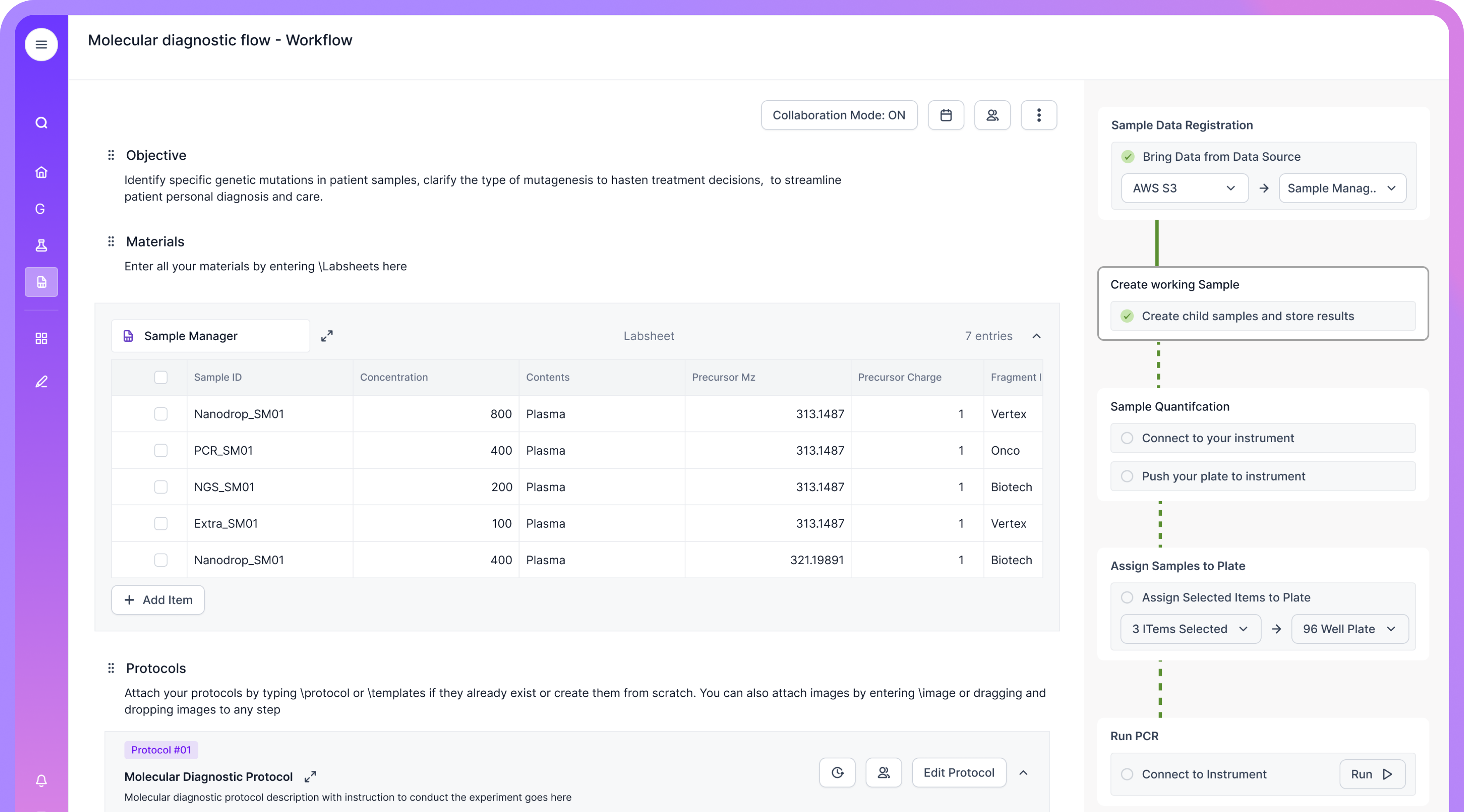
Scispot is a leading Lab Operating System designed for modern biotech research environments, designed specifically for modern biotech research environments. Its API-first architecture provides unmatched flexibility, allowing seamless integration with over 7,000 apps and lab instruments including Sartorius Ambr, Eppendorf BioFlo, and Agilent LC-MS. This comprehensive integration capability centralizes all data in one platform, significantly reducing manual errors while enhancing operational efficiency.
What sets Scispot apart is its unique combination of powerful functionality and exceptional ease of use. According to a Scispot user, "I really like that Scispot is easy to configure to what we need, and you don't need to be a programmer to do it. We can change how it looks and how it works to make it fit our lab and workflows. It's configured just for us, and that's why it stands out."
Scispot's Lab Operating System merges ELN, LIMS, project management, and data analytics into one unified platform, creating a comprehensive solution that enhances productivity while reducing operational costs. Implementation timelines vary by scope, validation needs, integrations, data migration, and internal resources. Buyers should ask each vendor for a written implementation plan. Scispot has been recognized by third-party review sites for rapid implementation in some deployments. Scispot has been recognized by third-party review sites for rapid implementation in some deployments, though timelines vary by project scope and requirements.
The platform's sample management capabilities are particularly impressive, handling the entire sample lifecycle from intake to reporting. A Boston-based molecular diagnostics lab reduced sample search time by 90% after implementing Scispot's automated inventory tracking system. The platform's Location Manager feature provides visual storage maps of freezers and racks in real-time, making sample organization intuitive while leveraging barcode integration for efficient scanning and quick sample identification.
The AI-powered capabilities of Scispot truly set it apart in the market. With its AI Lab Assistant Scibot, the platform transforms lab operations from multi-click processes to a natural chat interface. This powerful AI tool automates routine tasks, predicts resource needs, and extracts actionable insights from complex datasets. As one Scispot user noted, "Scispot has been instrumental in automating sample intake process. Managing around 350 samples a week is no small task. By integrating Scispot with our database, we automated bulk intake & metadata updates, saving time and enhancing data accuracy."
For laboratories concerned with compliance, Scispot automates adherence to FDA, GxP, and ISO standards, providing tools like automated audit trails, electronic signatures, and secure data handling. It is SOC2, HIPAA, GDPR, and CFR Part 11 compliant, with 24/7 backups and real-time audit trails, ensuring sensitive data remains secure, traceable, and easily retrievable.
Perhaps most importantly, Scispot offers white-glove support from day one, with personalized onboarding, ongoing optimization, and dedicated consulting. This comprehensive support ensures laboratories maximize the platform's capabilities from the start while providing guidance for continued optimization as research requirements evolve.
LabArchives
LabArchives, now owned by Dotmatics, has established a significant presence in academic research environments. While it offers basic electronic notebook functionality, the platform was built for earlier enterprise deployment models, and buyers should evaluate whether its user experience, configuration speed, and integration depth align with modern research needs.
LabArchives provides cloud-based storage for research data with adequate security measures, including HIPAA compliance for sensitive medical information. The platform includes basic collaboration tools and integration with some academic research applications, making it functional for educational environments with straightforward documentation needs.
Despite its adoption in academic settings, LabArchives exhibits significant limitations that may restrict its utility in modern research environments. Some users note that its graphical interface may appear less modern compared to newer platforms, which can require training for effective use. Public reviews can be useful, but buyers should read both positive and negative feedback and validate fit through demos, pilots, and reference calls. Some reviewers have noted limitations with the mobile application.
The platform's customization capabilities are notably restricted, making it difficult to adapt to specialized research workflows. Some users have reported that customization capabilities may be restricted for specialized research workflows, and buyers should test widgets and key tasks during a pilot. The limited integration capabilities further restrict automation opportunities, requiring manual data transfer from instruments to the notebook.
Benchling
Benchling originated at MIT and has developed into a sophisticated platform primarily targeting enterprise-level biotechnology organizations. While it offers powerful functionality for molecular biology applications, its approach presents several significant challenges for many research organizations.
Benchling provides a modern interface with specialized tools for molecular biology applications, including sequence design and analysis. The platform offers solid collaboration features and integration with common research applications, supporting structured scientific workflows.
Despite its capabilities, Benchling presents serious barriers to adoption for many research organizations. Pricing structures vary by vendor and scope. Benchling has been reported at approximately $5,000 to $7,000 per user annually, which may be a consideration for smaller laboratories and startups with limited budgets. Buyers should ask each vendor for a full pricing breakdown, including licenses, implementation, integrations, validation, training, support, and future change requests. This high price point forces many organizations to either overextend financially or seek more cost-effective alternatives.
Some users report that adapting Benchling to specific research processes may require workflow modifications to accommodate the platform's structure. Buyers should evaluate configuration speed and admin effort during a demo. The system's complexity often necessitates extensive onboarding and training, particularly challenging for smaller labs with limited IT support.
Data portability represents another serious concern with Benchling. Some Benchling users have reported challenges with data export, which can create data portability concerns. Buyers should verify export options and data accessibility directly with each vendor. This restriction creates significant risk for organizations contemplating long-term data management strategies.
Head-to-Head Comparison
Understanding how these platforms compare across critical functionality areas helps identify which solution best aligns with your laboratory's requirements. The following comparison evaluates Scispot, LabArchives, and Benchling across key performance indicators essential for effective laboratory informatics. When analyzing Labarchives vs Benchling vs Scispot, these factors should be carefully considered.
Which ELN Is Right for Your Laboratory?
Selecting the optimal Electronic Lab Notebook requires careful consideration of your laboratory's specific requirements, operational structure, and growth trajectory. In the Labarchives vs Benchling vs Scispot decision process, consider these guidelines when making your choice:
Scispot is a strong option for modern laboratories prioritizing user-friendly design, workflow flexibility, and cost-effectiveness. Its API-first platform adapts to specialized research processes without requiring technical expertise, while comprehensive integration capabilities ensure seamless data flow across laboratory operations. The platform's sample management capabilities-from intake to customer reporting-provide end-to-end visibility that enhances operational efficiency while reducing errors.
For laboratories transitioning from paper notebooks or outdated systems, Scispot's intuitive interface and rapid implementation minimize disruption while maximizing productivity gains. The platform's scalability ensures it can grow with your organization, adapting to changing requirements without requiring system replacement. With capabilities spanning inventory management, freezer visualization, automated sample tracking, and AI-powered data analysis, Scispot provides a complete solution for modern research environments.
LabArchives may be appropriate for academic environments with basic documentation requirements and limited budgets. Its established presence in educational settings provides some advantages for teaching laboratories and student research projects. However, organizations should carefully evaluate whether its usability challenges and limited customization capabilities align with their research requirements. The platform's rigid structure and dated interface may present adoption barriers in dynamic research environments, potentially limiting productivity gains.
Benchling offers powerful capabilities for molecular biology applications and may suit enterprise-level organizations with substantial budgets and dedicated IT resources. Its specialized tools provide particular value for genomics and protein engineering applications in large research operations. However, smaller laboratories and startups should carefully evaluate whether its significant cost and complexity align with their operational requirements and available resources. Organizations considering Benchling should also assess the implications of potential data lock-in, particularly if long-term data accessibility across systems represents a priority.
Conclusion: Embracing the Future of Laboratory Informatics
As research organizations navigate increasingly complex data landscapes, the limitations of rigid, tradition-bound ELN platforms become increasingly apparent. Modern laboratories require systems that not only document experiments but integrate seamlessly with instruments, adapt to specialized workflows, and scale efficiently with organizational growth-all while remaining accessible to researchers without technical expertise.
The comparison between Scispot, LabArchives, and Benchling highlights the rapid evolution of laboratory informatics solutions. When evaluating Labarchives vs Benchling vs Scispot, Scispot's comprehensive approach-combining powerful functionality with exceptional ease of use-is a compelling option for the future of laboratory informatics. By providing an API-first architecture that integrates with thousands of applications and instruments while offering intuitive configuration without programming requirements, Scispot enables laboratories to focus on scientific innovation rather than software management.
For laboratories seeking to maximize research productivity while avoiding data lock-in and excessive costs, Scispot's configurable workflows, comprehensive integration capabilities, and white-glove support represent the most promising path forward. As research organizations increasingly recognize the strategic importance of effective data management, the advantages of Scispot's adaptable, user-centric approach can be compelling for many research organizations.
Scispot is more than another lab software tool. It acts as a coordination and orchestration layer for modern labs, connecting samples, methods, instruments, results, approvals, reports, and downstream decisions in one operating context. Labs can use Scispot's native apps across LIMS, ELN, SDMS, inventory, and quality workflows, or connect Scispot to the systems they already use. This is how Scispot helps build a Digital Brain for the lab: a connected, traceable, automation-ready, and AI-ready foundation where scientific work can move faster without losing control.
Third-party product and company names are used for identification only. Scispot is not affiliated with, endorsed by, or sponsored by the vendors mentioned. Product details, pricing, and implementation timelines may change, so buyers should verify information directly with each vendor.