
Scispot vs LabVantage: Which LIMS Platform Fits Your Lab?
Evaluating Scispot vs LabVantage? Compare how each platform supports LIMS, ELN, LES, SDMS, sample lifecycle management, instrument connectivity, analytics and AI-enabled lab operations.
LabVantage offers an integrated laboratory informatics platform with LIMS, ELN, LES, SDMS and analytics capabilities. It emphasizes configurable workflows, sample lifecycle management, instrument and enterprise integration, and SaaS or on-premises deployment. Scispot approaches laboratory operations through a connected Lab Operating System, bringing instruments, applications, data and workflows together through configurable applications and its GLUE integration layer.
Evaluation tip: Compare both platforms against the same sample-to-result workflow, instrument interfaces and data access requirements.
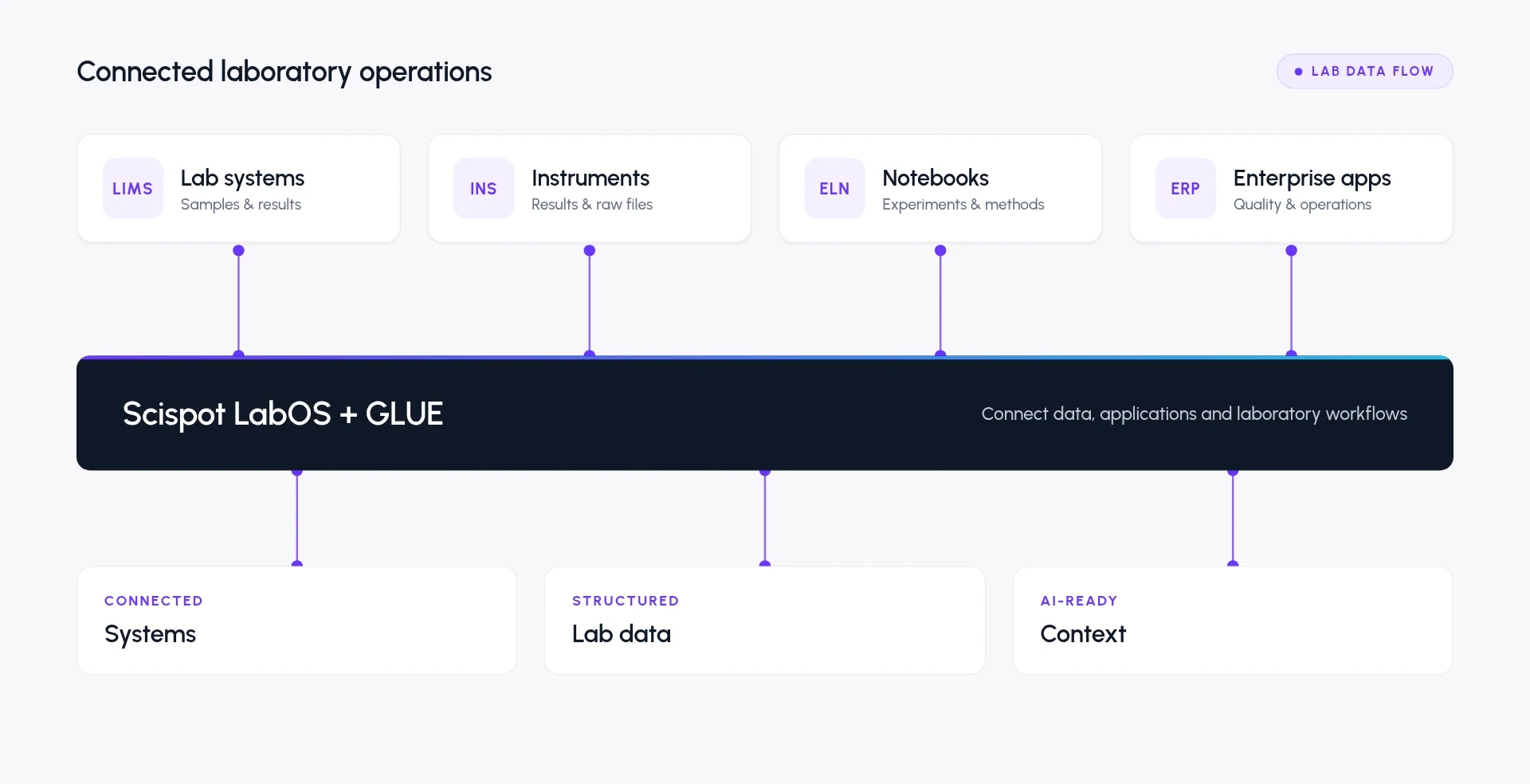
Illustrative architecture. Integration scope depends on systems, interfaces and implementation requirements.
Scispot vs LabVantage: Feature Comparison
Both platforms address laboratory operations, but their product architecture and emphasis differ. LabVantage presents an integrated suite spanning LIMS, ELN, LES and SDMS. Scispot focuses on connecting laboratory systems, data and workflows. Validate exact functionality, modules and implementation scope with each vendor.
Based on publicly available product information reviewed in November 2026. Capabilities can vary by product, deployment, configuration, contract and region. Validate requirements directly with each vendor.
Two approaches to managing laboratory information and operations
The decision depends on whether your priority is a dedicated, configurable LIMS environment, broader connectivity across systems, or a combination of both.
Integrated laboratory informatics suite
LabVantage describes a configurable platform combining LIMS with ELN, LES, SDMS and analytics. Its published capabilities include sample lifecycle management, instrument management, workflow design, reporting, enterprise interfaces and industry-specific configurations.
- LIMS, ELN, LES and SDMS within one platform
- Sample lifecycle, instrument and workflow management
- Analytics, reporting and data retrieval
- SaaS and on-premises deployment options
Connected lab operations across your technology stack
Scispot brings instruments, applications, scientific data and workflows together through LabOS and GLUE. It is designed for teams that need configurable operations and a connected data layer across existing systems.
- Connect instruments, ELNs, LIMS and scientific applications
- Coordinate data movement and cross-system workflows
- Build structured, reusable and AI-ready lab data
- Extend the existing stack instead of defaulting to rip-and-replace
Scispot vs LabVantage: What Should Your Lab Compare?
Move beyond feature checklists. Test the operational details that determine whether a platform works for your laboratory.

1. Sample lifecycle management
Assess sample registration, identifiers, aliquots, chain of custody, test assignment, status tracking, retention and disposal. Confirm that the model matches your sample types and processes.

2. Results entry and review
Compare how results are captured, calculated, checked, reviewed and approved. Test instrument-driven result entry and exception handling, not just manual entry screens.

3. Instrument and system integration
Map each instrument and enterprise system. Verify supported protocols, file formats, direction of data flow, error handling, auditability and ongoing connector ownership.

4. Workflow configuration
Test how easily administrators can adjust methods, forms, rules, dashboards and approvals as processes change. Understand what requires vendor services or custom development.

5. Compliance and validation
Review audit trails, electronic signatures, access controls, change management, validation documentation and your organization's responsibility for intended use and final sign-off.

6. Data access and AI readiness
Evaluate data structure, metadata, export paths, APIs, permissions and how easily teams can use data across reporting, analytics and AI workflows.
Your LIMS should connect with the rest of the lab
For many laboratories, the challenge extends beyond LIMS functionality. Instrument data, ELN records, quality systems, analytics tools and enterprise applications all need to work together without creating disconnected data silos.
Scispot GLUE is designed to connect laboratory instruments and applications, coordinate data flows and support workflows across the existing technology stack. The right architecture depends on your current systems, interfaces and governance requirements.
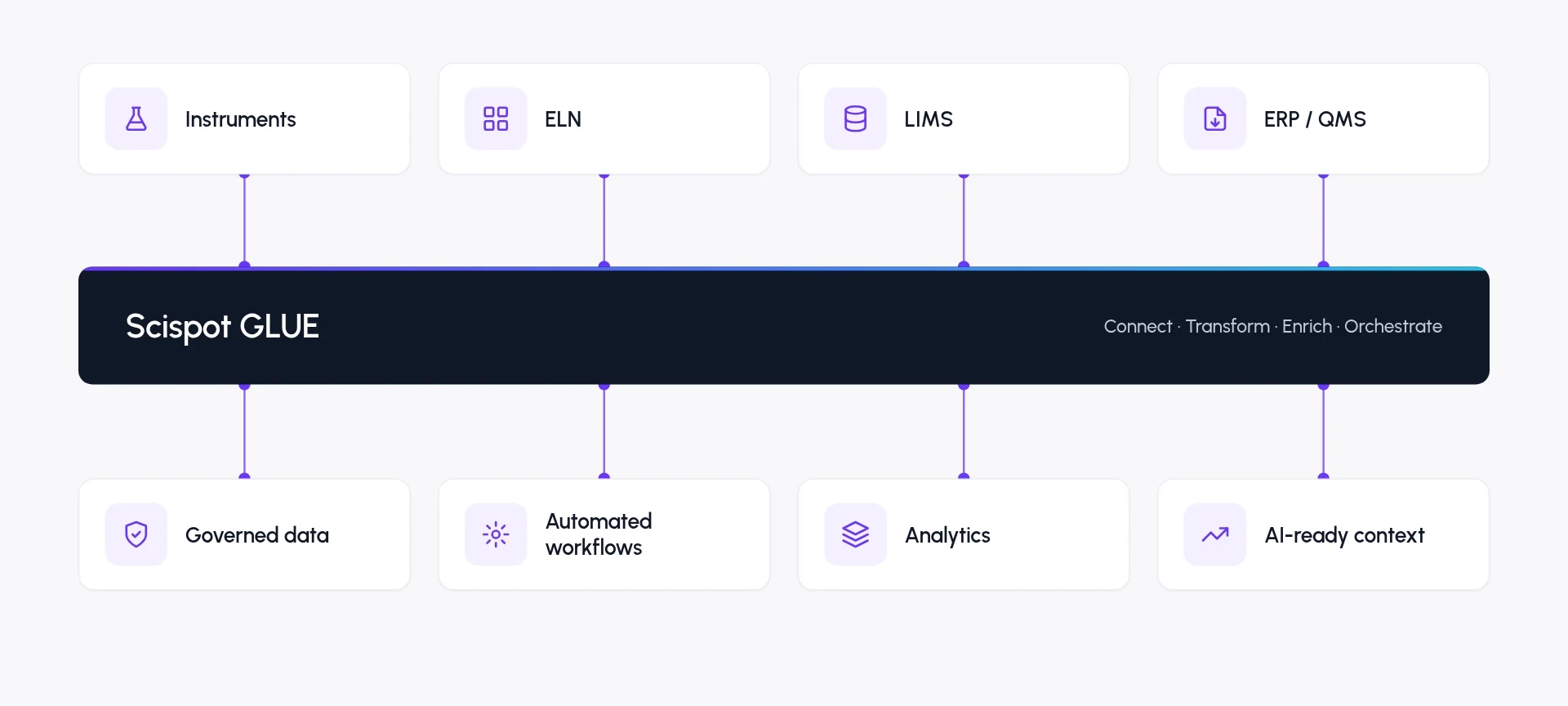
Illustrative architecture. Integration scope depends on systems, interfaces and implementation requirements.
Test both platforms with one sample-to-result workflow
Choose a process that reflects the real complexity of your laboratory, including instruments and downstream systems.
Define the workflow
For example, register a sample, assign tests, capture instrument results, complete review and approval, and generate a report or certificate.
Map the systems and data
Document instrument interfaces, identifiers, metadata, integrations, user roles and every manual handoff between systems.
Validate operational fit
Assess usability, traceability, configuration effort, validation responsibilities, reporting, implementation timeline and total cost.
When should your lab evaluate Scispot or LabVantage?
The strongest fit comes from your actual operating model, not a generic ranking.
You need an integrated laboratory informatics platform
You want to assess an integrated LIMS, ELN, LES and SDMS environment with configurable workflows, sample lifecycle management, analytics and deployment options for your laboratory.
You need to connect data and workflows across systems
Your lab needs configurable workflows, instrument connectivity, data movement across multiple applications, or a governed layer that can work alongside systems already in place.
Explore Scispot LabOS ↗Scispot vs LabVantage FAQs
Questions to structure your laboratory software evaluation.
What is the difference between Scispot and LabVantage?
LabVantage offers an integrated laboratory informatics platform with LIMS, ELN, LES, SDMS and analytics capabilities. Scispot is a Lab Operating System focused on connecting lab applications, instruments, data and workflows through its GLUE integration layer and configurable applications.
Is Scispot an alternative to LabVantage?
Scispot may be evaluated where teams need configurable laboratory workflows, connected applications and instrument data integration. Whether it can replace or complement a LabVantage deployment depends on the lab's required functions, validation scope, integrations and operating model.
Does LabVantage support instrument and system integration?
Yes. LabVantage describes instrument and enterprise system interfacing through its integration framework, web services and connectors. Confirm supported protocols, file formats and specific instrument interfaces for your deployment.
Can Scispot work with existing LIMS and laboratory systems?
Scispot GLUE is designed to connect laboratory instruments, applications and data systems. The exact integration pattern depends on the systems, interfaces, data models and implementation scope.
How should a lab choose between Scispot and LabVantage?
Compare both platforms using a representative end-to-end workflow. Assess sample lifecycle, results entry, instrument interfaces, reporting, compliance controls, deployment model, integrations, implementation effort and total cost.
Bring your lab data, instruments, and workflows together with Scispot.
Bring one sample-to-result workflow and your current systems. We’ll help you assess where Scispot fits within your laboratory technology stack.
Scispot vs LabVantage is an independent product comparison prepared by Scispot. LabVantage is a trademark of its respective owner. Scispot is not affiliated with, endorsed by or sponsored by LabVantage. Product capabilities and availability may vary by product, module, deployment, configuration, region and contract. This page uses publicly available information reviewed in November 2026. Confirm current details with each vendor before making a purchasing decision.