Scispot Harmonize

Turn Fragment Lab Data Into Trusted Scientific Context.

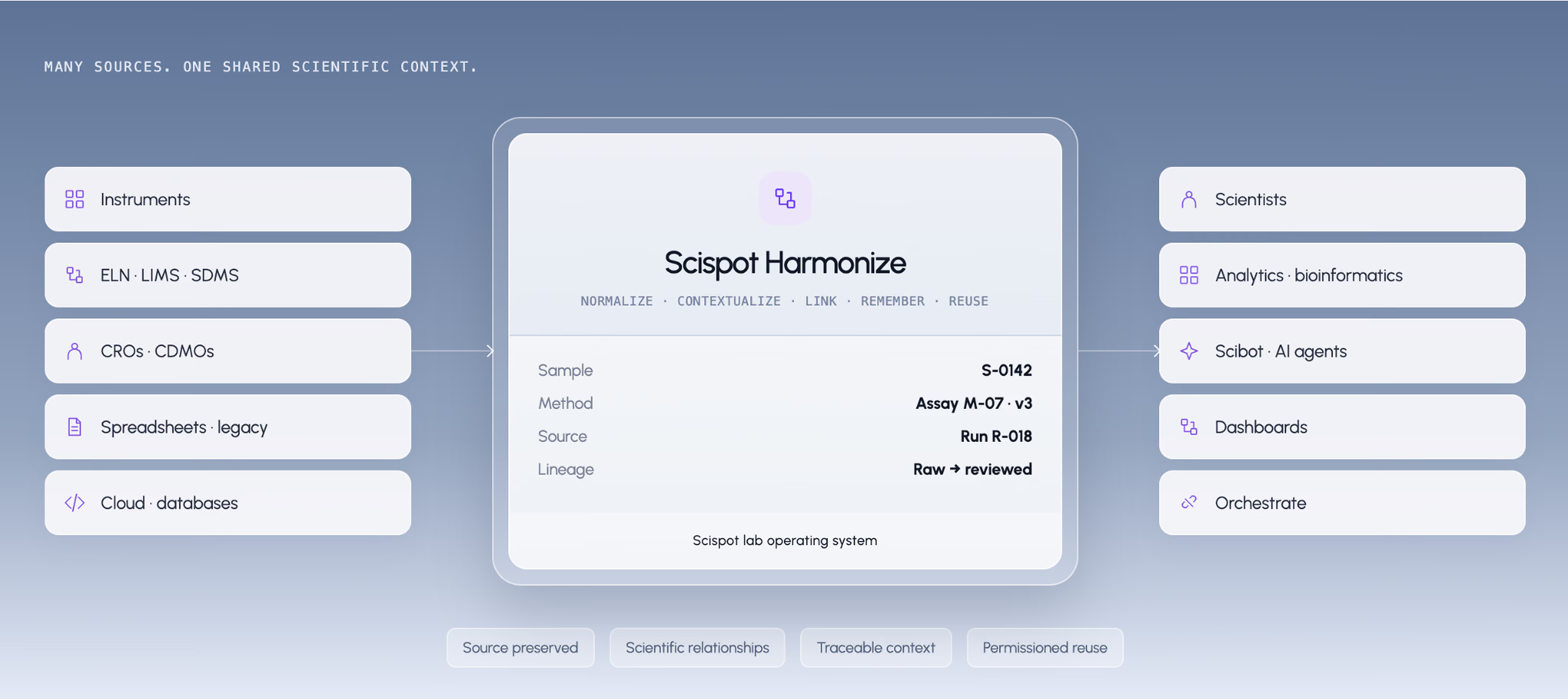
Normalize identifiers, units, metadata, and schemas. Link every result to its sample, method, experiment, and lineage.

Scispot Lab Operating System diagram: AI Agents, Jupyter Hub and third-party instruments connected through the Digital Brain to ELN, LIMS, SDMS, QMS, app integrations, Smart Actions and Trust Vault

Trusted by 200+ life science labs

The Data Readiness Gap

Your Lab Has Data.
‍It Keeps Losing Context.

Inconsistent identities

The same sample or material appears under different names.

Missing context

Results lose the experiment, protocol, or method that explains them.

Broken lineage

Raw, processed, and reviewed data become disconnected.

Repeated wrangling

Teams clean and reconcile the same information again and again.

What Harmonization Means

Integration Moves Data. Harmonization Gives It Shared Meaning.

INTEGRATION

Move it

Get data between instruments, systems, and applications.

STANDARDIZATION

Make it consistent

Align identifiers, units, fields, metadata, and schemas.

HARMONIZATION

Make it meaningful

Connect data to the scientific context needed to interpret and reuse it.

Scispot Harmonize connects the meaning behind the result to the work that produced it.

What Harmonization Means

Integration Moves Data. Harmonization Gives It Shared Meaning.

01 / Normalize

Make the data consistent.

Align identifiers, units, fields, schemas, and terminology across your data sources.

Source fields → shared definitions
sample_142 → S-0142
4000 pg/mL → 4 ng/mL
method_rev: 3 → M-07 · v3
Original source retained Illustrative data
What Harmonization Does

Consistent. Connected.
‍Ready To Use.

01

Metadata normalization

Align field names, units, formats, identifiers, and scientific metadata.

conc_pg_ml → Concentration
02

Identity resolution

Link samples, lots, materials, experiments, and records across systems.

sample_142 → S-0142
03

Scientific context

Connect results to their samples, methods, protocols, instruments, and experiments.

Sample Result Method
04

Raw-to-result lineage

Preserve the path from original source data through transformation, analysis, and review.

Raw → Processed → Reviewed
05

Partner data harmonization

Align CRO, CDMO, and collaborator data with your internal scientific context.

CRO file → Shared schema
06

Scientific memory

Build a connected foundation for experimental history, decisions, and exceptions.

History Context Decisions
Scientific Memory

Your Lab Should Not Have To Relearn What It Already Knows.

Every experiment creates knowledge beyond the final result. Harmonize helps keep that context connected to the work that produced it.

Which sample and method version were used
What happened, and which exception occurred
Why a decision was made
How the result relates to earlier work

AI Can Read A Value.
Give the context behind results.

A measurement becomes more useful when analytics and approved AI tools can trace the sample, method, source, quality state, and review history behind it.
Explore Scibot
Scibot, the Scispot AI coworker
Flag Tomy’s QC deviations
Count Cynthia’s CD8 antibody lots
Find patient-042’s sample location
Flag out-of-spec results
Compare assay run results
Summarize Jeremy’s sequencing run
Flag Tomy’s QC deviations
Count Cynthia’s CD8 antibody lots
Find patient-042’s sample location
Flag out-of-spec results
Compare assay run results
Summarize Jeremy’s sequencing run
One Lab Operating System

Every Layer Has A Role. Harmonize Creates Shared Meaning.

GLUE connects the sources. Bring data in and out of instruments, files, systems, and applications.

Explore GLUE →

Coordinate The Work

Orchestrate

Use trusted context to coordinate workflows, decisions, approvals, and next actions.

Workflow · state · rules

Create Shared Meaning

Harmonize

Normalize, link, and preserve scientific context for reuse across the lab.

Data · relationships · history

Perform The Action

Execute

Run approved digital work through configured workflows, agents, and connected tools.

Actions · review · outputs

GLUE moves the data. Harmonize gives it meaning. Orchestrate coordinates what happens next.

What Changes

Less Reconstruction.
‍More Scientific Reuse.

Less data wrangling

Reduce repeated cleaning, mapping, renaming, and reconciliation.

Faster data readiness

Make structured data easier for scientific and computational teams to use.

Stronger lineage

Trace a result back to the sample, method, experiment, and source.

Better reuse

Keep past experiments and their context useful for future work.

Software platforms manage tools. We manage outcomes.

Show us where your data loses its meaning.

Bring one workflow where scientists or data teams have to clean, map, rename, reconcile, or reconstruct context.

01 / Map the sources

02 / Find the context gaps

03 / Plan the first data flow

Chosen by labs that set the standard

Scispot stayed close to the technical details and extended label printing across our device environment. That makes the clinical workflow easier for the team to use and showed that the delivery team would stay with the practical issues that matter in day-to-day operations.
Ally Hirsch
Scientist & Regulatory Technical Lead
Our team was spending too much time on sample tracking and spreadsheet gymnastics instead of the science. Scispot is becoming the single place we can answer what happened to a sample, from intake through capture, libraries, and sequencing.
Brett Stevens
Director of Translational Laboratory Research
Scispot gave our Medical Affairs team a practical way to collect PHI-aware patient submissions and test requests while keeping the lab workflow connected to Sample Manager
Dr. Onome Braimah
Head Medical Affairs
Our team needed a system that allowed for more flexibility while keeping data for our sample intake and processing current. Scispot worked closely with us through recurring sessions to shape a more manageable system using custom automations and also determine best next steps for workflow improvement.
Emily Reister, PhD
Staff Laboratory Science Lead