
Complete sample traceability, without the spreadsheet detective work
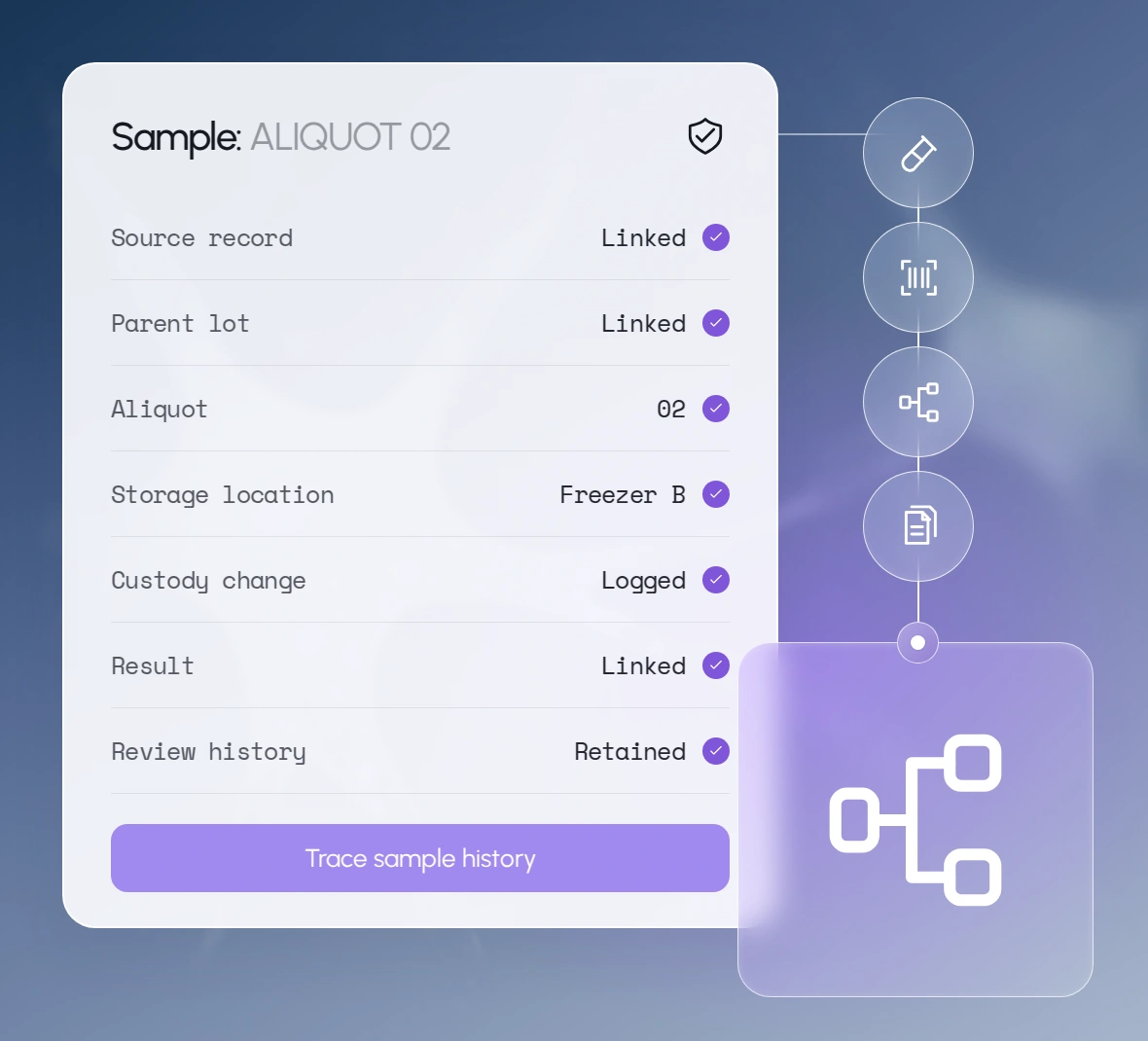
Scispot connects every sample to its source, lot, aliquots, storage location, handoffs, and results as work happens.
Trusted by 200+ life science labs




















How traceability fits your team's daily routine

Morning: Technician
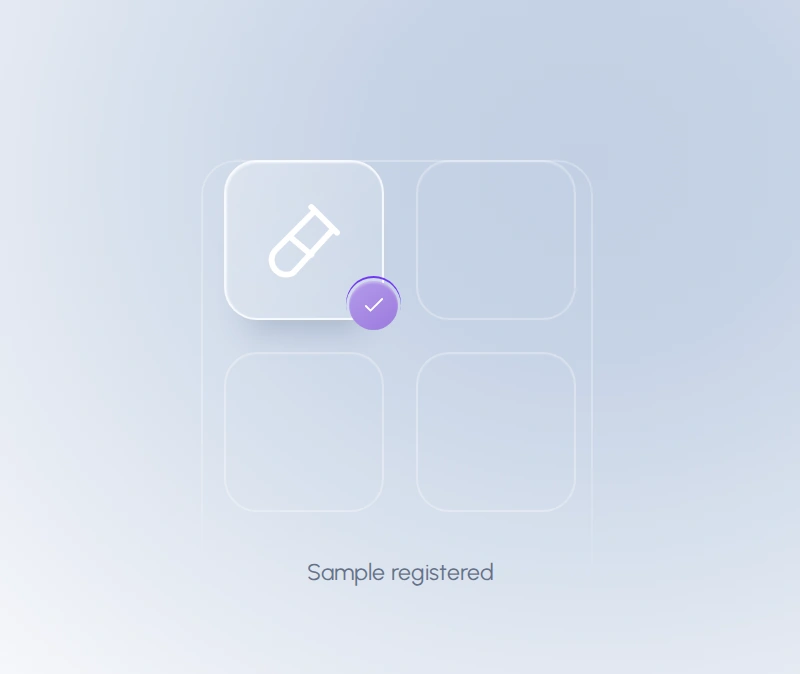
Every incoming sample is registered with full context at intake
Barcodes, sample IDs, source, project, sample type, and storage location are captured once, and partner submissions are matched to existing records automatically.
Midday: Lab scientist
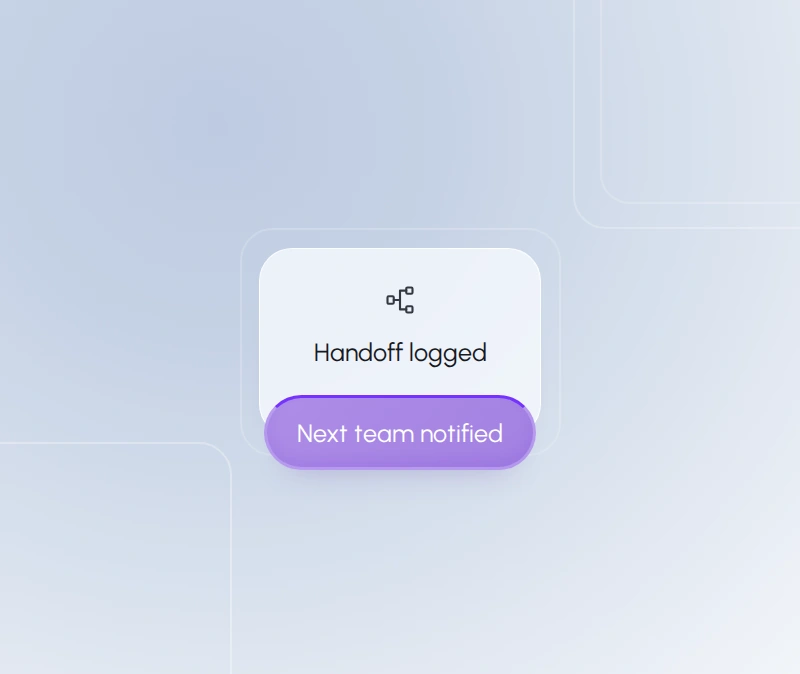
Lineage builds itself as samples move between teams
Aliquots, blocks, slides, and plates inherit parent IDs. Status and location changes are logged, and handoffs notify the next team automatically.
End of day: Lab manager
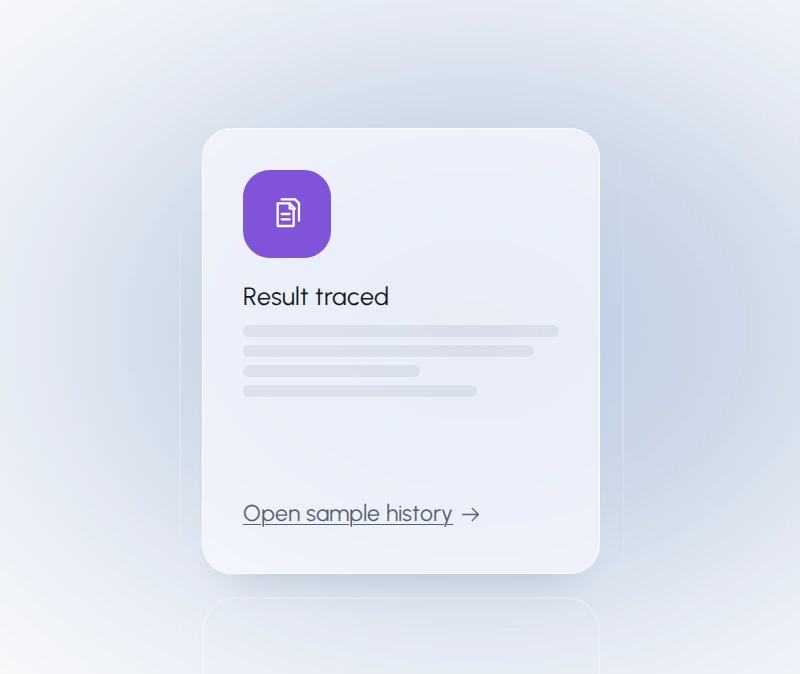
Every result traces back instantly
Source files, calculations, review states, sign-offs, and storage history stay connected to each sample, from intake to reported result.
Everything included, built around how sample-driven labs work today
Keep the LIMS, ELN, request portals, and partner tools that still work. Scispot connects sample records across them or provides native sample management where gaps remain.
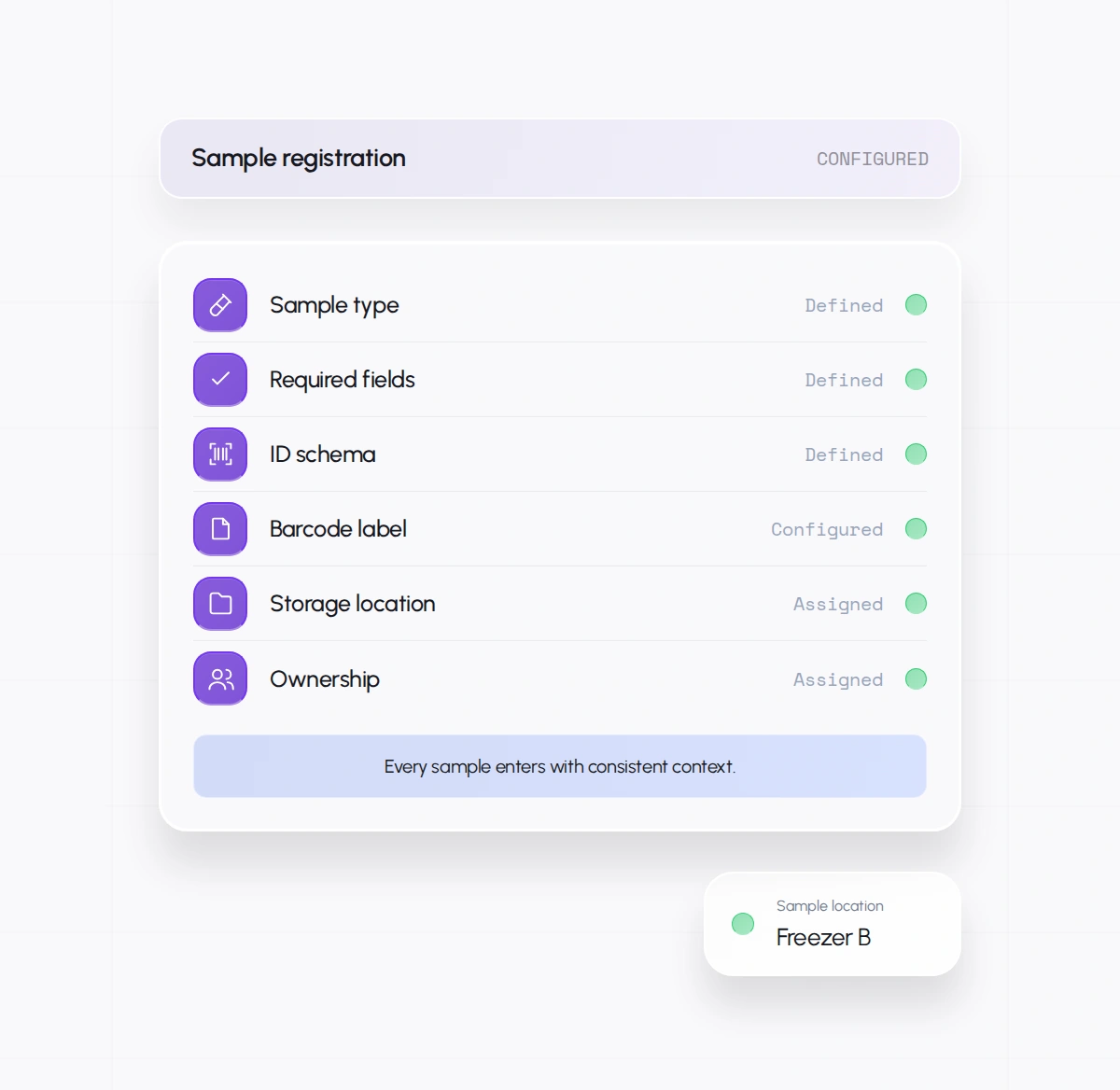
Structured Sample Registration
Define sample types, required fields, ID schemas, barcode labels, storage locations, and ownership so every sample enters with consistent context.
Lineage and Chain of Custody
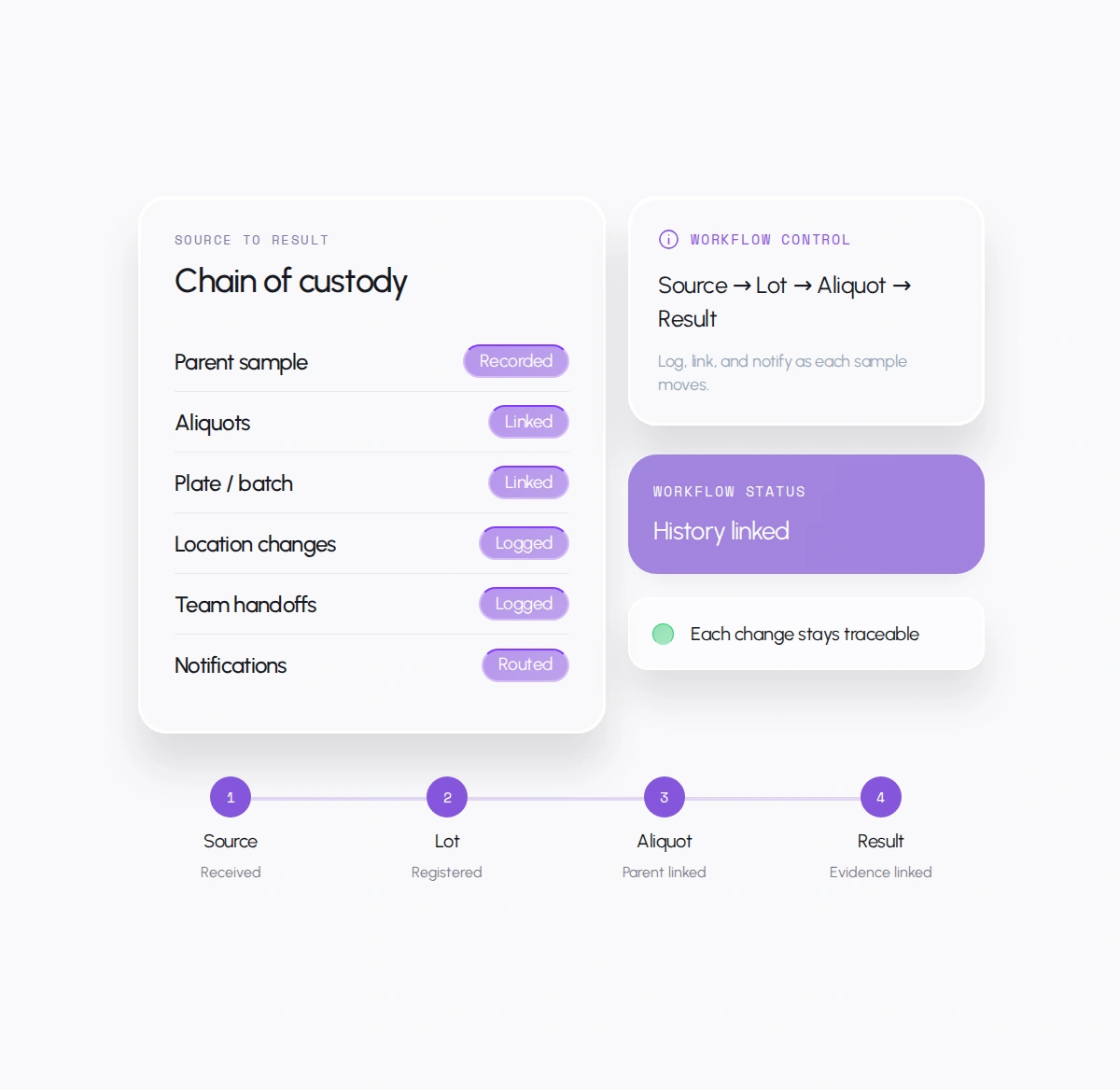
Track source to lot, aliquot, plate, batch, storage, shipment, and result, with parent-child relationships created as samples are processed.
Scispot's default posture is to log, link, and notify. Every status change, location move, and handoff is recorded automatically.
Connected Evidence in Trust Vault
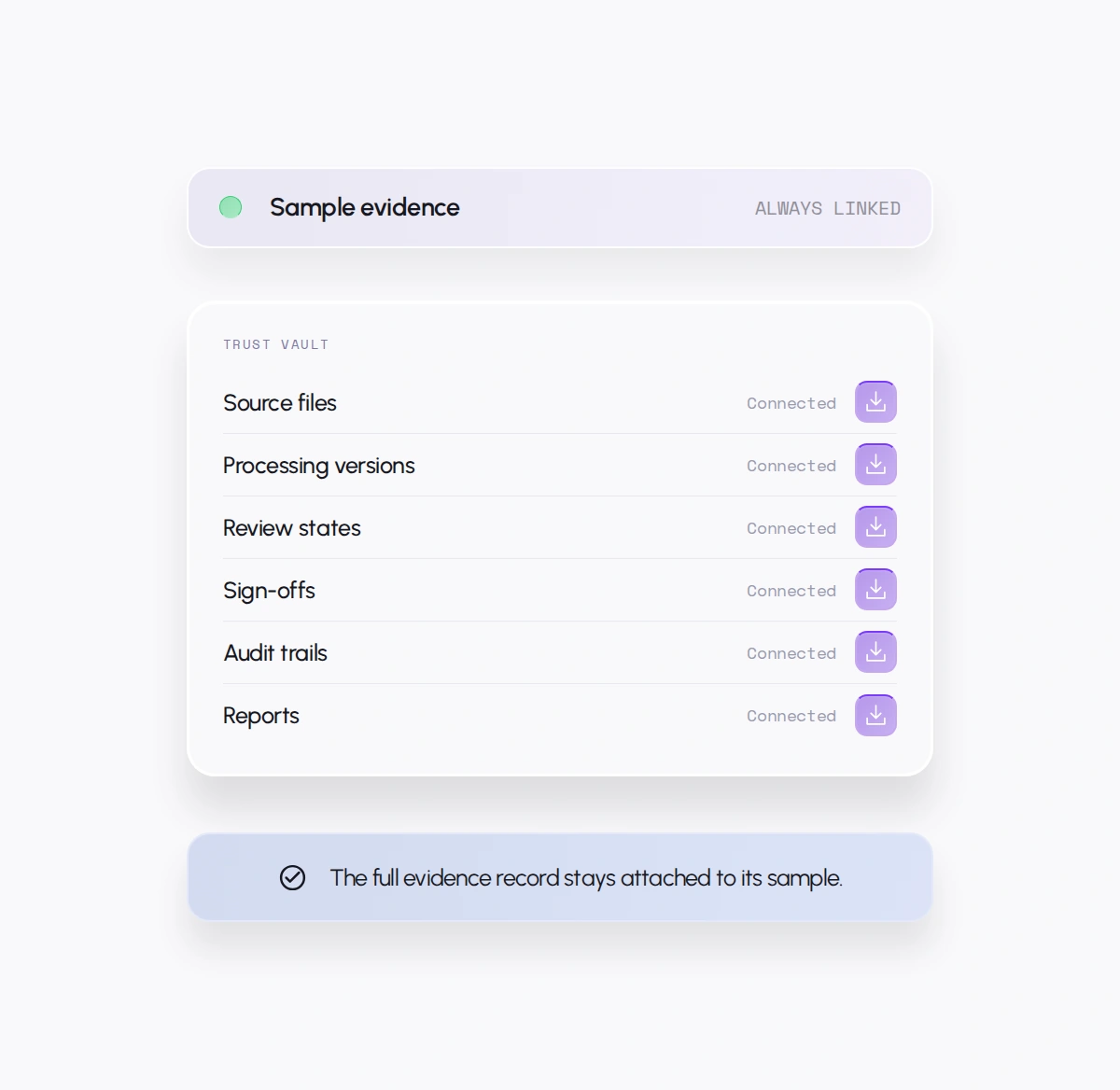
Keep source files, processing versions, review states, sign-offs, audit trails, and reports connected to the samples they describe.
Ask Where any sample is and
what happened since.
It does not replace Quality judgment.



Why growing labs choose Scispot for sample traceability
Lineage is created during the work
Parent-child relationships, custody, and storage history build automatically as samples are received, split, processed, and moved.
Trace samples in minutes
One cell therapy team targeted cutting sample trace time from more than 30 minutes to under five.
Partner and internal data connect
Scispot links internal samples with CRO, partner, and collaborator submissions using consistent composite keys.
Built for handoffs across teams and cores
Location management and status notifications keep every team aligned on who holds each sample.
Specialists model your sample workflow
Scientists and lab software specialists design ID schemas, sample hierarchies, labels, and handoff rules with your team.
Real-World Applications
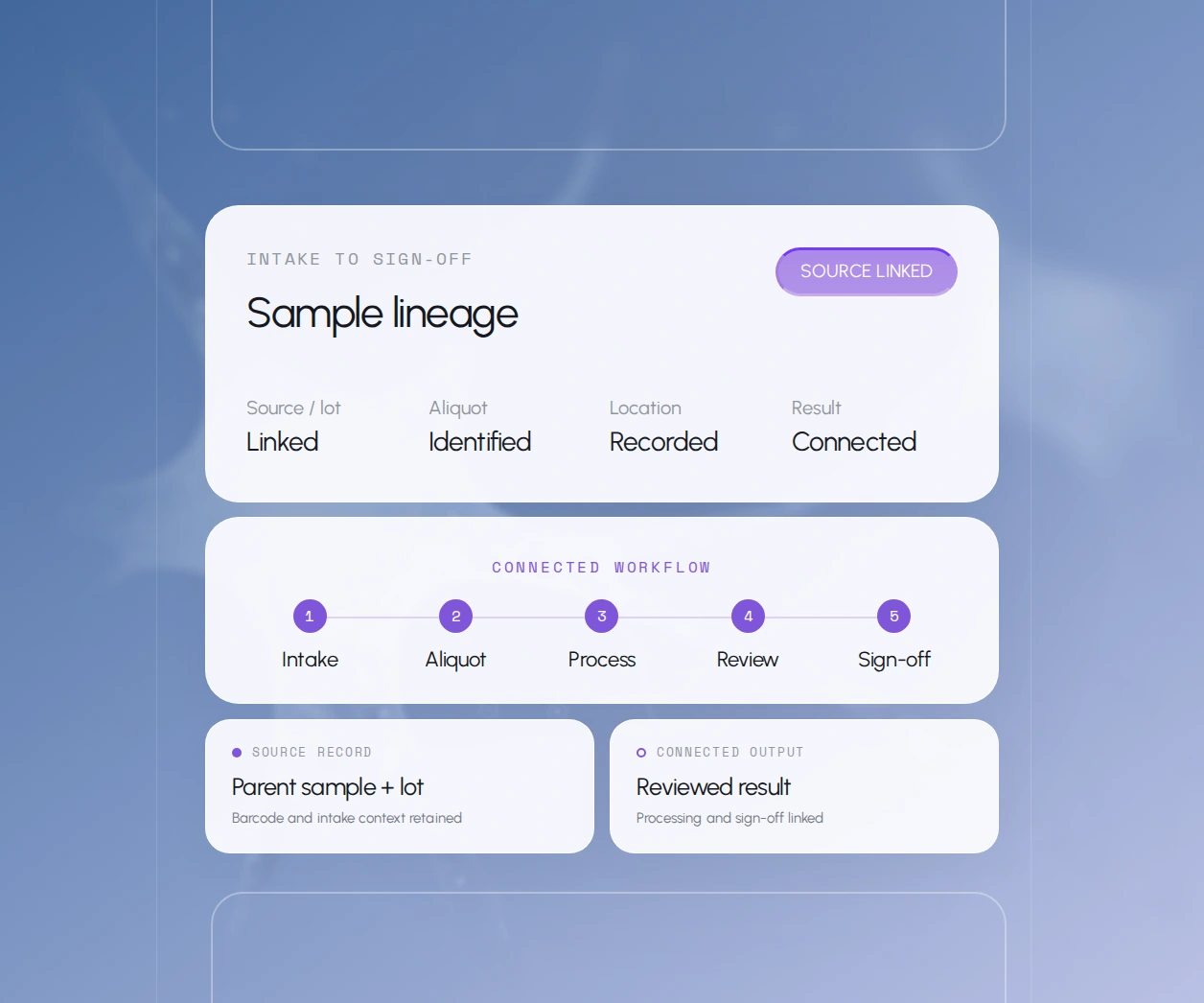
End-to-end sample lineage
Sample intake → Barcode → Aliquot → Storage → Processing → Result → Review → Sign-off
Keep source, lot, aliquots, location, processing, and results connected at every step of the workflow.
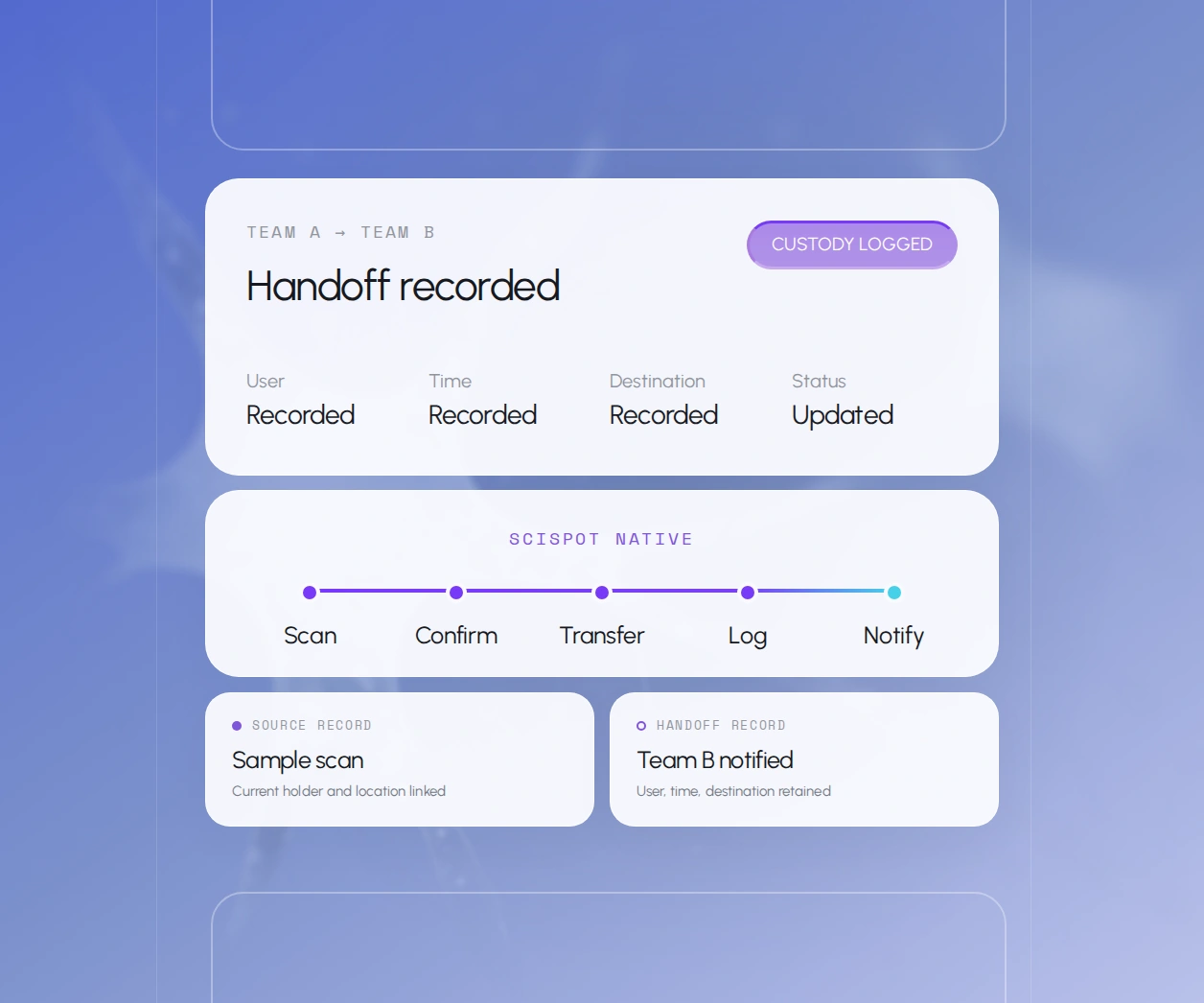
Custody across handoffs
Status and location changes, scans, and handoffs between teams are logged with user, time, and destination.
Every team knows who holds each sample, without manual check-ins, emails, or paper trails.
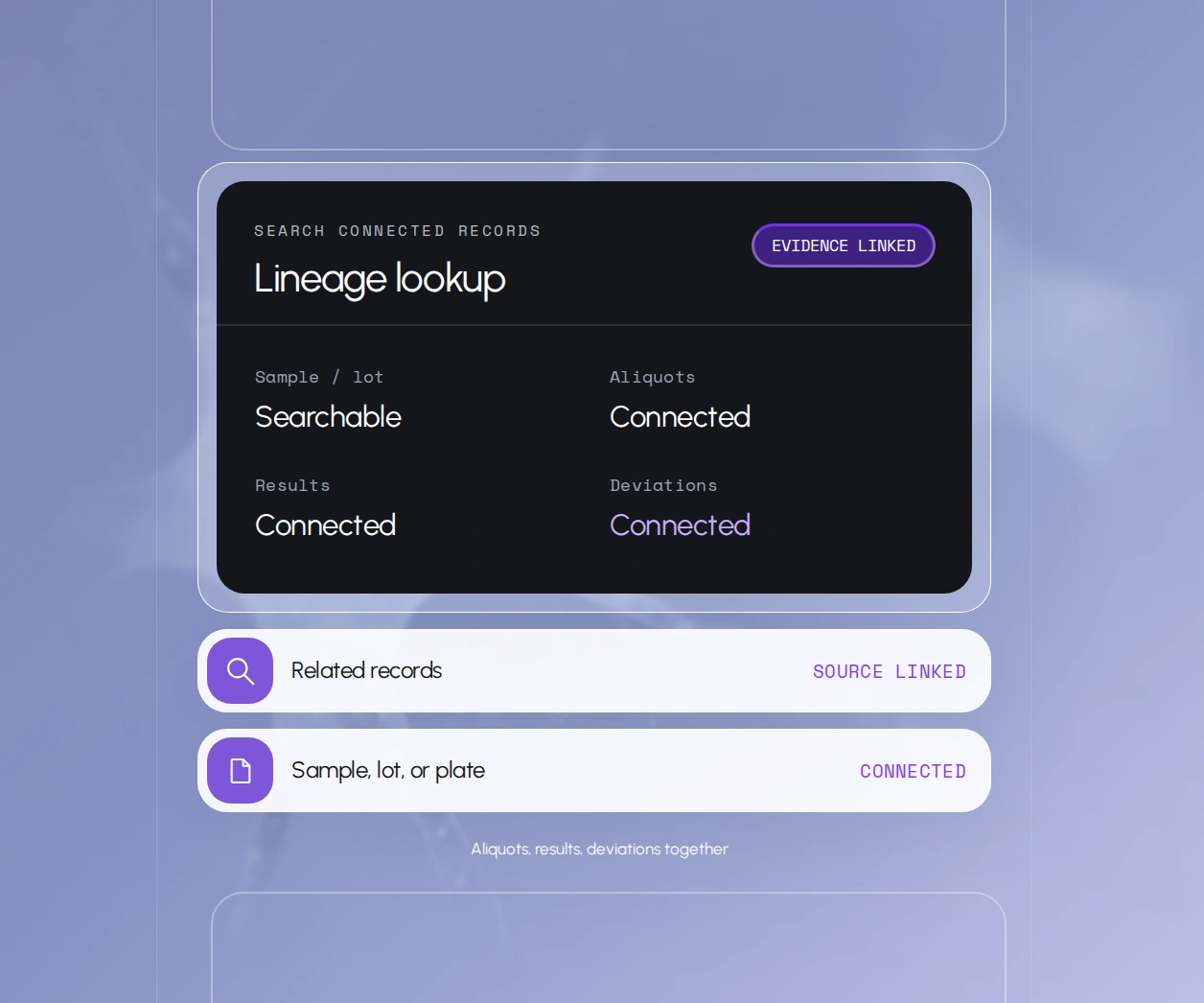
Rapid lineage investigations
Search by sample, lot, patient, plate, batch, or storage location. See every related aliquot, result, and deviation without searching across spreadsheets.
Frequently asked questions
How does Scispot track sample lineage?
Each sample record stores its parent, source, lot, type, and location. When samples are split, pooled, plated, or sectioned, child records inherit IDs and context automatically, so lineage from source material to reported result builds as work happens, not after the fact.
What custody information does Scispot capture?
Scispot can connect user identity, roles, timestamps, barcode scans, status changes, storage locations, handoffs, shipments, source files, processing versions, review states, and electronic sign-offs to each sample and its derivatives.
The exact evidence depends on your sample workflow and connected systems.
Can Scispot link our samples to partner, CRO, or collaborator data?
Yes. Partner files are ingested into standardized records and matched to existing samples using IDs or composite keys, such as vendor sample ID, lot number, and sample date.
Does Scispot support barcodes and labels?
Yes. Scispot supports barcode scanning and label printing, and scans can update sample status and location in real time. Label formats, ID schemas, and printers are configured during implementation to match your workflow.
Can we keep our LIMS or sample spreadsheets?
Yes. Scispot can operate alongside existing systems or replace spreadsheets where they create risk. Historical sample data can be migrated, and live records stay connected to the instruments, partners, and reports that use them.

What labs say















Let's map your sample lineage
FAIR data • pipelines • automation
Instruments • ELN/LIMS/SDMS • 200+ connectors
FAIR data • pipelines • automation
Instruments • ELN/LIMS/SDMS • 200+ connectors