

TL;DR
- Lab inventory management software replaces spreadsheet stock lists with identity, location, lots, and usage context for lab materials.
- Useful capabilities include barcodes, real-time counts, reorder alerts, audit trails, and visibility across freezers and benches.
- Generic warehouse apps often miss experiment links, so materials used in a run never appear on the scientific record.
- Scispot ties inventory to experiments, instruments, and analytics so teams see availability, origin, and use in one lab operating system.
Lab inventory management software is the system labs use instead of spreadsheets to know what is on the shelf, where it came from, and what it was used for. This 2026 guide is a category comparison of laboratory inventory platforms, distinct from the free-tools article. Scispot is described as connecting automated tracking, barcodes, real-time stock monitoring, and links to instruments and experiments inside a lab operating system. Efficient inventory supports availability, waste control, and traceability. Look for alerts, digital audit trails, and visibility across freezers, benches, and suppliers. Generic stock apps rarely keep that scientific context.
Barcodes, alerts, and experiment links
Managing inventory in a laboratory shouldn't be this hard. Yet, many labs still waste hours updating spreadsheets, tracking samples manually, and juggling disconnected systems. That's where Scispot comes in - a strong option for modern labs looking to digitize and scale their inventory operations.
Scispot brings everything together: automated tracking, barcode integration, real-time stock monitoring, and seamless connections to your instruments and experiments. It's built for biotech, diagnostics, and R&D teams that need flexibility, speed, and compliance - all in one place.
Unlike generic inventory apps, Scispot is part of a complete Lab Operating System that connects inventory with experiments and instruments. It connects your inventory data with experiments, instruments, and analytics, so you always know what's available, where it came from, and what it's used for.
Why Laboratory Inventory Management Software Matters
Efficient inventory management is the foundation of smooth lab operations. It ensures that materials are available when needed, can reduce avoidable overstock, and prevents workflow interruptions.
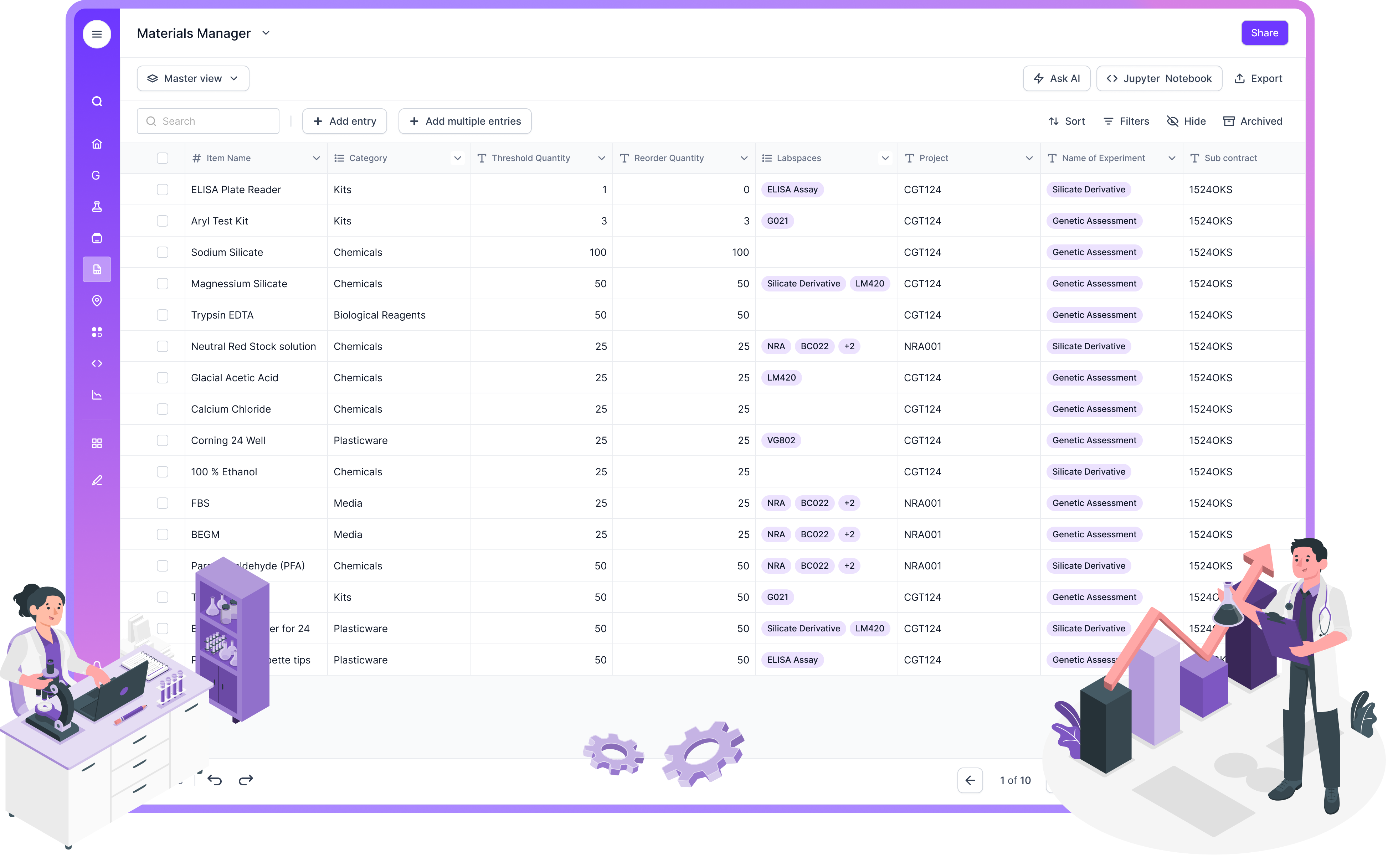
Scispot simplifies this with automated alerts, smart reordering, and digital audit trails. You get real-time visibility across every freezer, bench, and supplier - supporting compliance workflows and traceability without the busywork.
Key benefits include:
- Real-time, consistent tracking
- Smart automation to reduce waste
- Compliance-ready documentation
With Scispot, labs finally move from manual tracking to intelligent operations - where every tube, reagent, and plate is accounted for automatically
Key Features to Look for in Lab Inventory Software
When choosing inventory software, you want something that doesn't just track your materials - it should run your lab. That's exactly what Scispot does.
Scispot isn't another siloed tool; it's an AI-ready lab operating system that connects your inventory, experiments, and instruments. You can barcode every reagent, automate restocking, and see real-time usage data directly linked to ongoing experiments. Everything stays connected - no more spreadsheets or guesswork.
What to look for (and what Scispot delivers):
- Real-time inventory tracking: Every sample, reagent, or consumable is instantly updated.
- Instrument integration: Data flows automatically from balances, liquid handlers, and analyzers.
- Smart automation: Built-in triggers for reorders, QC checks, and material usage tracking.
- Configurable data models: Design your own structure - perfect for biotech, diagnostics, or CROs.
- Compliance & audit trails: ISO 17025 and 21 CFR Part 11-aligned tracking built in.
- AI-powered analytics: Surface insights about consumption, cost, and efficiency.
Scispot turns what used to be manual tracking into a self-updating, auditable system that fits naturally into your lab's daily flow. It's the difference between managing inventory and orchestrating your entire lab.
A good system supports regulatory compliance and minimizes manual effort. This investment ultimately saves costs and enhances productivity.
Top Laboratory Inventory Management Software Solutions
Choosing the right laboratory inventory management software requires careful evaluation. Each software solution offers unique features tailored for various laboratory needs. Here, we explore five popular options, each providing distinct advantages.
Top software solutions include:
- Scispot (Lab Inventory Module)
- Quartzy
- SciNote
- LabArchives (Inventory Module)
- LabCollector

1. Scispot Inventory
Scispot is built for modern biotech, diagnostics, and R&D labs that want more than just inventory tracking - they want a connected, automated lab. It goes beyond spreadsheets and static databases by linking your inventory directly with experiments, workflows, and instruments.
With Scispot, every reagent, plate, or consumable is traceable from purchase to experiment. It automatically records usage, updates stock in real time, and even connects to instruments and ordering systems. The platform is API-first and ready to integrate with your entire digital ecosystem - from balances and liquid handlers to analytics dashboards.
It's not just inventory management; it's part of a complete Lab Operating System that runs your lab from experiment design to execution. Scispot helps teams save time, stay compliant, and scale operations without chaos
Ideal for: Labs that want one connected system for inventory, experiments, and automation - without juggling multiple tools.
2. Quartzy
Quartzy simplifies lab management with a user-friendly design. It offers inventory management and order requests.
May suit labs needing seamless communication and simple order tracking. Quartzy also integrates well with other software solutions. Some ELN and LIMS platforms, including Scispot, can connect with Quartzy
3. SciNote
SciNote focuses on collaboration and compliance. Its features support electronic lab notebooks and data management.
Perfect for research labs requiring extensive documentation. SciNote's open-source model provides flexibility for customization.
4. LabArchives Inventory
LabArchives Inventory provides organization tools. It supports collaborative inventory tracking and record-keeping.
Designed for labs that prioritize organization. It simplifies data access for efficient laboratory operations.
5. LabCollector
LabCollector excels in lab asset management. It offers extensive modules for tracking diverse lab inventory.
Ideal for labs with complex inventory needs. It ensures efficiency by streamlining processes and providing complete visibility.
Free and Entry-Level Inventory Options
Some vendors offer trials, limited tiers, academic programs, or open-source components, but availability and terms change. Buyers should verify current eligibility, limits, support, hosting, security, export, and upgrade conditions directly with each provider. A no-cost entry point is useful only when it supports the lab's required traceability and operating model.
Choosing the Right Solution for Your Lab
Selecting the best laboratory inventory management software requires careful thought. Each lab has unique demands, so matching features to these needs is crucial.
Consider these factors when evaluating software options:
- Lab Size: Software should scale with your lab's operations.
- Budget Constraints: Balance cost against functionality.
- Compliance Needs: Ensure the software meets regulatory standards.
Make sure to evaluate these aspects thoroughly. Proper alignment with your lab's goals and processes ensures effective inventory management. Finding the perfect fit boosts efficiency and accuracy.
Custom and Automated Laboratory Inventory Management Software Development Services
Custom solutions provide tailored features specific to a lab's workflow. By opting for custom software, labs can address unique challenges effectively.
Consider these benefits of custom and automated solutions:
- Personalized Features: Meet unique laboratory needs.
- Automated Tasks: Reduce manual errors.
- Enhanced Integration: Seamlessly connect with existing systems.
Investing in tailored solutions can significantly enhance operational efficiency. When off-the-shelf software lacks certain capabilities, a custom approach delivers more robust results.
Final Thought
Choosing the right laboratory inventory management software can improve how your lab runs. It's not just about tracking supplies - it's about creating a connected, automated workflow that saves time and reduces avoidable errors. Scispot supports that transition. It brings your inventory, instruments, and experiments together in one place, so your team can focus on science, not spreadsheets. For labs serious about efficiency and growth, Scispot is a strong option for labs serious about efficiency and growth.
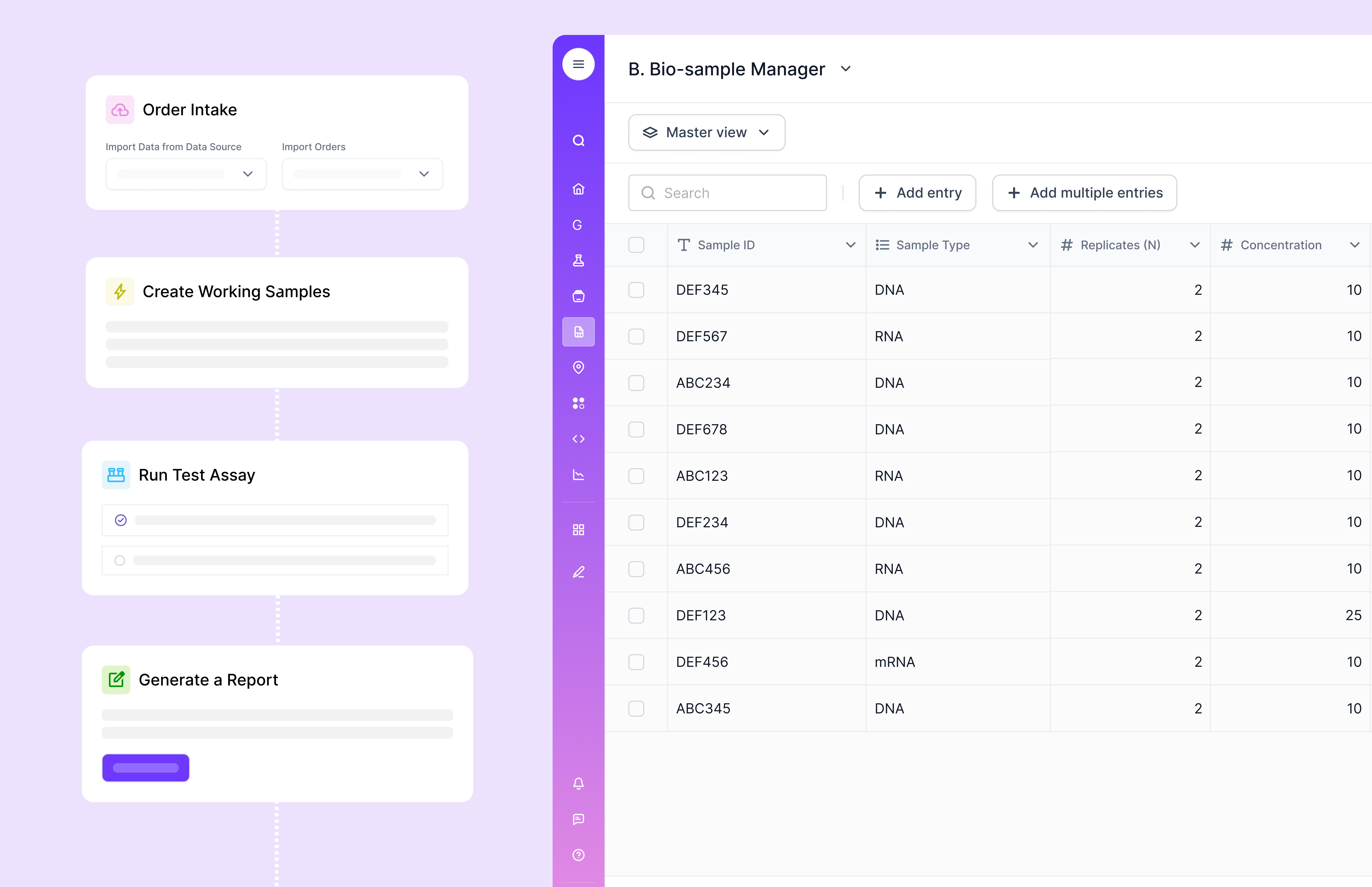
Scispot is more than another lab software tool. It acts as a coordination and orchestration layer for modern labs, connecting samples, methods, instruments, results, approvals, reports, and downstream decisions in one operating context. Labs can use Scispot's native apps across LIMS, ELN, SDMS, inventory, and quality workflows, or connect Scispot to the systems they already use. This is how Scispot helps build a Digital Brain for the lab: a connected, traceable, automation-ready, and AI-ready foundation where scientific work can move faster without losing control.
Start with the inventory workflow, not the feature list
A laboratory inventory project usually begins with a familiar operational problem: a scientist reaches for a reagent and discovers that the spreadsheet count does not match the shelf. The missing item delays an experiment, starts an email thread, and forces someone to reconstruct who used the last container. Software should remove that uncertainty by making receipt, location, status, reservation, usage, and disposal part of one traceable workflow. Before comparing vendors, map how materials enter the lab, how they move, which events change quantity or status, and which records must be reviewed. That map reveals whether the lab needs basic stock control or a connected platform that coordinates inventory with experiments, instruments, quality, and purchasing.
Evaluate configuration and daily adoption
Inventory records stay reliable only when scientists can update them during normal work. Buyers should test barcode creation, mobile or scanner workflows, bulk updates, freezer navigation, aliquot relationships, unit conversions, and low-stock notifications with realistic examples. Ask each vendor to configure a representative material type and a multi-step usage workflow during the evaluation. The exercise should show who can change fields, rules, labels, and permissions after launch. A system that looks polished in a generic demonstration may still create administrative work if routine changes require vendor services. Adoption also depends on search speed, clear location paths, and the ability to correct mistakes without weakening the audit history.
Connect inventory to the scientific record
The practical value of inventory software increases when a material record connects to the work that consumed it. A scientist should be able to move from a sample or reagent to the relevant experiment, method, instrument output, result, and approval context. That connection supports root-cause investigations, repeatability, and planning without forcing teams to reconcile separate identifiers. Labs should ask how the platform handles parent-child samples, lots, batches, preparations, plates, and derived materials. They should also evaluate APIs and integrations for purchasing, instruments, analytics, and existing ELN or LIMS systems. The goal is not integration for its own sake. It is a dependable flow of context across the lab.
Third-party product and company names are used for identification only. Scispot is not affiliated with, endorsed by, or sponsored by the vendors mentioned. Product details, pricing, and implementation timelines may change, so buyers should verify information directly with each vendor.