



TL;DR
- Bioinformatics consulting companies help life sciences teams analyze genomic and other biological datasets, develop computational pipelines, and turn research data into scientific insights.
- Providers differ: some specialize in omics analysis and biological interpretation, while others focus on cloud infrastructure, scientific computing, or large-scale data platforms.
- Excelra, BioTeam, The Bioinformatics CRO, AccuraScience, Strand Life Sciences, CD Genomics, and DNAnexus offer different types of bioinformatics expertise.
- The right partner depends on your data modalities, research objectives, internal capabilities, infrastructure, and need for ongoing support.
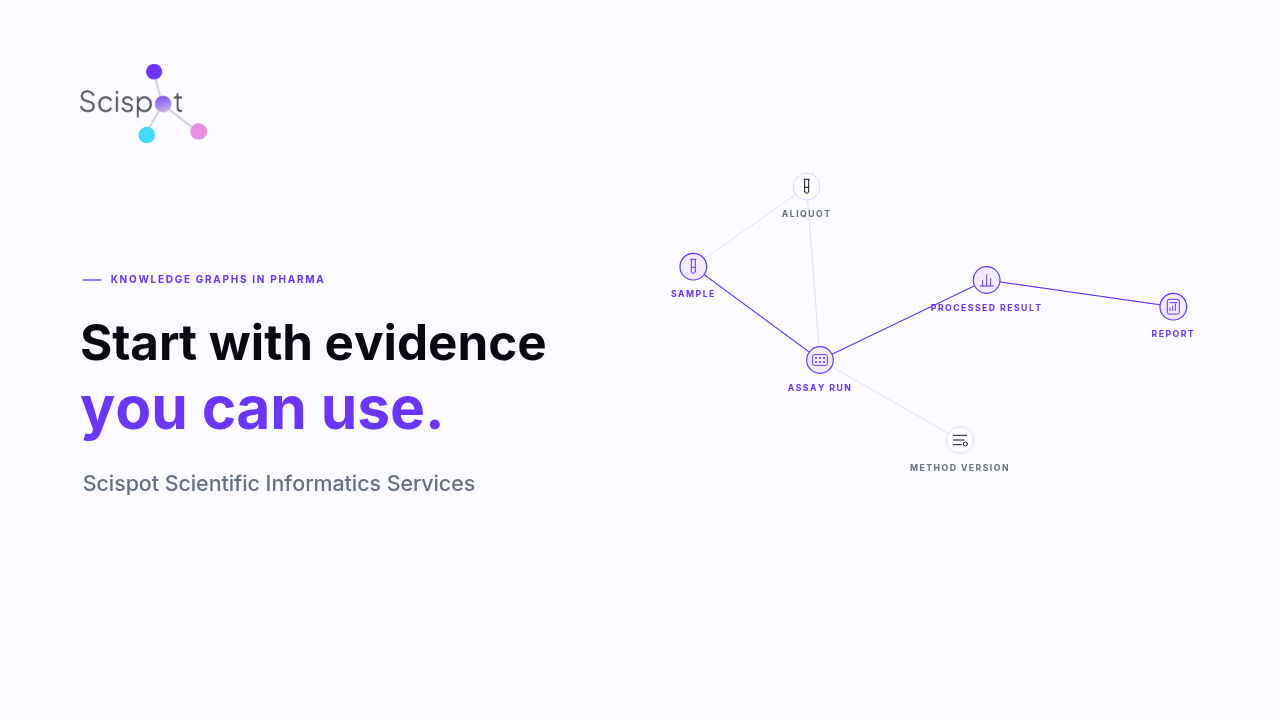
Need to connect bioinformatics outputs with your existing lab systems? Explore Scispot's scientific informatics services to see how instruments, scientific data, and workflows can work together.
Bioinformatics has become essential to modern life sciences research. Genomics, transcriptomics, proteomics, and other high-throughput experiments generate datasets that require specialized computational methods and biological interpretation.
However, many biotech and pharmaceutical organizations do not have all the expertise or infrastructure needed to manage these projects internally. They may need help developing NGS pipelines, integrating multi-omics datasets, identifying biomarkers, or preparing research data for downstream analysis.
Bioinformatics consulting companies provide access to these capabilities through project-based analysis, specialist teams, pipeline development, and scientific data services.
Below are 7 companies worth evaluating, along with the types of projects each is positioned to support.
1. Excelra
Best for: Bioinformatics, multi-omics analysis, and computational support for pharmaceutical R&D.
Excelra provides scientific data, analytics, and informatics services to pharmaceutical and biotechnology organizations. Its bioinformatics capabilities span multi-omics analysis, customized data-analysis pipelines, systems biology, predictive modeling, and scientific data visualization.
Its work supports research activities such as target identification, biomarker discovery, patient stratification, drug response analysis, and disease landscape assessment.
Excelra is also relevant for organizations that need bioinformatics alongside broader scientific data engineering and drug discovery analytics capabilities.
Services to evaluate:
- Multi-omics data analysis and interpretation
- Custom bioinformatics pipelines
- Target and disease landscape analysis
- Systems biology and predictive modeling
- Biomarker discovery and patient stratification
What to consider: Excelra has a broad scientific informatics portfolio. Buyers should clarify whether the engagement is focused on a defined bioinformatics analysis project, a longer-term R&D data program, or a combination of both.
Excelra announced in October 2026 that the bioinformatics team and services of Fios Genomics had moved into its organization, adding further omics analysis and scientific consulting capabilities.
2. BioTeam
Best for: Bioinformatics infrastructure, scientific computing, and cloud-based research environments.
BioTeam is a life sciences IT consulting firm working with pharmaceutical companies, biotech organizations, academic medical centers, and research institutions.
Its bioinformatics consulting work extends beyond individual data-analysis projects. The company helps organizations design and modernize the infrastructure that supports computational biology and large-scale research.
This can be useful when an organization has bioinformatics expertise but needs better cloud architecture, scalable computing resources, workflow automation, or data governance.
Services to evaluate:
- Bioinformatics infrastructure and technology assessments
- Cloud and high-performance computing environments
- Pipeline development and modernization
- Scientific data engineering and governance
- Workflow automation using tools such as Nextflow and Snakemake
What to consider: BioTeam is particularly relevant when the challenge involves the technical environment supporting bioinformatics, not just interpreting a particular sequencing dataset.
3. The Bioinformatics CRO
Best for: Outsourced bioinformatics analysis and specialist computational biology support.
The Bioinformatics CRO provides project-based contract research, consulting, and flexible bioinformatics support for pharmaceutical companies, biotechnology organizations, and academic researchers.
Its model can suit teams that need specialist expertise without hiring a permanent bioinformatics department. Organizations can engage the company for a defined analysis, receive support alongside an internal team, or use its services for ongoing research requirements.
Its capabilities cover several areas of computational biology and biological data analysis.
Services to evaluate:
- Transcriptomics and gene expression analysis
- Epigenomics and single-cell analysis
- Whole-genome and whole-exome sequencing analysis
- Population and statistical genetics
- Network analysis and integrative systems biology
- Target diligence and exploratory discovery research
What to consider: This provider is worth evaluating when a project needs hands-on scientific analysis and interpretation. Discuss the expected deliverables, reproducibility requirements, access to analysis code, intellectual property ownership, and publication support before starting.
4. AccuraScience
Best for: Customized bioinformatics and computational biology analysis.
AccuraScience provides customized bioinformatics and computational biology services for academic and industry research teams.
Its stated capabilities cover a wide range of biological data types, making it relevant for organizations with research questions that do not fit a standard analysis package.
The company emphasizes direct access to experienced scientists and tailored analysis rather than relying exclusively on predefined workflows.
Services to evaluate:
- Genomics and transcriptomics analysis
- Epigenomics and single-cell analysis
- Spatial transcriptomics
- Multi-omics integration
- Microbiome and proteomics analysis
- GWAS, EWAS, and TWAS
- Machine learning applications in biological research
What to consider: AccuraScience may be a good fit when the scientific question requires a customized analytical approach. Ask how the team handles method selection, quality control, reproducibility, and interpretation of results.
5. Strand Life Sciences
Best for: Genomics, precision medicine, biomarker discovery, and omics data analysis.
Strand Life Sciences is a genomics and bioinformatics company with capabilities across data generation, data curation, bioinformatics analysis, and genomics software development.
Its work is relevant to pharmaceutical organizations conducting target discovery, translational research, and clinical research. Strand also supports single-cell and spatial transcriptomics data generation and analysis.
Beyond individual analysis projects, the company develops software applications for managing and analyzing omics data and associated metadata.
Services to evaluate:
- Genomics and bioinformatics analysis
- Single-cell and spatial transcriptomics
- Omics data curation and annotation
- Biomarker and target discovery applications
- Genomics software development
What to consider: Strand is worth evaluating when a project combines genomics data generation, computational analysis, and software-supported research workflows. Clarify whether the engagement is primarily a laboratory service, a bioinformatics project, or a software development requirement.
6. CD Genomics
Best for: NGS data analysis, sequencing-related bioinformatics, and multi-omics research.
CD Genomics provides sequencing and bioinformatics services for research organizations and industry customers. Its bioinformatics offering supports the analysis of data generated through next-generation sequencing, long-read sequencing, genotyping, and microarray experiments.
The company offers customized analysis workflows based on the sequencing platform, dataset, and research objective.
This can be relevant for teams that want sequencing-related services and downstream computational analysis through a single provider.
Services to evaluate:
- Whole-genome and whole-exome sequencing analysis
- Transcriptomics and gene expression analysis
- Metagenomics
- Epigenomics
- Long-read sequencing analysis
- Microarray data analysis
- Customized bioinformatics workflows
What to consider: Confirm which sequencing platforms and analysis methods are supported for your project. Also establish whether the deliverable includes raw data processing only, biological interpretation, or publication-ready reports.
7. DNAnexus
Best for: Large-scale omics data management, cloud-based bioinformatics, and enterprise research infrastructure.
DNAnexus combines a cloud-based omics data platform with professional and managed services for organizations working with large and complex biological datasets.
Its services include platform implementation, pipeline migration, bioinformatics workflow development, training, and ongoing operational support.
This makes it relevant for pharmaceutical companies, diagnostics organizations, and research programs that need to scale computational workloads across teams or locations.
Services to evaluate:
- Bioinformatics pipeline development and migration
- Cloud-based omics infrastructure
- Professional and managed services
- AI/ML development and deployment
- Data integration and harmonization
- GxP-related platform readiness support
What to consider: DNAnexus is particularly relevant when infrastructure and large-scale data operations are central to the project. Evaluate platform fit, data portability, cloud costs, security requirements, and the level of ongoing operational support included.
How to Choose a Bioinformatics Consulting Company in 2027
The right provider depends on more than its list of technologies. A company that specializes in sequencing analysis may not be the best choice for cloud infrastructure modernization or enterprise scientific data integration.
Evaluate potential partners across these areas:
1. Match expertise to your data
Start with the biological data involved in your project. Determine whether the provider has demonstrated experience with the relevant modalities, such as:
- Genomics and whole-genome sequencing
- Bulk and single-cell transcriptomics
- Proteomics and metabolomics
- Epigenomics
- Spatial transcriptomics
- Multi-omics datasets
Ask for examples of comparable projects rather than relying only on a broad capabilities list.
2. Evaluate analytical methods and reproducibility
A useful bioinformatics engagement should produce results that your scientific team can understand, review, and reproduce.
Discuss the analytical methods, quality-control procedures, software versions, pipeline documentation, statistical assumptions, and interpretation process.
Where appropriate, request access to scripts, workflow definitions, and analysis parameters.
3. Understand the infrastructure requirements
Some projects need only a defined analysis and report. Others require cloud computing, workflow orchestration, secure data storage, or integration with existing research systems.
Clarify who will manage infrastructure, pipeline execution, access controls, maintenance, and future updates.
4. Confirm data ownership and security
Before sharing sensitive research or patient-related datasets, review the provider's security practices and contractual terms.
Clarify:
- Data ownership and intellectual property rights
- Data access and retention policies
- Encryption and access controls
- Data residency requirements
- Confidentiality and subcontracting arrangements
- Responsibilities for regulated or clinical data
5. Plan for what happens after analysis
Bioinformatics is rarely an isolated activity. Research teams may need to connect analysis outputs with sample records, experimental metadata, instruments, LIMS, ELN, data warehouses, and downstream analytics.
Consider whether the provider can support ongoing pipeline maintenance, data integration, documentation, and operational handover.
Where Scispot Fits in a Bioinformatics Data Strategy
Bioinformatics consulting helps organizations analyze biological data. But analysis is only one part of the research data lifecycle.
Many laboratories still manage samples, experimental records, instruments, analysis outputs, and research metadata across separate systems. This fragmentation can make it difficult to reuse data, trace results back to their experimental context, or prepare consistent datasets for advanced analytics and AI.
Scispot approaches this challenge through scientific informatics services and its AI-native Lab Operating System.
Rather than requiring a laboratory to replace every existing application, Scispot can work alongside its current LIMS, ELN, instruments, and cloud platforms.
Its capabilities include:
- GLUE: Connects instruments, laboratory applications, and downstream systems.
- Harmonize: Helps standardize scientific data, metadata, and identifiers.
- Orchestrate: Coordinates workflows across connected laboratory systems.
- Scientific informatics services: Supports LIMS and ELN consulting, data migration, integration, data integrity, and laboratory workflow automation.
For teams building a bioinformatics or AI-ready data strategy, this can help address the operational layer around scientific data: how it is captured, connected, governed, and made available for downstream use.
Book a Consultation call with Scispot to see how your existing laboratory systems and data workflows can work together.