Sample Management and LIMS Systems
Sample management is a critical aspect of laboratory operations. It ensures the integrity and traceability of samples. Proper management is essential for accurate research outcomes.
Laboratories handle numerous samples daily. This requires efficient systems for organization and documentation. Without these, errors and inefficiencies can occur.
LIMS, or Laboratory Information Management Systems, play a vital role. They streamline sample handling and processing. This enhances both efficiency and accuracy in labs.
Effective sample management involves several key components. These include handling, storage, and tracking. Each step is crucial for maintaining sample quality.
In this guide, we explore the importance of sample management. We also discuss how LIMS systems can transform lab operations.
What is Sample Management?
Sample management involves the comprehensive handling of samples within a laboratory. It encompasses several processes that ensure samples remain viable and accessible. This is foundational for maintaining data accuracy and reliability.
Key processes in sample management include:
- Collection: Gathering samples properly.
- Labeling: Accurate and clear identification.
- Storage: Keeping samples in controlled environments.
- Tracking: Monitoring sample locations and status.
.webp)
These processes are crucial for efficient lab operations. Proper management minimizes errors and contamination risks. It is also essential for complying with regulatory standards. Good sample management supports effective research and reliable results.
Key Components of Effective Sample Management
Effective sample management is pivotal for ensuring sample integrity. It involves multiple components working in harmony. Each component is designed to streamline and secure sample workflows.
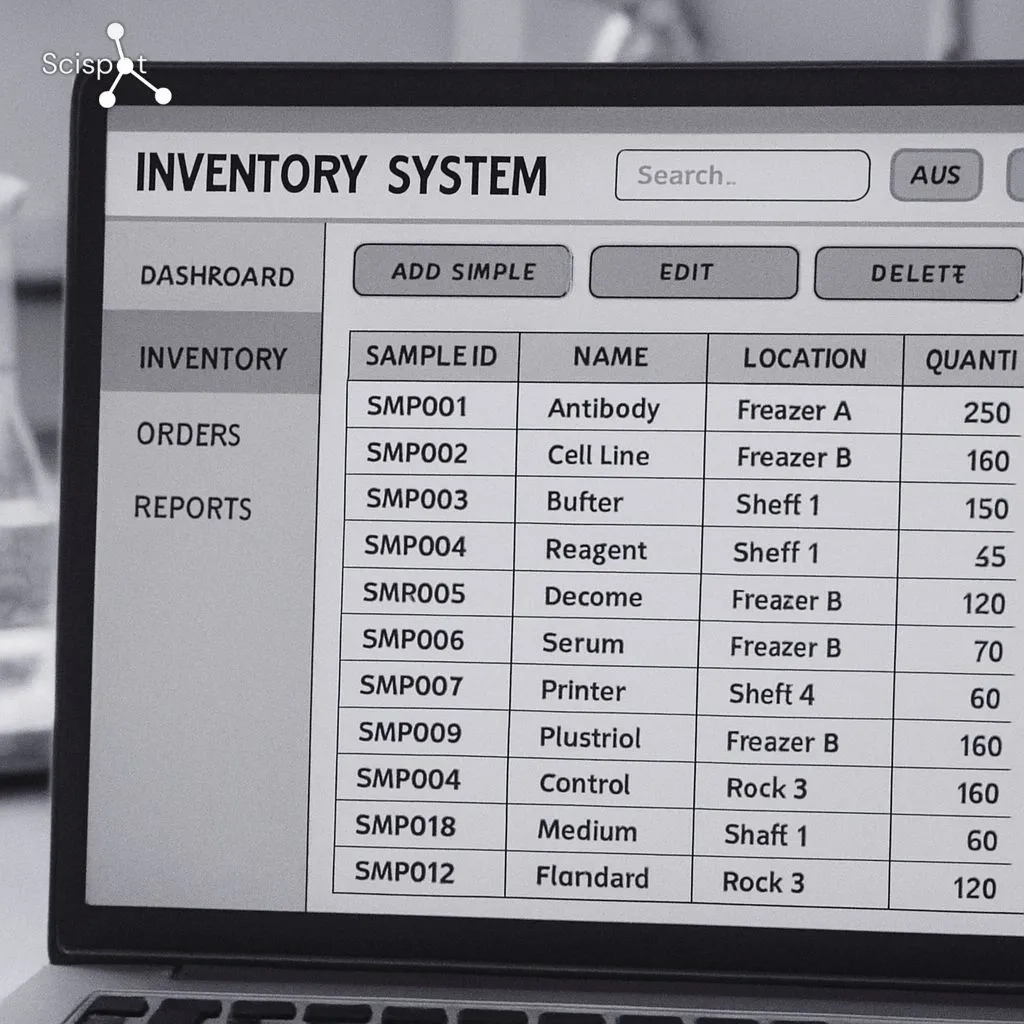
Organizational structure within the lab is essential. Proper sample organization leads to efficient operations and reduces the risk of sample loss. Having a clear inventory system helps manage resources effectively.
Documentation plays a critical role. Accurate sample documentation is crucial for traceability and regulatory compliance. It also aids in maintaining transparent records for future reference.
Technology integration enhances sample management. Using specialized software can automate many manual tasks. This reduces human error and improves efficiency in labs. Collaboration across these elements ensures a robust sample management system.
Challenges in Lab Sample Management
Lab sample management presents unique challenges. One of the main issues is handling large volumes of samples. This can lead to organizational chaos if not managed properly.
Maintaining sample integrity is crucial yet difficult. Environmental factors such as temperature and humidity must be meticulously controlled. Failure to do so can compromise sample quality.
Another challenge is ensuring data accuracy. Manual data entry is prone to errors and inconsistencies. Implementing automated systems can help, but they come with their own set of challenges. Addressing these challenges requires strategic planning and effective use of technology.
- Managing large volumes of samples
- Controlling environmental conditions
- Ensuring data accuracy and consistency

The Role of LIMS in Sample Management
LIMS plays a pivotal role in managing lab samples effectively. It offers a centralized platform for organizing and storing sample data. This can enhance operational efficiency and data accuracy in laboratories.
A significant benefit of LIMS is automation. It reduces the reliance on manual processes, decreasing the likelihood of human error. This leads to more reliable sample documentation and sample tracking.
Furthermore, LIMS facilitates streamlined communication among lab personnel. This ensures everyone is on the same page regarding sample processes and management decisions. A well-implemented LIMS can boost collaboration and data sharing across different departments.
- Centralized data storage
- Automated processes
- Enhanced communication
Scispot: Unified Sample Management With Barcode Traceability, Automation, and Integrations
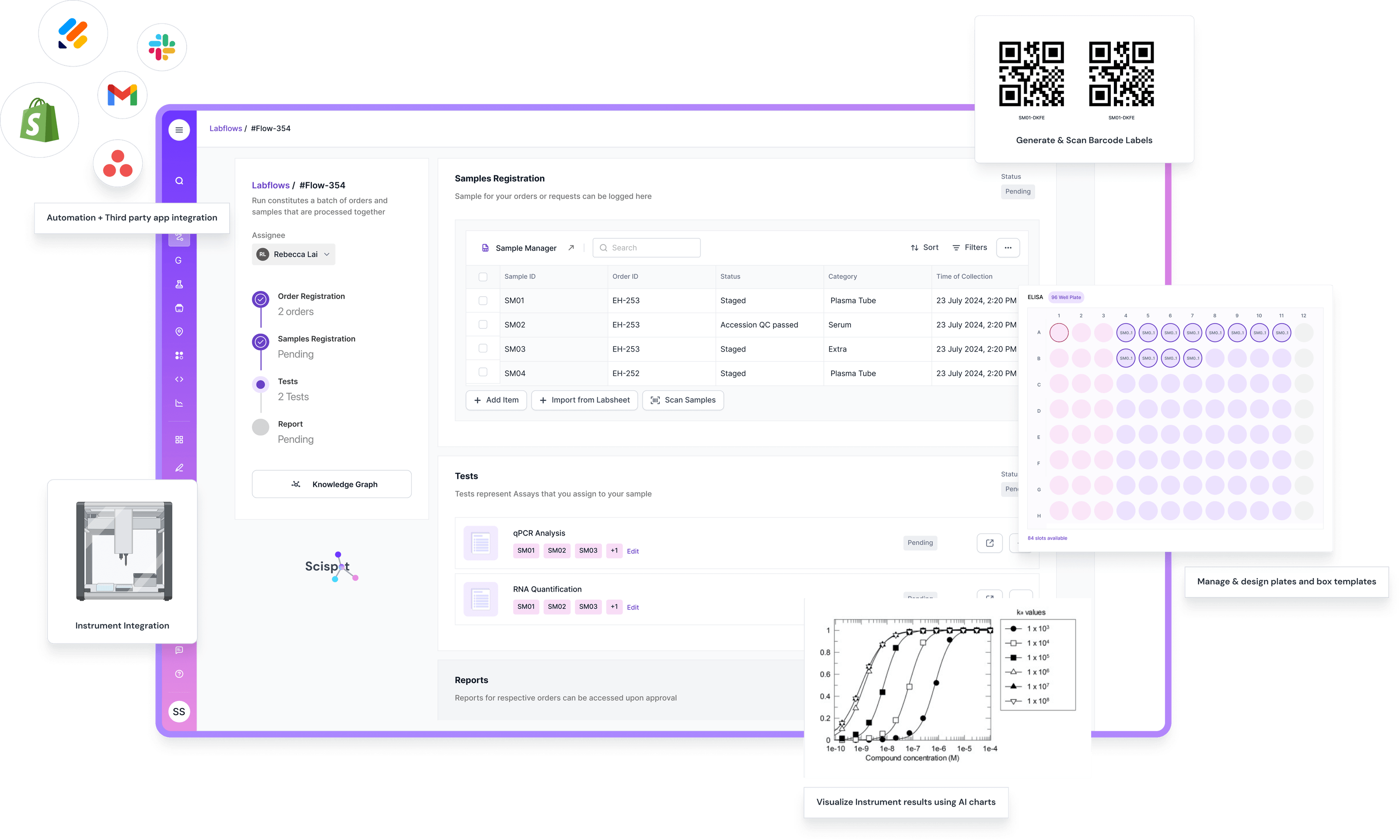
Scispot gives labs a unified system for sample intake, tracking, storage, and analysis. It centralizes every detail—metadata, chain of custody, storage history, and test results—so teams never worry about misplaced samples or missing context. This simplifies daily work and strengthens integrity across the entire sample lifecycle.
Its built-in automation reduces manual steps that usually lead to data errors. Barcode-driven workflows, real-time QC validations, and configurable Labsheets ensure samples move through each stage with accuracy and speed. Labs gain consistent documentation, audit-ready traceability, and higher confidence in downstream analysis.
Scispot also integrates seamlessly with lab instruments and existing systems. This eliminates silos and ensures every sample action—whether storage, processing, or reporting—is captured in one place. For labs that want efficiency, compliance, and scalability without operational friction, Scispot stands out as the most complete sample management platform.
Core Features of Lab Sample Management Software
Lab sample management software is critical for efficient laboratory operations. It includes features that streamline various aspects of sample workflows, ensuring consistency and precision.
One notable feature is sample inventory management. This allows labs to keep track of available samples and resources. With real-time updates, labs can quickly identify sample quantities and locations, supporting effective sample organization.
Another key aspect is the integration capability. The software can connect with other lab systems, providing a unified approach to data handling. This enhances the ease of access to crucial information across different platforms.
Lastly, data security is paramount. The software safeguards sensitive sample data through advanced encryption and access controls. This ensures compliance with regulatory standards and enhances risk management.
- Sample inventory management
- System integration capability
- Robust data security
.jpg.webp)
Sample Workflow: From Collection to Analysis
A well-defined sample workflow is essential for lab efficiency. The process begins with sample collection, ensuring the integrity and identity of each sample. This initial step is critical to prevent errors later in the workflow.
Next, proper labeling and documentation are fundamental. Labels must be clear and accurate to avoid confusion during further processing. Documentation ensures that samples can be easily traced and verified at any stage.
After labeling, samples proceed to analysis. During this phase, maintaining precise conditions is essential to guarantee accurate results. By following structured steps, labs can achieve reliable outcomes and optimize their operations.
- Sample collection and integrity
- Accurate labeling and documentation
- Precise conditions for analysis
.jpeg)
Best Practices for Sample Handling, Storage, and Tracking
Effective sample handling ensures samples are not compromised. Avoid contamination by using clean tools and gloves. This simple practice maintains sample integrity and quality throughout the lab processes.
Proper storage conditions are crucial. Ensure each sample is stored at the correct temperature and humidity level. This preserves the sample’s validity and prevents degradation over time.
Tracking samples efficiently is essential for accountability. Utilize barcoding or RFID technology to monitor samples. This technology provides real-time updates on the location and status of samples, enhancing traceability and reducing errors.
- Use clean tools and gloves
- Maintain optimal storage conditions
- Implement advanced tracking technology
.jpg.webp)
Ensuring Compliance and Risk Management
Compliance with regulatory standards is essential in labs. It ensures that samples are processed according to legal requirements. This not only enhances reliability but also upholds the lab's credibility.
Risk management involves identifying potential issues in sample handling. Proactively addressing these risks helps prevent costly errors and regulatory breaches. Developing a risk management framework can reduce sample-related challenges.
- Monitor compliance with regulations regularly
- Identify and address potential risks proactively
- Develop a detailed risk management framework
Future Trends in Sample Management and LIMS
The future of sample management promises increased automation and integration. Emerging technologies are transforming how labs handle samples, making processes more efficient and accurate.
Artificial intelligence and Internet of Things (IoT) devices are set to revolutionize LIMS systems. These technologies offer capabilities for real-time monitoring and data analysis.
- Increased automation in sample processes
- Integration with AI and IoT technologies
- Enhanced real-time monitoring and data analysis capabilities
Conclusion
Effective sample management is crucial for laboratory success. It protects sample integrity and traceability, which directly impacts research outcomes.
LIMS systems improve this by reducing manual errors and keeping records audit-ready. Scispot stands out because it combines barcode-based sample tracking and storage visibility with audit trails and e-signatures aligned with FDA 21 CFR Part 11 expectations. It also reduces tool sprawl by offering 7,000+ app integrations and 250+ instrument connections via GLUE, so sample actions and results stay in one system instead of scattered across trackers and folders.

%20Comprehensive%20Guide.avif)
.webp)