

TL;DR
Here is what laboratories need to know about building a connected experiment-to-report workflow.
- ELN report management links reported conclusions to experimental procedures, samples, raw data, analyses, and decisions.
- ELN-LIMS integration gives experiments and samples shared identifiers and reduces error-prone data re-entry.
- Standard templates, metadata, version control, and protected source files strengthen traceability and reproducibility.
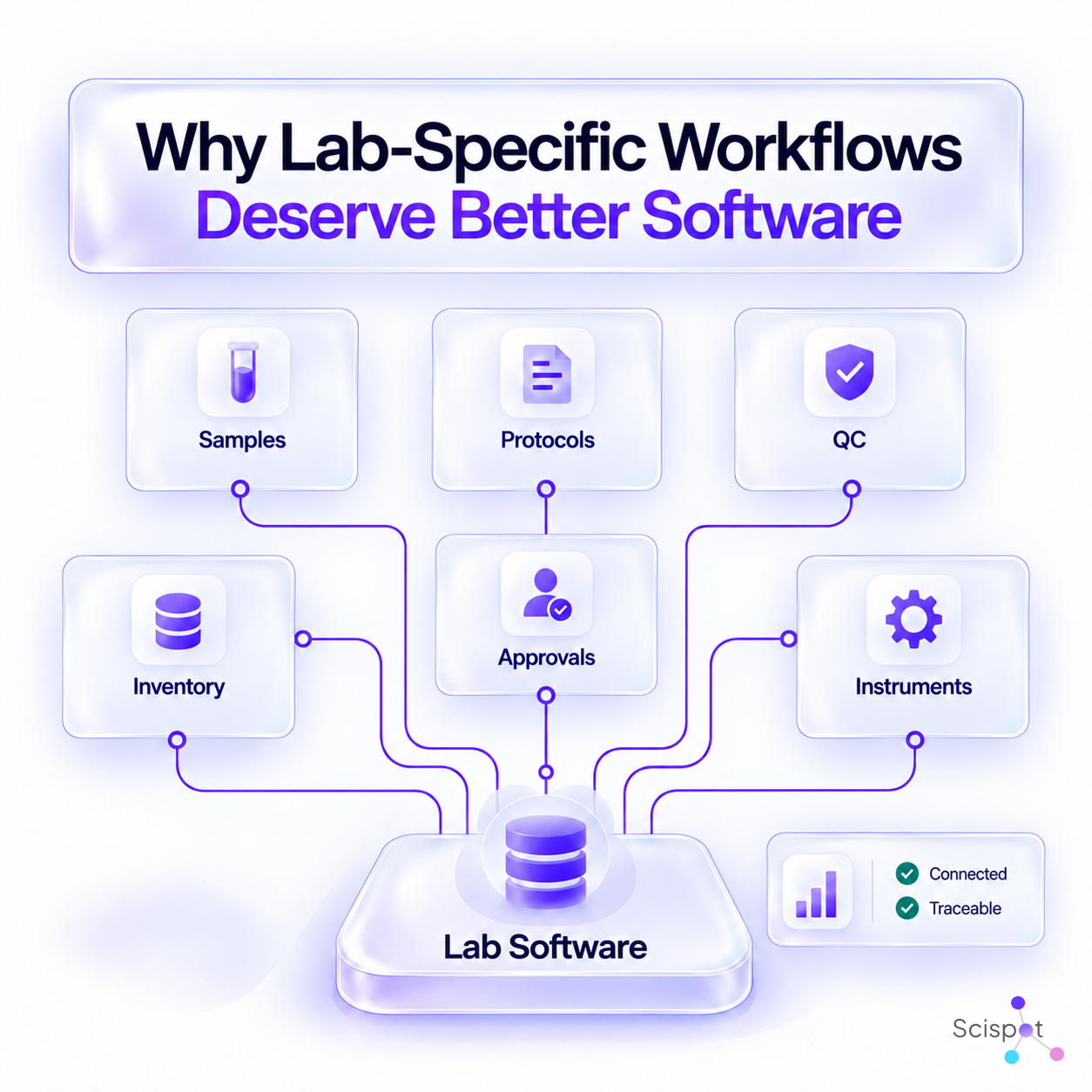
- Scispot connects ELN, LIMS, SDMS, instruments, and reporting workflows so teams can preserve scientific context.
A final report may show what a laboratory concluded, but it does not always show how the team reached that conclusion.
The protocol may live in an electronic lab notebook (ELN), samples in a LIMS, raw files on an instrument computer, and calculations in spreadsheets. Connecting these records creates a navigable evidence chain from the reported outcome back to the experiment, materials, data, analysis, and scientific reasoning that support it.
What Is ELN Report Management?
ELN report management extends the digital experiment record into a structured foundation for scientific reporting.
ELN report management is the process of connecting experiment records with their samples, raw data, analyses, decisions, and reports. An ELN records procedures, observations, and experimental data digitally, while connected report management keeps those records linked as results move toward review and communication.
How experiment records support scientific reports
An experiment record provides the context behind a result: objective, protocol version, materials, sample IDs, equipment, conditions, observations, deviations, files, calculations, and interpretation. Well-organized and documented data allow others to validate findings and build on previous work.
ELN report management vs standalone documentation
Standalone documentation stores notes or attachments, but it may not preserve relationships among them. ELN report management links a report to the exact experiment, sample, source file, analysis, and decision history supporting it.
Who benefits from connected experiment-to-report workflows
Scientists spend less time reconstructing past work, while reviewers receive the context needed to assess conclusions. Project leaders, data teams, quality groups, and research collaborators also gain more searchable, reusable knowledge.
Why Experiment Records Become Disconnected from Reports
Disconnection usually occurs when each stage of the research lifecycle uses a different system, identifier, or manual handoff.
Protocols, samples, and reports stored in separate systems
ELNs often manage experimental documentation while LIMS platforms manage samples and laboratory operations. When the two operate independently, scientists may copy IDs, results, and file paths between systems, weakening the connection over time.
Limited visibility into supporting experiment data
A report may contain a chart or summary value without a direct path to its source experiment. Reviewers must then ask the author to locate the relevant notebook entry, instrument file, metadata, and calculation.
Missing links between raw data and scientific conclusions
Exporting and transforming data manually can separate processed results from their original files. Research data guidance recommends preserving dependable sources, protecting original digital files, and retaining the documentation required to understand processing and analysis.
Difficulty reconstructing decisions behind reported results
Raw data cannot explain why a run was excluded, a parameter changed, or an assay repeated. If the rationale remains in email, chat, or memory, the report loses context that may be essential for review or reuse.

Key Components of ELN Report Management
A dependable workflow combines lifecycle data management, shared identifiers, source-to-report lineage, and explicit decision capture.
Experiment data management across the research lifecycle
Manage records from study design and data acquisition through processing, analysis, reporting, archiving, and reuse. Define ownership, formats, metadata, access, retention, and version rules before information becomes fragmented.
ELN LIMS integration for sample and result traceability
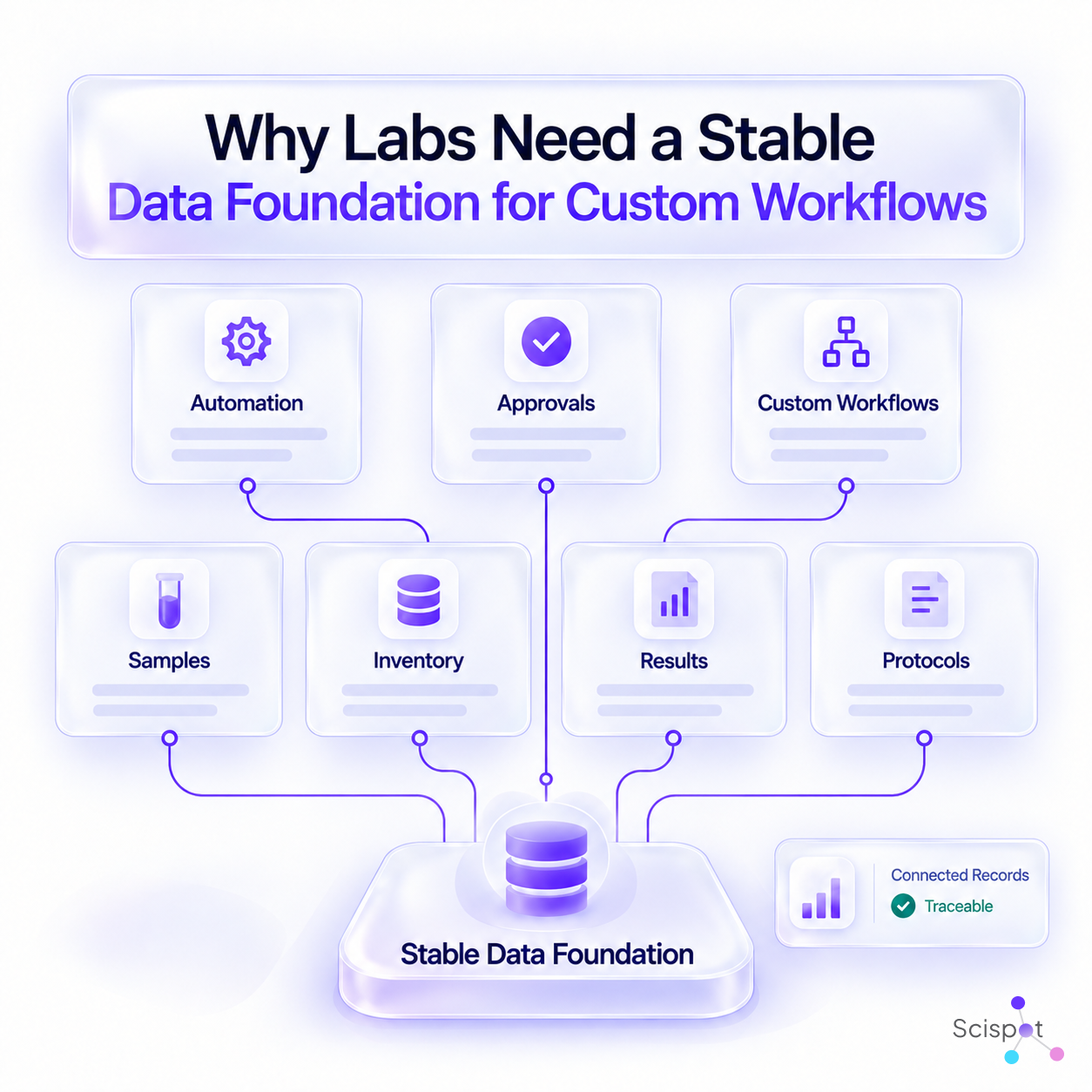
The ELN captures experimental design and scientific narrative; the LIMS manages structured sample identities, locations, statuses, tests, and results. Integration lets experiments reference exact sample IDs and supports bidirectional data flow without repeated transcription.
Assign persistent identifiers to experiments, samples, runs, files, analyses, and reports. Record the path from source file to processed dataset, figure, reported value, and conclusion, including software, method versions, parameters, and authorship.
Preserving scientific decisions and supporting evidence
Capture decisions where they occur, including rationale, alternatives, exceptions, and approvals when relevant. Link each decision to the affected protocol, observation, sample, dataset, or result.

Best Practices for Connecting Experiments to Reports
These practices improve traceability without turning documentation into a separate administrative task.
- Maintaining traceability from protocol to reported outcome Test traceability in both directions: from a report claim back to its evidence and from an experiment forward to every report that uses it. Keep links version-specific so later changes do not alter the historical basis of a released conclusion.
- Standardizing experiment documentation and metadata Use templates, mandatory fields, controlled vocabularies, consistent units, and shared identifiers. Define standard metadata for protocols, samples, instruments, files, analyses, results, and decisions so records remain searchable across teams.
- Capturing scientific context alongside data Record the objective, hypothesis, conditions, observations, deviations, failures, analysis choices, and interpretation while the work is underway. Contemporaneous context is easier to trust than explanations reconstructed after reporting.
- Building a foundation for scientific knowledge management Make experiments findable by project, sample, method, scientist, result, and scientific concept. Connected records help teams understand why decisions were made, reuse validated knowledge, and avoid repeating work.

How Scispot Helps Manage Experiment-to-Report Workflows
Scispot connects experimental documentation with operational records, scientific files, and reporting processes.
Connecting ELN records, samples, and raw data
Scispot ELN links experiments with protocols and related metadata, including samples, inventory, equipment, and results. Its connected platform can keep this context attached as data moves through downstream workflows.
Enabling seamless ELN LIMS integration
Scispot combines ELN and LIMS capabilities and can connect retained applications through its integration layer. Scispot GLUE connects instruments, ELNs, LIMS, data lakes, and applications while automating extraction, transformation, and delivery.
Preserving complete scientific context and traceability
Scispot records activities, modifications, and data access within its ELN and connects protocols with experimental metadata. Laboratories can use these relationships to follow work across samples, source files, results, reviews, and reports.
Supporting scientific knowledge management across teams
By joining narrative experiment records with structured samples, files, workflows, and results, Scispot makes research easier to search and interpret. Its unified data model connects projects, experiments, samples, batches, and results as related records rather than isolated files.