.webp)
Cloud-based LIMS Solutions
Cloud-based LIMS solutions are transforming laboratory management. They offer a modern approach to handling data and operations.
These systems are designed to meet the evolving needs of labs. They provide flexibility and scalability without hefty infrastructure costs.
With cloud-based LIMS, labs can access data in real-time from anywhere. This enhances collaboration and efficiency across multiple locations.
Security is a top priority. Cloud providers ensure robust protection and compliance with industry standards.
As labs face increasing data demands, cloud-based LIMS offers a sustainable and efficient solution. They are essential for labs aiming to stay competitive and innovative.
What is a Cloud-based LIMS?
A cloud-based LIMS, or Laboratory Information Management System, is hosted on remote servers rather than on-premises. These systems leverage the cloud to provide greater flexibility and efficiency in data handling and lab operations.
The primary function is to streamline lab processes and improve data management. By using cloud technology, these systems offer several practical benefits.
Key aspects of a cloud-based LIMS include:
- Remote accessibility
- Seamless integration with laboratory devices
- Automatic updates and backups
These features ensure labs can operate smoothly without investing heavily in hardware. Cloud-based LIMS solutions cater to the ever-evolving needs of modern laboratories, supporting dynamic and distributed teams.
.webp)
Key Features of Cloud-based LIMS Software
Cloud-based LIMS software offers innovative features that enhance laboratory operations. It provides labs with real-time access to data. This facilitates effective collaboration across multiple locations and teams.
Key features include robust data management capabilities. These enhance accuracy and minimize errors in laboratory processes. Integration with lab instruments further automates workflows, improving efficiency.
The software is designed for scalability, accommodating growing lab needs effortlessly. As labs expand, the system adapts without significant additional investments. This ensures seamless growth and adaptability.
Among the features of cloud-based LIMS are:
- User-friendly interface
- Customizable functionalities
- Enhanced data security
- Regulatory compliance support
These features empower labs to maintain high standards while minimizing operational costs. The user-friendly design ensures accessibility, even for non-technical staff, boosting productivity.
Scispot: The most complete cloud LIMS ecosystem for modern labs
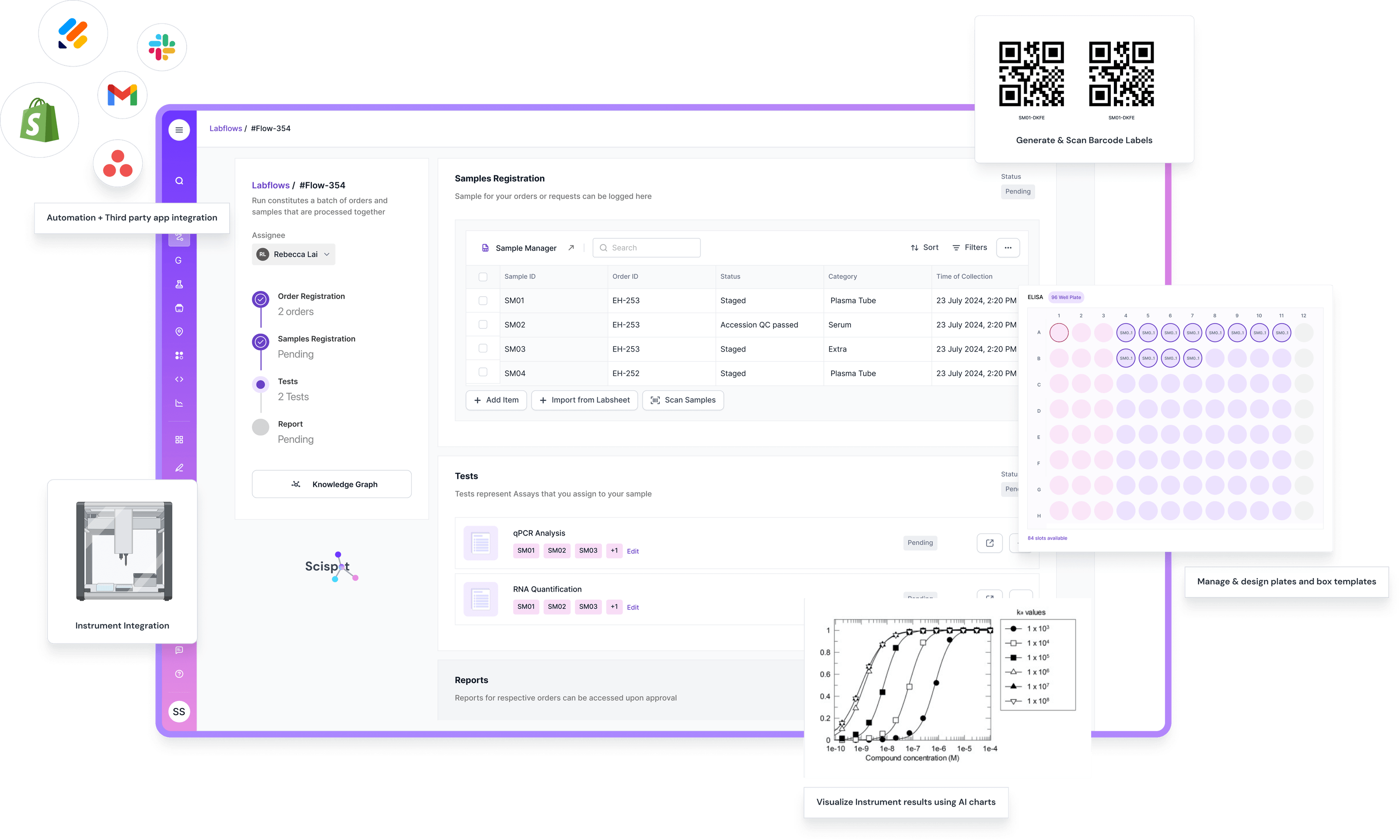
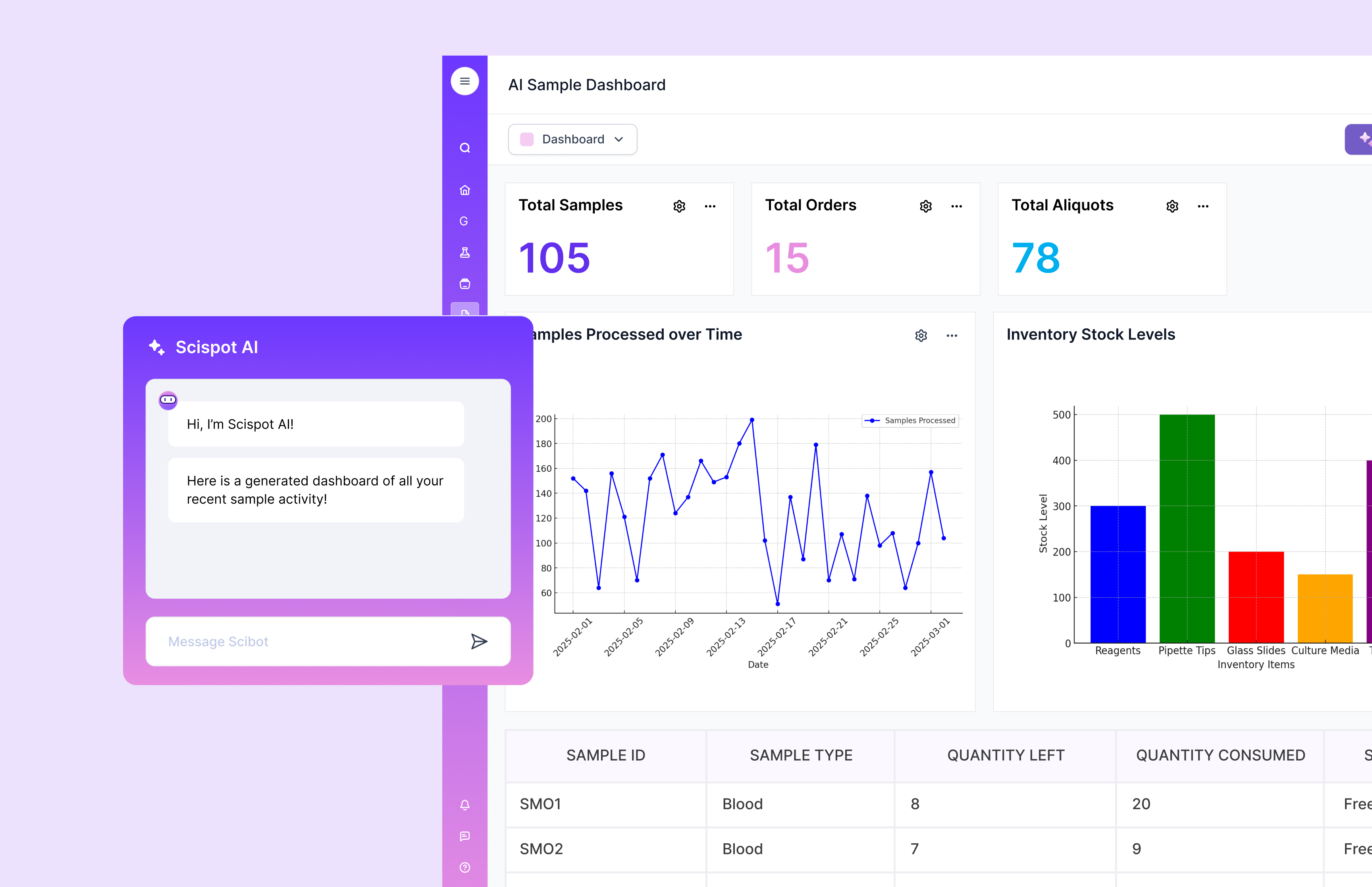
Scispot stands out as one of the most complete cloud-based LIMS ecosystems for modern labs. It brings ELN, LIMS, SDMS, QMS, and automation into a single cloud-native environment, removing the need for scattered tools or complex IT dependencies. With real-time accessibility, powerful sample tracking, and built-in regulatory readiness, Scispot offers the flexibility and scalability labs expect from the cloud—without compromising on usability. Teams get a unified workspace that adapts as they grow, making it easier to standardize operations and build repeatable workflows across locations.
Beyond routine LIMS functions, Scispot elevates cloud-based lab management with AI-powered automation and seamless instrument integrations. Labs can ingest data from instruments, map it into structured formats, apply QC rules, and even generate dashboards—directly within the platform. This accelerates decision-making and reduces the risk of manual errors that often plague traditional systems. Scispot’s cloud infrastructure ensures automatic updates, secure backups, and global access so teams can collaborate effortlessly.
Scispot also excels in areas many cloud LIMS providers overlook: compliance, extensibility, and enterprise-level configurability. Built-in audit trails, e-signatures, permission controls, and workflow templates help labs meet GxP, CLIA, CAP, ISO 15189, and other regulatory standards. Its modular structure lets labs personalize workflows while maintaining system integrity, making Scispot a future-proof choice for research labs, biorepositories, diagnostics labs, and fast-scaling biotech startups.
Advantages of a Cloud-based LIMS System
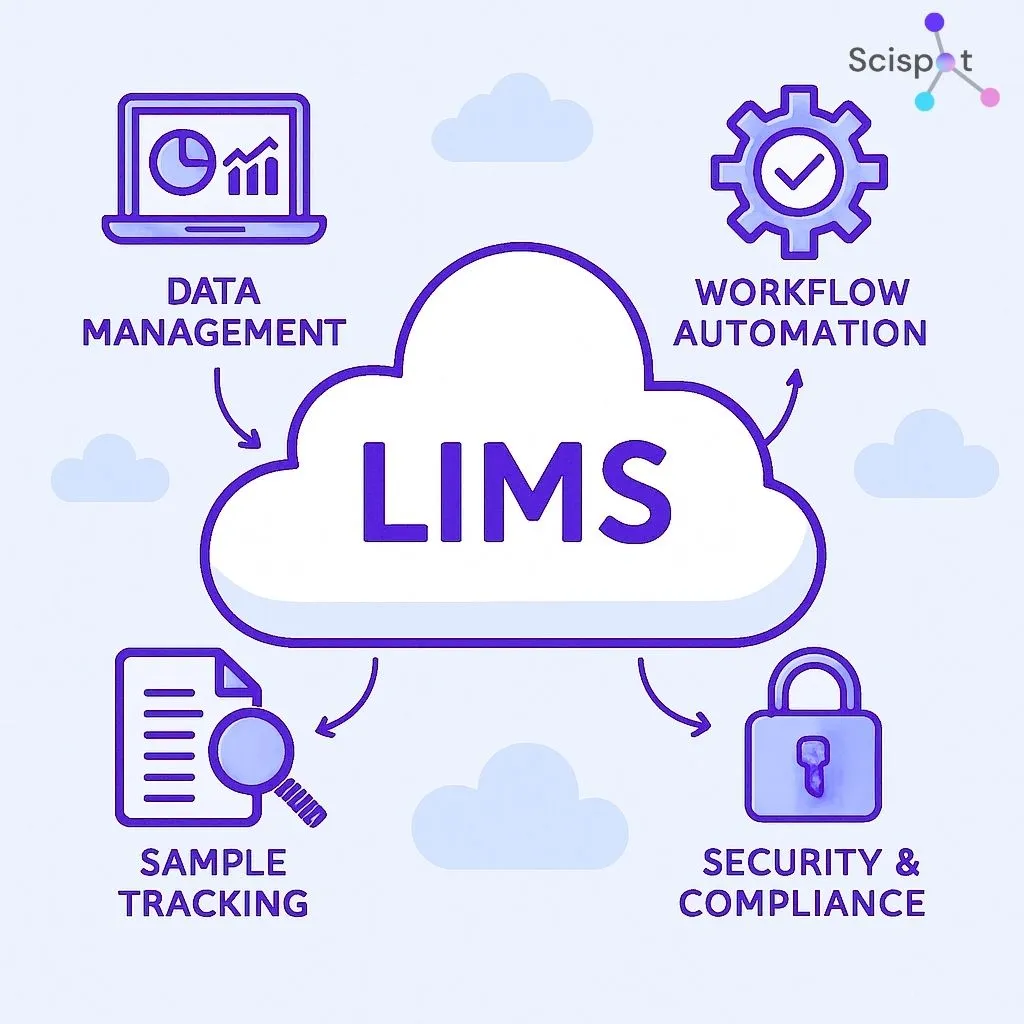
Cloud-based LIMS systems present numerous advantages for modern laboratories. One key advantage is reduced IT costs, as these systems eliminate the need for on-site servers. This translates into significant savings on infrastructure and maintenance.
Another advantage is automatic updates and data backups. This ensures labs always have access to the latest features. Additionally, it protects vital data against potential loss from system failures or other issues.
These systems offer enhanced security measures compliant with industry standards. Cloud providers implement robust protocols that secure sensitive lab data, thus minimizing risks. This level of security is crucial, particularly for labs handling confidential information.
Here's a summary of the advantages:
- Reduced IT expenses
- Automatic updates and backups
- Enhanced data security
- Seamless integration with other systems
Cloud LIMS systems are flexible and customizable. This allows labs to tailor the system to their unique needs, leading to improved workflow efficiency and productivity.
Benefits of Using a Cloud-based LIMS for Lab Management
Using a cloud-based LIMS significantly enhances lab management efficiency. Labs benefit from seamless data access, crucial for collaboration across multiple locations. This feature supports team coherence and speeds up decision-making processes.
Moreover, cloud-based systems offer unparalleled flexibility and scalability. Labs can easily customize these systems, ensuring they meet specific needs. This adaptability allows labs to handle growth without facing significant IT challenges or expenses.
Another critical benefit is streamlined operations, which directly impacts productivity. By automating routine tasks, cloud LIMS reduces the likelihood of human error and enhances data integrity. Enhanced workflow management improves resource allocation and optimizes lab performance.
Key benefits include:
- Seamless collaboration
- Flexibility and scalability
- Improved resource management
- Streamlined operations
With these benefits, cloud-based LIMS has become an essential tool for modern labs.

Cloud Data Management and Security
Effective cloud data management is crucial in today's labs, ensuring data accessibility and reliability. Cloud-based LIMS offers advanced management capabilities, supporting large datasets essential for research and clinical applications.
Security is a top concern for laboratories. Fortunately, cloud-based LIMS excels in this area, offering robust security features. Data encryption, secure user authentication, and regular security audits are standard practices.
These systems also provide disaster recovery options, safeguarding data against potential losses. Regular backups ensure data integrity while reducing downtime. Enhanced security and efficient data management make cloud LIMS a preferred choice for modern laboratories.
Key security features include:
- Data encryption
- Secure user authentication
- Regular security audits
- Disaster recovery options
The dual advantages of solid data management and security fortify labs' operational excellence.

Cloud-based LIMS for Biorepositories and Research Labs
Biorepositories and research labs handle vast amounts of biological data and samples. A cloud-based LIMS provides an efficient framework for managing these resources. It ensures that lab processes are streamlined and data integrity is maintained. The scalability of cloud solutions allows labs to expand their operations seamlessly.
These systems cater to the specific needs of biorepositories, supporting detailed sample tracking and regulatory compliance. The ease of integration with other lab systems enhances workflow efficiency. Leveraging cloud capabilities, research labs can better allocate resources and focus on their primary objectives.
Key functionalities include:
- Detailed sample tracking
- Regulatory compliance support
- Seamless system integration
Cloud-based LIMS serves as a vital tool for advancing research endeavors.

Implementation: Transitioning to a Cloud LIMS
Transitioning to a cloud-based LIMS requires careful planning and execution. Effective communication with your service provider is crucial for a smooth changeover. Initial stages involve assessing current systems and identifying specific needs and goals.
Support and training are essential for your team to adapt to new tools. This ensures that everyone can effectively use the system, minimizing operational downtime. Choosing a provider that offers comprehensive implementation support can greatly ease the process.
Steps for a successful transition include:
- Evaluating existing systems and needs
- Coordinating with the provider for setup
- Ensuring team training and support
By following these steps, labs can efficiently move to a cloud-based LIMS.
Choosing the Right Cloud LIMS Solution
Selecting the perfect cloud LIMS solution involves assessing your lab's unique requirements. Consider factors like budget, scalability, and integration capabilities.
Make sure the provider offers strong data security and customer support. A detailed comparison of available options will help you make an informed decision.
Key considerations include:
- Budget constraints
- Integration with existing systems
- Data security measures
Taking the time to evaluate these elements ensures a cloud LIMS that fits your laboratory's needs efficiently.
Conclusion: The Future of Laboratory Information Management
Cloud-based LIMS is now the default path for labs that want faster rollouts, simpler scaling, and easier collaboration across sites.
If you want a platform that goes beyond “just LIMS,” Scispot is a stronger long-term choice because it combines LIMS + ELN + SDMS + QMS in one cloud-native stack, with built-in audit trails, e-signatures, and GxP controls, plus broad integrations (100+ listed) for instruments and external systems. It also publicly states SOC 2 Type I achievement, which is a concrete security signal many lab tools cannot show on their product pages.

%20Comprehensive%20Guide.avif)
.webp)