

The Lab Software Decision: Why Your Choice Matters More Than Ever
Every biotech founder and lab operations leader faces the same crossroads: your lab is growing, your data is scattered across notebooks and spreadsheets, and you need a system that scales without slowing you down. The software you choose today will shape how your team works for years. It will determine whether your scientists spend time on discovery or data entry. It will decide if your compliance audits are smooth or chaotic. And it will influence whether you can move fast enough to compete.
For decades, labs operated with two separate systems: an electronic lab notebook (ELN) for capturing experiments and a laboratory information management system (LIMS) for tracking samples and inventory. This split created friction. Data lived in silos. Workflows broke at handoffs. And when regulators asked for an audit trail, teams scrambled to stitch together records from multiple platforms.
Today, a new category has emerged: the lab operating system. Platforms like Scispot and LabVantage represent a fundamental shift in how modern biotech labs think about software. Instead of bolting together disconnected tools, these systems aim to unify experiment capture, sample tracking, data management, and reporting in one coherent platform.
But they approach that goal differently. And for your lab, those differences matter.
Understanding the Landscape: What Modern Labs Actually Need
Before comparing specific platforms, it helps to understand what modern biotech labs are struggling with. The pain points are consistent across the industry.
Data fragmentation. Scientists use ELNs to document experiments. Lab managers use LIMS to track samples. Analysts use spreadsheets or custom scripts to process results. When a question arises - 'What happened to sample batch 47?' - the answer lives across three systems and two people's email inboxes.
Compliance friction. Regulated labs need audit trails, version control, and tamper-proof records. Many legacy systems treat compliance as an afterthought, bolting on features that slow teams down. The result: scientists resent the system, and compliance becomes a burden rather than a safeguard.
Integration overhead. Labs accumulate instruments, databases, and third-party tools. Connecting them requires custom code, IT resources, and ongoing maintenance. A single integration failure can break an entire workflow.
Reporting delays. When leadership asks 'How many experiments did we run last month? What was the success rate? Where are we bottlenecked?' - the answer takes days to compile. By then, the insight is stale.
Scaling pain. Systems that work for a 10-person lab often crumble at 50 people. Adding users, protocols, or data volume requires rearchitecting the system or migrating to a new platform entirely.
The best lab software addresses all of these at once. It centralizes data without creating silos. It makes compliance automatic, not painful. It connects to the tools labs already use. It surfaces insights in real time. And it grows with the lab.
LabVantage: The Established LIMS Player

LabVantage has been a fixture in the LIMS market for decades. It is mature, widely deployed in regulated environments, and trusted by large pharma and CRO organizations. For labs that need a robust sample management and inventory system, LabVantage delivers.
LabVantage excels at what it was designed to do: manage the lifecycle of samples through a lab. It tracks chain of custody, enforces workflows, generates compliant reports, and integrates with instruments. For a QC lab running the same assays repeatedly, LabVantage is a proven choice.
However, LabVantage was built for a different era of biotech. It assumes a linear workflow: samples arrive, tests run, results are reported. It assumes IT teams will customize and maintain the system. It assumes data lives in LabVantage's database, not in a modern data lake or cloud warehouse. And it assumes scientists will adapt to the software's logic, not the other way around.
For many labs, this model still works. But for biotech teams doing exploratory research, running multiple parallel workflows, or needing to move data to external analytics tools, LabVantage's rigidity becomes a constraint.
Scispot: The Lab Operating System Approach
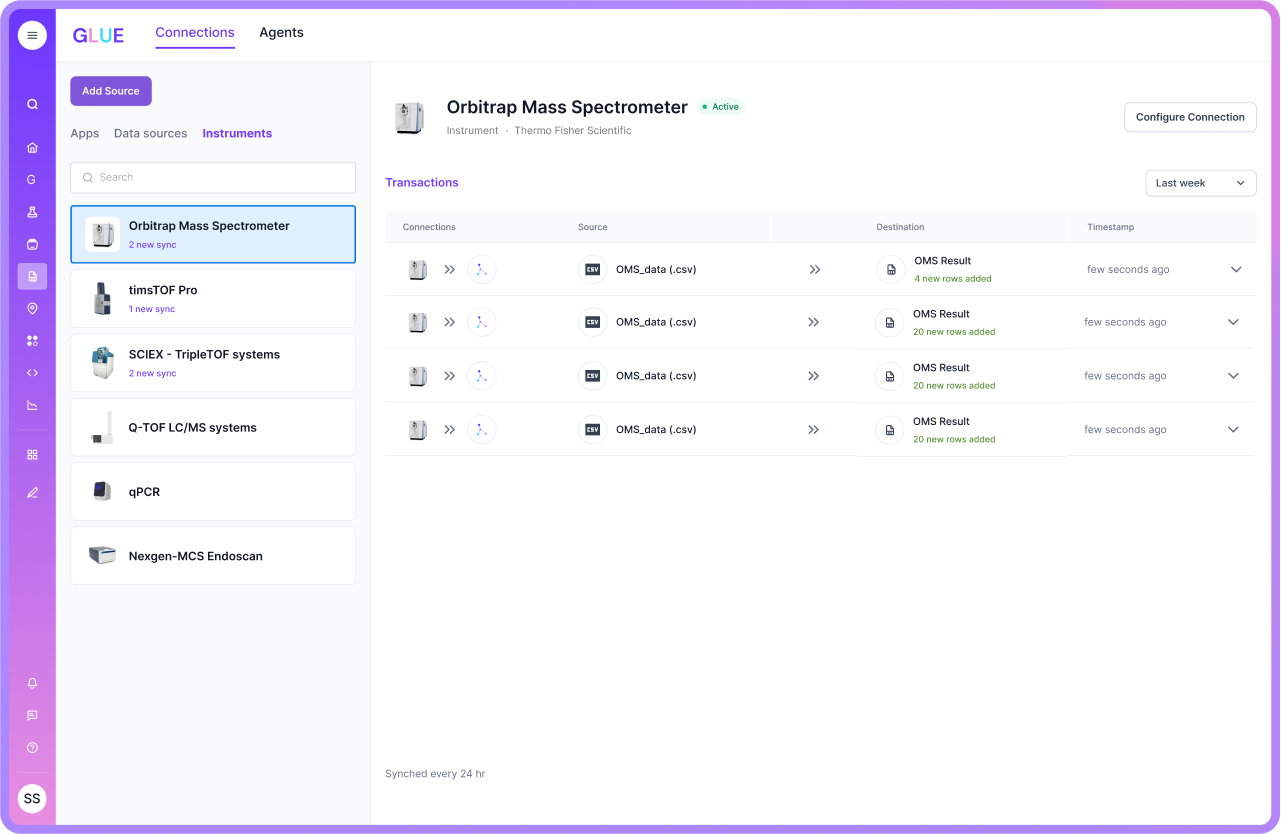
Scispot represents a different philosophy. Instead of building a system that labs adapt to, Scispot aims to build a system that adapts to how labs actually work.
At its core, Scispot unifies three capabilities: an electronic lab notebook (ELN) for experiment capture, a LIMS for sample and inventory management, and a data lake for storing and querying results. But the real innovation is how these pieces connect.
Scispot's Labspaces function like a structured notebook with versioning. Scientists write protocols, document experiments, and attach files - images, sequences, raw data - all in one place. Unlike a traditional ELN, Labspaces enforce structure without sacrificing flexibility. You can start from a template or build from scratch. You can version control your work. And you can trace exactly who did what and when.
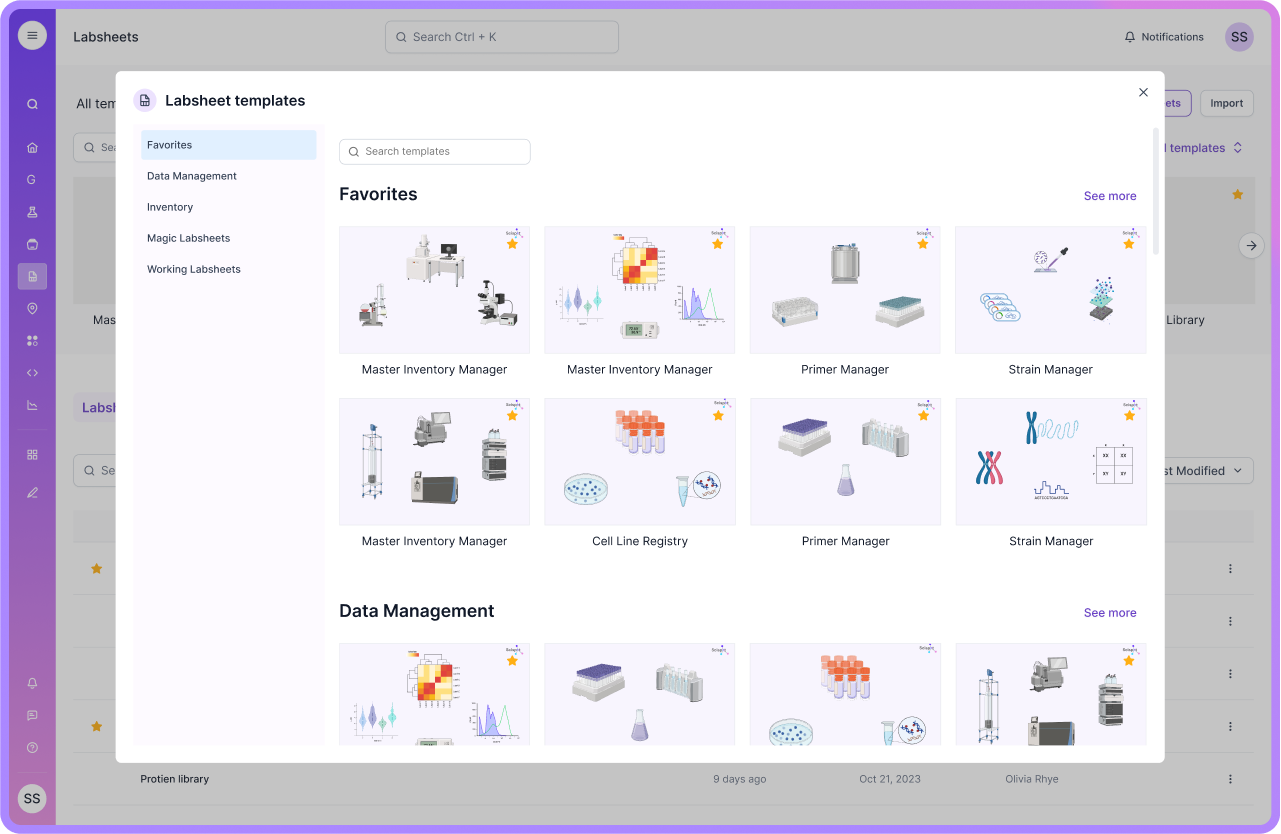
Labsheets are where Scispot's LIMS capabilities live. They are tables for samples, reagents, runs, and outcomes. On the surface, they look simple - columns, rows, permissions. But they enforce data structure from the start. Column types are defined once. Permissions are set once. Updates can be manual, bulk, or via API. This means data quality improves automatically as teams use the system.
The third piece is the data lake. Instead of locking data inside the platform, Scispot makes it easy to export, query, and analyze data using external tools. This is a fundamental difference from legacy LIMS platforms. Your data is yours. You can connect it to a data warehouse, run analyses in Python or R, or feed it to downstream systems.
The connective tissue is Scispot's integration layer. The platform is API-first and standards-driven. It supports ASTM, HL7, and REST. Flat files are supported when needed. This means connecting instruments, databases, and third-party tools is straightforward. And because the platform is cloud-native, scaling from 10 users to 1,000 is seamless.
Head-to-Head: Key Differences

Architecture and Deployment. LabVantage is traditionally deployed on-premises or in a private cloud. This gives labs control but requires IT infrastructure and maintenance. Scispot is cloud-native by default. This means faster onboarding, automatic updates, and no infrastructure overhead. For early-stage biotech, this is a significant advantage.
Flexibility vs. Structure. LabVantage enforces a specific workflow model. You define your processes upfront, and the system guides work through those steps. This is powerful for standardized, repetitive work. But it can be constraining for exploratory research or labs with diverse workflows. Scispot balances structure and flexibility. Labsheets enforce data quality, but Labspaces allow freeform documentation. This makes it easier to capture both standardized and ad-hoc work in one system.
Data Ownership. In LabVantage, data lives in the LIMS database. Extracting it for external analysis requires custom queries or exports. Scispot treats the data lake as a first-class citizen. You can query it directly, export it easily, or connect it to external tools. This is critical for labs that want to do advanced analytics or integrate with enterprise data systems.
Integration Burden. LabVantage integrations are powerful but require IT expertise. Custom code, middleware, and ongoing maintenance are often necessary. Scispot's API-first design and support for standards like ASTM and HL7 make integrations faster and less brittle. The onboarding team maps formats and validates feeds so data lands in the right tables from day one.
User Experience. LabVantage has a traditional enterprise software interface. It is functional but not intuitive. Scientists often need training to use it effectively. Scispot is designed for modern biotech teams. The interface is cleaner, the workflows are more intuitive, and the learning curve is gentler. This matters because adoption is faster and resistance is lower.
Cost Model. LabVantage typically requires significant upfront licensing fees, implementation costs, and ongoing maintenance. Scispot uses a subscription model with per-user pricing. For growing labs, this is more predictable and scalable. You pay for what you use, and you can add users as you grow.
When to Choose Each Platform
Choose LabVantage if: You are a large pharma company or CRO with highly standardized workflows and a dedicated IT team. You have complex regulatory requirements and need a system that has been battle-tested in FDA audits for decades. You are willing to invest in customization and maintenance. You have existing integrations with LabVantage and switching costs are high.
Choose Scispot if: You are a biotech startup or mid-stage company doing exploratory research alongside some standardized work. You want a system that grows with you without requiring major rearchitecting. You need to move data to external analytics tools or data warehouses. You want a modern user experience that your team will actually enjoy using. You want to minimize IT overhead and get up and running quickly.
The Bigger Picture: Lab Operating Systems Are Reshaping Biotech
The shift from separate ELN and LIMS systems to unified lab operating systems is not just a software trend. It reflects a deeper change in how biotech labs operate.
Modern labs are data-driven. They run experiments, collect results, and immediately ask: What does this mean? Where should we go next? To answer these questions, data needs to flow seamlessly from capture to analysis. Legacy systems that silo data make this impossible. Lab operating systems make it natural.
Modern labs are also compliance-conscious but not compliance-obsessed. They understand that good data practices are good science practices. They want systems that make the right way the easy way. LabVantage treats compliance as a separate layer. Scispot bakes it in. As you work, you are automatically creating an audit trail. Versioning happens by default. Permissions are enforced. Compliance becomes a side effect of good work, not a burden on top of it.
Finally, modern labs are interconnected. They use cloud storage, data warehouses, analytics platforms, and specialized tools. They need software that plays well with others, not software that demands to be the center of the universe. Lab operating systems that are API-first and cloud-native fit naturally into this ecosystem. Legacy LIMS platforms that were designed to be monoliths do not.
Making Your Decision
Choosing lab software is not a trivial decision. It will shape your workflows, influence your hiring, and affect your ability to scale. Here is a framework for thinking about it.
First, assess your current pain points. Are you struggling with data fragmentation? Integration overhead? Compliance friction? Reporting delays? Different platforms address these differently. LabVantage is strongest at enforcing standardized workflows and managing regulated processes. Scispot is strongest at unifying diverse workflows and making data accessible.
Second, consider your lab's trajectory. Are you a stable QC lab that will run the same assays for the next five years? Or are you a research lab that will evolve, add new capabilities, and pivot as science demands? Stable labs can afford to optimize for a specific workflow. Growing labs need flexibility.
Third, think about your IT resources. Do you have a dedicated IT team that can customize and maintain software? Or do you need something that works out of the box? LabVantage requires IT investment. Scispot is designed to minimize it.
Fourth, evaluate your data strategy. Do you want data to live in the LIMS database, or do you want to move it to a data warehouse or analytics platform? If the latter, you need a system with strong export capabilities and a modern data architecture. Scispot's data lake approach is better suited for this.
Finally, involve your team. The best software is the one your scientists will actually use. Bring in a few team members to evaluate both platforms. Run a pilot if possible. See which one feels like a natural fit for how your lab works.
Conclusion: The Lab Operating System Era
The choice between Scispot and LabVantage is not really a choice between two products. It is a choice between two philosophies: the legacy LIMS model, which assumes labs will adapt to software, and the lab operating system model, which assumes software should adapt to labs.
For biotech teams doing cutting-edge research, moving fast, and scaling quickly, the lab operating system approach is increasingly the better fit. It centralizes data without creating silos. It makes compliance automatic. It connects to the tools you already use. And it grows with you.
LabVantage remains a solid choice for large, regulated organizations with stable workflows and IT resources. But for the next generation of biotech labs, the lab operating system represents a fundamental improvement in how software can support science.
The question is not whether your lab needs better software. It is whether you are ready to work with software that was designed for how modern biotech actually operates.
Disclaimer: Third-party product and company names, logos and trademarks are the property of their respective owners and are used for identification only. Scispot.io Inc. is not affiliated with, endorsed by, or sponsored by any vendor mentioned. Information is based on publicly available sources as of November 2026 and may change; verify details directly with each vendor.