

Why Your Biotech Startup's Lab Stack is Doomed to Fail in 2026
Picture this: It's mid-2026, and your biotech startup is burning through Series A cash. Your team of five scientists is juggling Google Sheets for experiment tracking, a clunky ELN for protocols, and email threads for inventory updates. A key experiment fails because someone used the wrong reagent batch, and now you're scrambling to reconstruct what went wrong. Investors are asking for data-driven insights, but your scattered tools can't deliver. Sound familiar?
This isn't a hypothetical - it's the reality for most early-stage biotech startups. In 2026, with AI-native workflows and precision medicine demands skyrocketing, fragmented lab software isn't just inefficient; it's a liability. Biotech founders, lab leads, and R&D operators need a complete stack that unifies data, automates toil, and scales with growth. This post breaks down the essential biotech software for startups, why the old ELN-LIMS split is obsolete, and how to build a future-proof lab stack.
The Pain Points of Legacy Lab Tools in Startup Labs

Startups move fast, but traditional lab software lags behind. Here's why most biotech startup tools from the 2010s are cracking under 2026 pressures:
- Data Silos Everywhere: Wet-lab teams log experiments in one ELN, while computational biologists pull data into Jupyter notebooks via manual exports. No single source of truth means hours lost to data wrangling.
- Compliance Without Intelligence: Basic LIMS track samples and inventory, but they don't enforce policies in real-time or flag anomalies. Startups face audit risks without automated QC.
- No AI Readiness: With LLMs and ML models now core to biotech R&D, tools must support structured, machine-readable data. Legacy systems output PDFs, not APIs.
- Scalability Bottlenecks: What works for a 5-person team collapses at 20. Custom integrations break, and costs balloon as you bolt on more apps.
- Team Friction: Lab ops leaders spend 30% of their time on manual workflows - request approvals, equipment booking, vendor manifests - instead of innovation.
These issues compound in startups where every hour counts. A 2026 lab needs biotech software that acts as an operating system: connecting instruments, teams, and AI pipelines seamlessly.
The Evolution: From ELN + LIMS to Lab Operating Systems
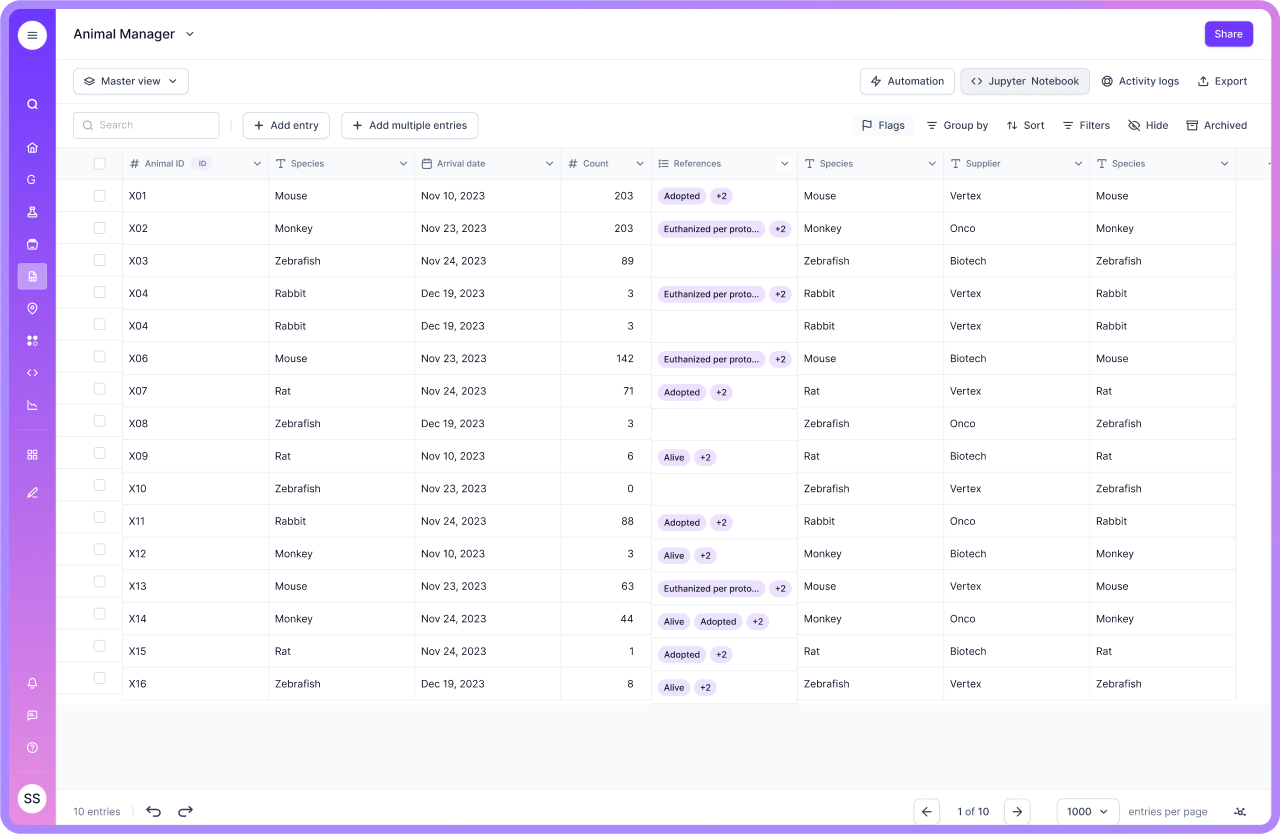
Biotech software for startups has evolved beyond the ELN-LIMS dichotomy. ELNs captured narratives; LIMS handled logistics. But modern workflows demand more - a unified platform that digitizes the entire lab as code.
Enter the Lab Operating System (LabOS). This 2026 paradigm integrates:
- Structured Data Capture: Labsheets replace spreadsheets with custom, relational tables for experiments, inventories, and libraries.
- Automation Layers: Policy enforcement, result calculations, and outlier detection run natively.
- API-First Architecture: One backend powers UI, Jupyter, and external ML tools - no integration hell.
- AI-Native Features: Embedded analytics, pub-sub data flows, and cloud data lakes for transformative insights.
LabOS isn't about replacing tools; it's about making the right workflow the path of least resistance. Repetitive tasks shift to the platform, freeing scientists for high-value work.
For startups, this means biotech tools that grow with you - from MVP validation to clinical trials - without rip-and-replace cycles.
Core Components of the Complete Biotech Startup Stack in 2026
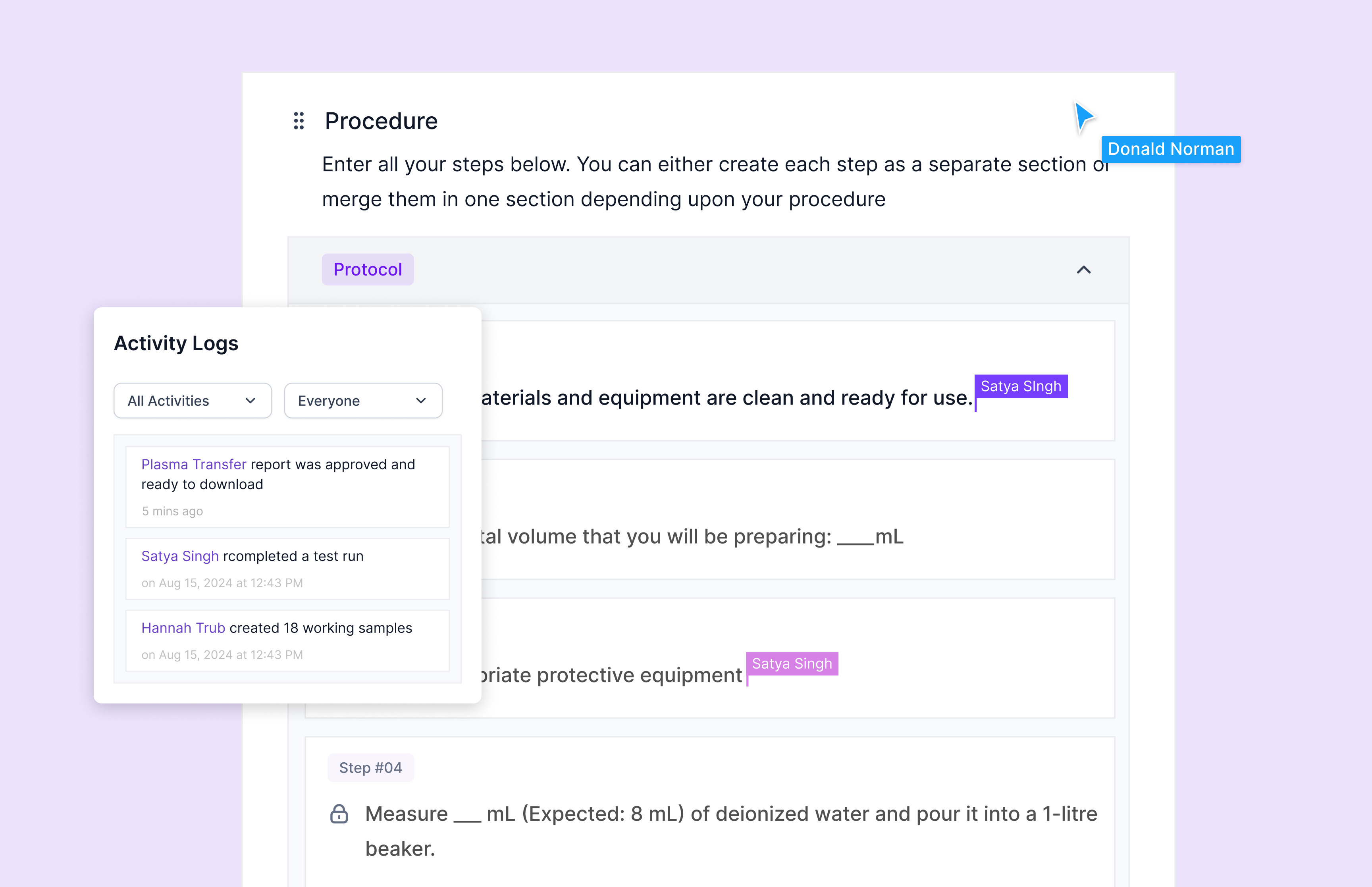
Here's the biotech software stack every startup needs. We'll focus on integrated platforms over point solutions, with real-world workflow examples.
1. Unified Data Platform: Labsheets and Registries
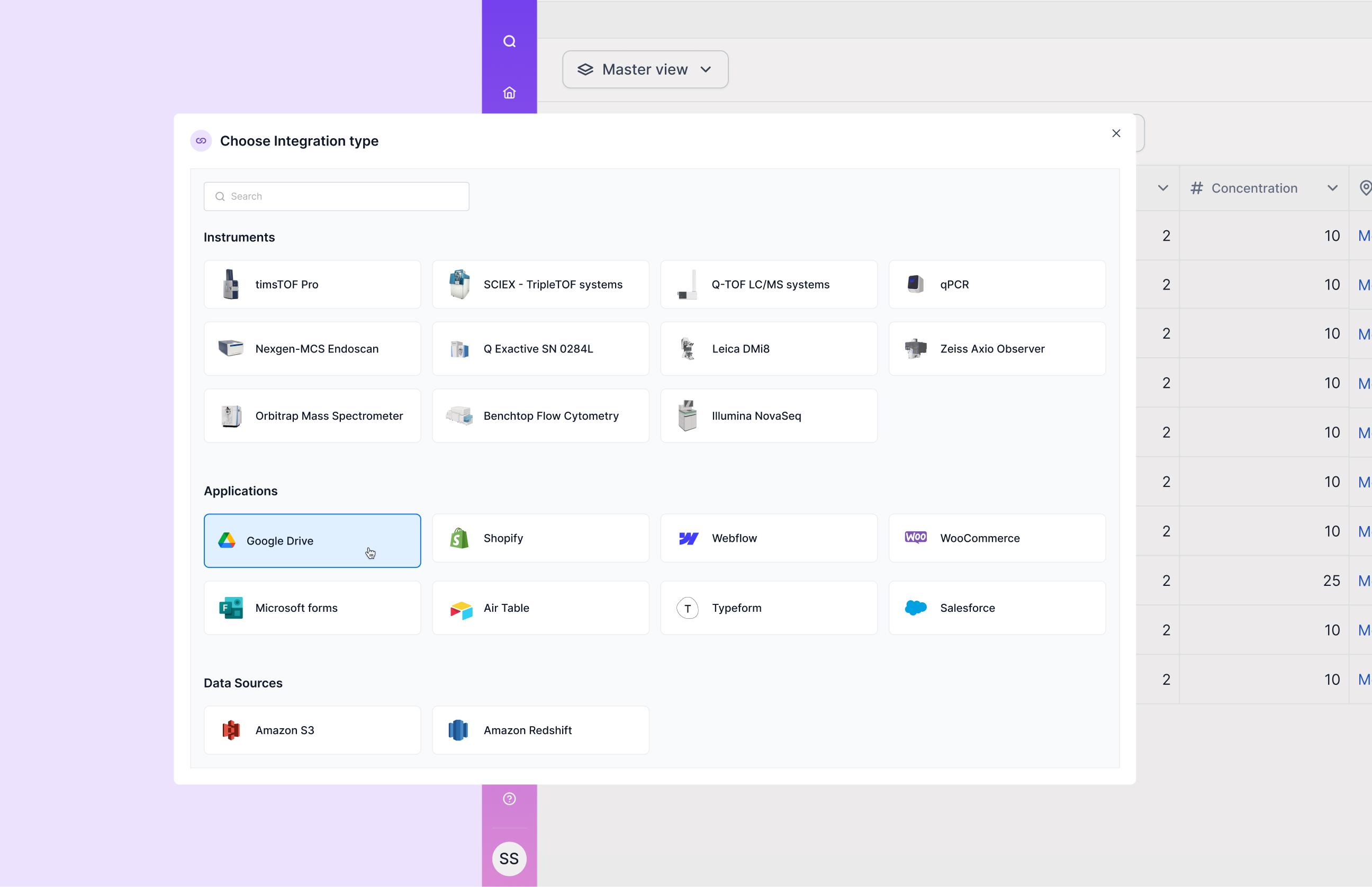
Start with data ingestion. In 2026, biotech startup tools must import from Google Drive, CSV, AWS S3, or instruments into structured registries - built in seconds, not weeks.
Workflow Example: Your team designs a CRISPR screen. Using labsheets, create a custom table linking guide RNAs, cell lines, and sequencing runs. Import historical data, auto-calculate hit scores, and flag outliers via Jupyter scripts. No more Excel errors derailing analysis.
This replaces fragmented spreadsheets, ensuring machine-actionable data for downstream AI models.
2. Inventory and Sample Management: Beyond Basic LIMS
Modern LIMS (or LIMS++) track reagents, equipment, and samples with real-time dashboards. But for startups, integrate bookings, expiry alerts, and vendor manifests.
Workflow Example: Lab lead requests antibodies via a request manager. Supervisor approves electronically; inventory deducts automatically. If stock is low, the system triggers a reorder - visible on a central dashboard.
Key: Relational links tie inventory to experiments, enabling traceability without manual logs.
3. Experiment and Project Management: Collaborative Lab Spaces
Biotech software for startups must support real-time collaboration. Lab spaces organize protocols, experiments, and milestones with approval workflows.
Workflow Example: Founder assigns a protein optimization project. Team iterates in shared spaces - editing protocols live, validating pages with e-signatures. Analytics dashboard shows progress metrics, surfacing bottlenecks early.
This scales from solo founders to cross-functional teams, with owner-reviewer gates for compliance.
4. Analytics and AI Integration: Embedded Intelligence
2026 demands biotech tools with SQL/no-SQL queries, custom visualizations, and Jupyter Hub. Connect to data lakes for ML pipelines.
Workflow Example: Post high-throughput screen, query "samples with viability >80% and batch X." Visualize trends, export to Python for modeling. Pub-sub architecture pushes updates to Slack or external APIs.
No more exporting to BI tools - insights live in the lab context.
5. Integrations and Automation: The Glue
Top stacks offer robust APIs for instruments (e.g., liquid handlers, sequencers), cloud storage, and CROs. Automate QC, manifests, and reporting.
Workflow Example: Instrument data flows into labsheets; automated scripts compute stats and gate next steps. External partners access secure views via API - no FTP nightmares.
Life science SaaS winners provide one API to the core data model, not bolted-on layers.
Lab Scenario 1: CRISPR Screening in a Seed-Stage Startup
Imagine a 7-person seed-stage startup developing CRISPR-based gene therapies for rare diseases. They're running their first large-scale screen with 10,000 guide RNAs across multiple cell lines.
Day 1: The team uses labsheets to build a registry for gRNAs, linking SMILES structures, predicted off-targets, and transfection protocols. Historical data from pilot experiments imports seamlessly from CSV files stored in S3.
Week 1: During execution, liquid handlers like Tecan Fluent integrate via API, logging pipetting data directly into experiment records. Inventory deducts Cas9 protein automatically, triggering a low-stock alert that auto-generates a PO for their preferred vendor.
Analysis Phase: Post-sequencing, FASTQ files upload to the platform's data lake. A pre-built Jupyter notebook queries the labsheet: "SELECT gRNA, viability, fold_change FROM screen_data WHERE p_value < 0.05." Custom visualizations highlight top hits, and an ML model (integrated via API) predicts clinical candidates. The founder exports a dashboard to their investor deck in one click.
Result: What took 4 weeks and multiple tools now completes in 10 days, with full traceability for IND filing.
Lab Scenario 2: Protein Engineering at a Series A Firm
A 20-person Series A company is engineering novel enzymes for sustainable plastics. Their iterative directed evolution campaigns generate thousands of variants weekly.
Setup: Project space organizes rounds as sub-spaces. Each variant logs in a labsheet with columns for sequence, expression yield, activity assay, and stability metrics. Protocols are version-controlled with e-signatures for QC gates.
Daily Workflow: Wet-lab techs plate variants on 96-well plates. Plate maps auto-populate from the labsheet. Post-assay, plate readers push OD600 data via API; automation calculates specific activity and flags outliers (e.g., >3SD from mean).
Collaboration: Comp bio lead runs rounds in embedded Jupyter, training a protein language model on cumulative data. Changes propagate via pub-sub to the team's Slack, notifying the wet lab of top variants for scale-up.
Inventory Twist: A reagent expiry alert pauses a round, rerouting to backup stock. All linked to experiments for root-cause analysis.
Outcome: Cycles drop from 3 weeks to 7 days; hit rates improve 25% from data-driven decisions.
Lab Scenario 3: Small Molecule Optimization for Oncology
A computational chemistry-focused startup (12 people) optimizes lead compounds for kinase inhibitors. They bridge wet-lab synthesis with in silico modeling.
Core Setup: Chemistry-aware labsheets parse SMILES, compute properties (LogP, TPSA), and link to synthesis routes. Sample registry tracks purity from LC-MS integrations.
Workflow: Synthetic chemist logs a batch; HPLC data auto-imports, calculating yield and purity. If purity <95%, the system gates approval and notifies for repurification.
AI Layer: Query "compounds with IC50 <100nM and solubility >10uM." Results feed a graph neural network via API for SAR analysis. Visualizations overlay structures with activity heatmaps.
External Loop: CRO receives a manifest via secure API link, uploads bioassay data back - closing the loop without emails.
Impact: Reduces synthesis-to-SAR time by 50%, accelerating lead optimization amid tight funding.
Building Your Startup Lab Stack: Practical Recommendations
Not all biotech software companies deliver this. Prioritize platforms designed for AI-native biotechs: API-first, structured, and extensible. Avoid legacy vendors locked into compliance checkboxes without developer-friendly features.
Selection Criteria for 2026:
- Single platform spanning ELN, LIMS, inventory, and analytics.
- Custom data structures without coding.
- Embedded Jupyter and LabSQL for comp bio teams.
- Scalable pricing for startups (per-user or usage-based).
- Mol bio and chemistry-aware tools (e.g., SMILES parsing, sequence viewers).
Scenario: A seed-stage startup validating a gene therapy platform. Day 1: Import vectors and cell data into registries. Week 1: Run screens with automated tracking. Month 1: Analyze hits with ML, prep investor deck from dashboards. This stack turns data into defensible IP fast.
Another: R&D operator at a 15-person firm. Use request workflows to streamline ops - cut approval times 70%, reduce stockouts. Focus shifts to experiment design.
Real-World Impact: More Lessons from Growing Labs
Consider a computational biology startup. Traditional stacks force data exports to cloud warehouses. A modern LabOS keeps everything in one lakehouse: query experiments alongside omics data, iterate models in Jupyter, deploy via API.
Or a wet-lab focused team screening compounds. Labsheets handle plate maps; integrations pull LC-MS data; analytics flag actives. Vendors get manifests auto-generated - closing the loop end-to-end.
Antibody discovery team: Registries track hybridoma clones, ELISA data auto-computes affinities, ML ranks binders. From immunization to sequence in weeks, not months.
These aren't edge cases. In 2026, with funding tighter and timelines shorter, biotech startup tools must deliver ROI from week one: time saved, errors cut, insights accelerated.
The Future-Proof Choice: Why Integrated Stacks Win
Fragmented tools breed inefficiency; unified LabOS platforms create flywheels. Data compounds value - better experiments, faster iterations, stronger moats.
For biotech founders: Choose software that embeds in your stack like Vercel for web devs or Stripe for fintech. It should feel invisible yet indispensable.
Lab leads: Demand automation that enforces best practices without rigidity.
R&D operators: Seek tools that surface context at decision points - turning surprises into signals.
Next Steps: Assemble Your 2026 Stack Today
Don't wait for the next funding round. Audit your current setup: How many apps? Hours on manual work? Data readiness for AI?
Explore biotech software for startups that unify your lab - API-driven, AI-ready, scalable. The complete stack exists: labsheets for structure, dashboards for oversight, integrations for flow.
In 2026, the winners aren't the smartest scientists alone - they're the ones with labs that learn and adapt. Build yours now.