

Why Small Biotech Labs Can't Afford to Ignore LIMS - But Dread the Enterprise Trap
Picture this: your small biotech startup has just nailed a promising assay. Samples are piling up, data is scattered across Excel sheets and notebooks, and your team spends more time chasing inventory than innovating. You know a Laboratory Information Management System (LIMS) could fix this - tracking samples, automating workflows, ensuring compliance. But the options? Enterprise giants with six-figure price tags, implementation marathons, and features your five-person lab will never touch. Sound familiar?
For biotech founders, lab leads, and R&D operators in small teams, the LIMS decision is a high-stakes pivot. Get it wrong, and you burn cash on overhead. Get it right, and you unlock efficiency that scales with your growth. This guide cuts through the noise: we'll map the pain points of small lab software, define what makes a LIMS fit for startups, dive into concrete lab scenarios, and show how modern cloud LIMS for small labs deliver enterprise power without the bloat.
The Hidden Costs Plaguing Small Labs Without Proper LIMS
Small labs - think early-stage biotechs, academic spinouts, or contract research outfits with under 20 heads - operate on razor-thin margins. Every hour lost to manual tracking is a hit to velocity. Here's the reality:
- Sample chaos: Without centralized tracking, samples vanish into freezers or get mislabeled. A 2024 survey of life science startups found 40% of delays trace back to sample management errors.
- Data silos: Experiments live in Google Drive, protocols in emails, results in Jupyter notebooks. Integrating for analysis? Weeks of pain.
- Compliance blind spots: FDA audits or grant reviews demand traceability. Manual logs fail here, risking funding or partnerships.
- Inventory black holes: Reagents expire unnoticed, equipment bookings overlap, vendors chase payments.
- Scaling friction: As you hire or expand assays, ad-hoc tools crumble. What worked for 50 samples chokes at 500.
These aren't abstract. A lab lead at a gene therapy startup shared how Excel-based tracking led to a $50K repeat experiment after lost samples. The fix? Not more spreadsheets - a LIMS designed for small labs. Multiply this across months, and you're looking at tens of thousands in lost productivity.
Traditional LIMS were built for Big Pharma: rigid, consultant-heavy, and priced for labs with 100+ staff. Small labs need agile, affordable LIMS that install in days, not months.
What 'Right-Sized' LIMS for Small Labs Actually Looks Like
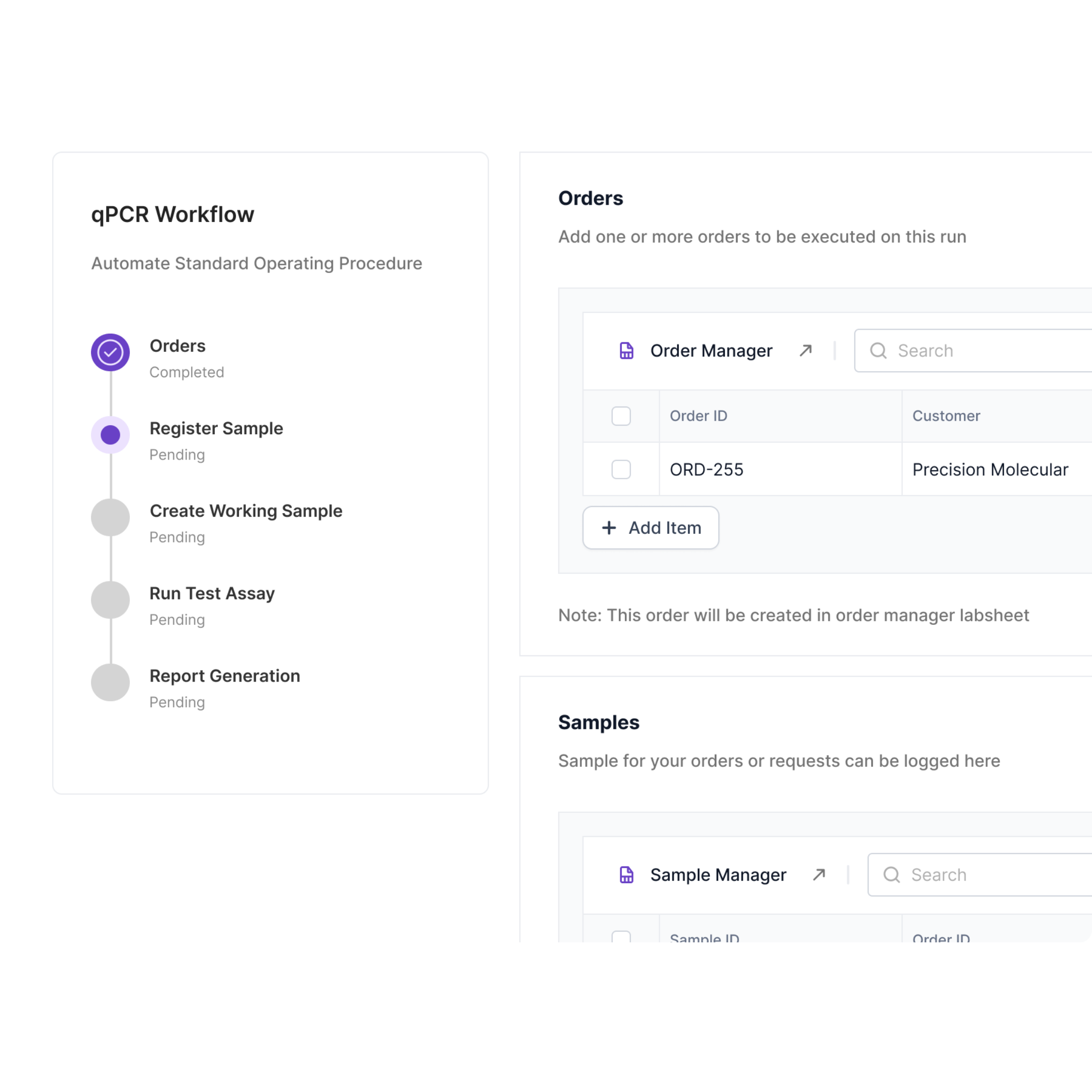
Forget the enterprise behemoths. The best LIMS for small laboratories prioritize simplicity, scalability, and integration. Core must-haves:
1. Cloud-First Deployment
Cloud LIMS for small labs means zero hardware, instant access from anywhere, and automatic updates. No IT team needed. Your postdocs log in from home, instruments push data directly, and backups run silently. This setup also supports remote collaborations, crucial for distributed startup teams.
2. Intuitive Sample and Inventory Tracking
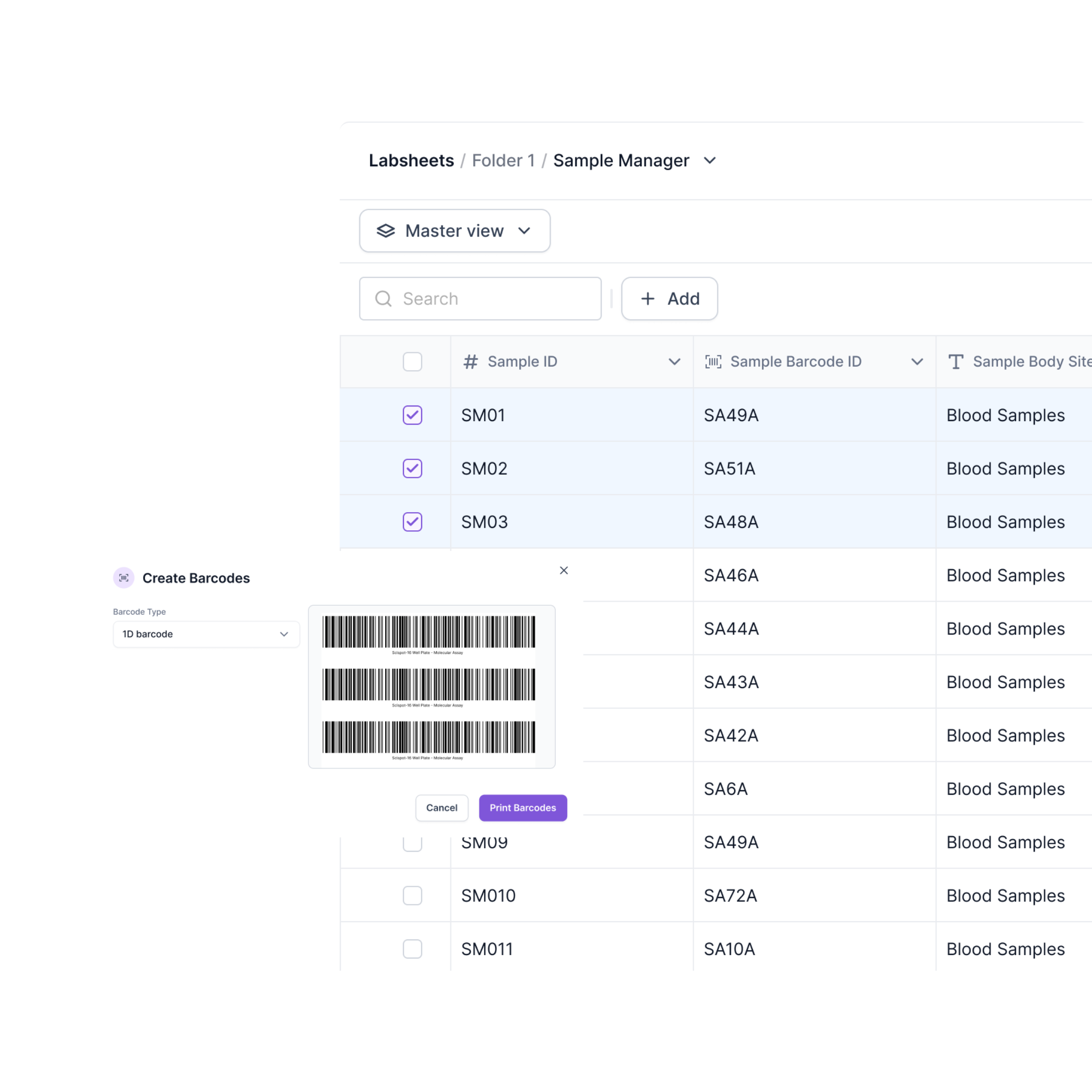
Barcode scanning, freezer maps, lot tracking - all without custom coding. Affordable LIMS shine here: drag-and-drop interfaces that handle custom assays like CRISPR screens or protein purifications. Visual freezer layouts prevent mix-ups, while lot traceability ensures batch recalls are a breeze.
3. Workflow Automation Tailored to Biotech
Small lab software should automate what you do daily: protocol templates, approval chains, result calculations. Imagine auto-flagging outliers via embedded Jupyter scripts or triggering reorders at low stock. These automations free scientists for hypothesis-driven work, not data entry.
4. API-First Integrations
Startup lab LIMS connect to your stack: Google Sheets for imports, AWS S3 for storage, instruments like qPCR machines or sequencers. No ETL nightmares. Open APIs mean you can hook into emerging tools like AI model trainers without vendor lock-in.
5. Built-In Analytics and Compliance
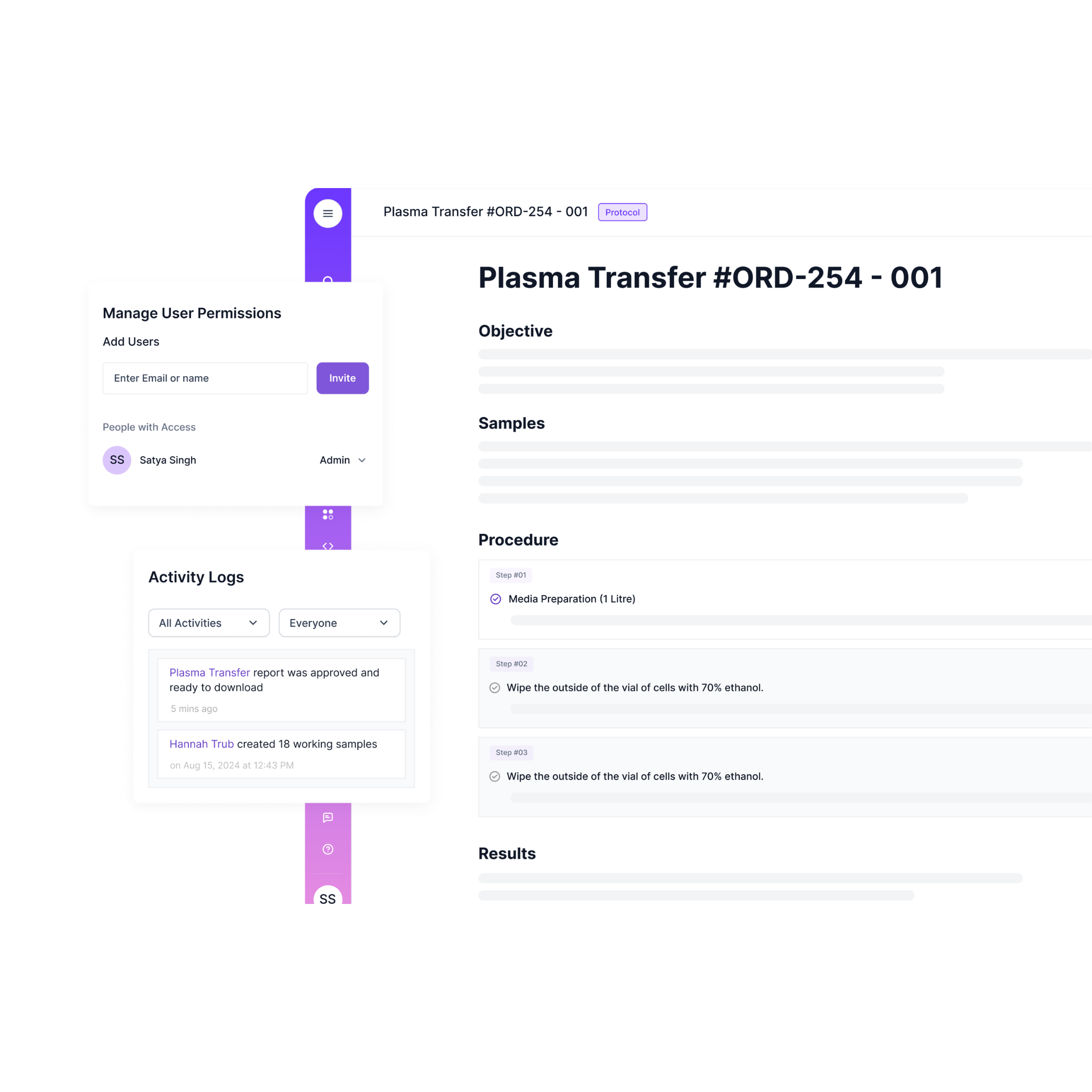
Query your data with SQL or no-code dashboards. Electronic signatures for GLP, audit trails for every change. All at a fraction of enterprise cost. Advanced features like trend analysis help spot assay drifts early.
Pricing sweet spot? $500-$2,000/month for small teams, scaling with usage. No upfront licenses, no per-user traps. This keeps cash flow positive during seed rounds.
Real-World Lab Scenario 1: Directed Evolution in Protein Engineering
Your five-person protein engineering lab runs directed evolution campaigns: generating 1,000+ variants weekly for enzyme optimization. Old way: manual plating logs in notebooks, Excel for OD readings from plate readers, emails for peer reviews. Chaos ensues with mislabeled plates and delayed iterations.
With a right-sized LIMS:
- Import variant libraries from CSV into a custom registry with sequence IDs and barcodes.
- Plate reader auto-uploads OD600 data via API, calculating growth rates on-the-fly.
- AI-powered analytics flag top 10% performers based on activity thresholds; automated workflows route them for sequencing submission.
- Inventory module tracks media batches, antibiotics, and induction reagents, auto-generating POs when stocks hit 20%.
Result: Iteration cycles drop from 3 weeks to 10 days. One startup lab lead reported 30% headcount savings, redirecting talent to new targets. In a real pilot, a Bay Area biotech cut variant screening time by 40%, accelerating their lead candidate discovery.
Real-World Lab Scenario 2: Cell Therapy IND Preparation
You're a cell therapy startup prepping for your IND filing. Compliance is non-negotiable: batch records, deviation tracking, full lineage from donor to final vial. Manual systems risk audit failures.
Best LIMS for small labs handles this natively:
- Relational sample registries link primary cells, expansion media, cryopreservation lots, and fill-finish equipment.
- Batch record pages with dynamic validation rules and e-signatures for 21 CFR Part 11 compliance.
- Supervisor-reviewer workflows enforce SOPs, auto-escalating deviations for CAPA initiation.
- One-click PDF exports with embedded audit trails for regulatory submissions.
No consultants required. Configure in a week, validate in two. A Boston-area startup used this to pass their first mock audit flawlessly, saving $100K in consulting fees.
Real-World Lab Scenario 3: CRISPR Screening Workflow
High-throughput CRISPR knockout screens: 96-well plates galore, electroporation logs, FACS data floods. Tracking guide RNAs, cell lines, and readouts manually is a nightmare.
LIMS transformation:
- Guide RNA library registry with search-by-sequence and knockout target metadata.
- Electroporation run sheets auto-populate from instrument APIs, linking to downstream FACS gates.
- Post-screen hit picker module prioritizes by fold-change, integrating NGS fastq uploads.
- Lineage tracking prevents cross-contamination in multi-line screens.
A synthetic biology startup reported 25% faster screen turnaround, enabling monthly campaigns versus quarterly.
Real-World Lab Scenario 4: ADC Conjugation and Analytics
Antibody-drug conjugate development: precise payload-to-antibody ratios, DAR calculations, HPLC analytics. Small batches, but data-intensive.
LIMS setup:
- Custom assay templates for conjugation protocols with molar ratio calculators.
- HPLC/SEC data import with peak integration and DAR computation.
- Stability study tracking across conditions (temp, time, buffer).
- COA generation with embedded chromatograms and pass/fail criteria.
This streamlined a Series A ADC company's workflow, reducing QC time from days to hours per batch.
Scispot: The API-First Lab OS Built for Small Labs That Think Big
Scispot isn't just LIMS - it's a full lab operating system blending ELN, LIMS, inventory, and analytics. Designed from day one for AI-native biotechs and startups.
Why Scispot nails LIMS for small labs:
- Lab Sheets: No-code data structures. Import from Sheets/CSV, build libraries in 30 seconds, auto-calculate results. Perfect for custom assays like those above.
- Unified Tracking: Samples, inventory, equipment in one dashboard. Real-time views, mobile access for freezer checks.
- Workflows That Scale: Request manager, approvals, protocols with real-time collab. Mol bio and chemistry-aware tools, including reagent calculators.
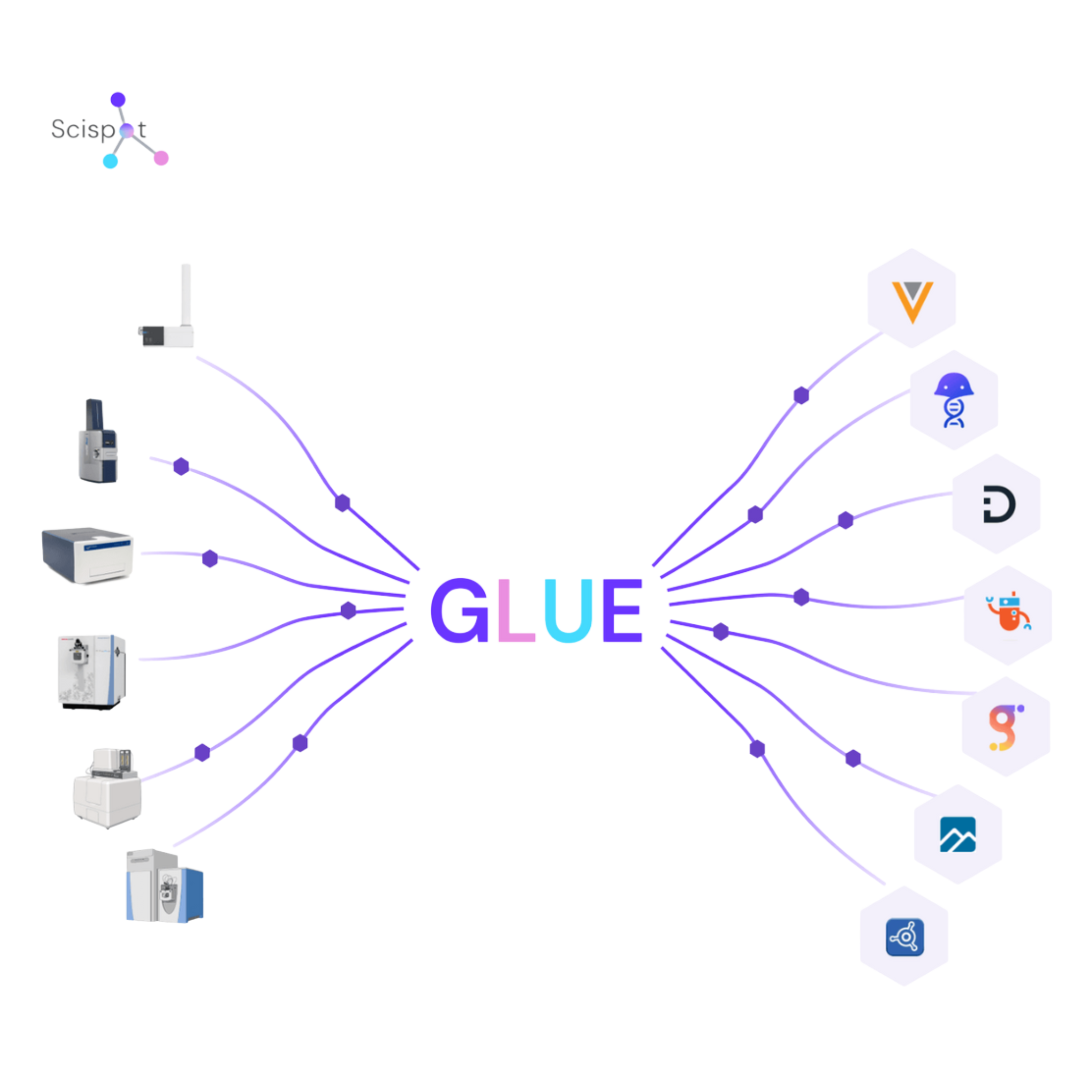
- AI-Ready Integrations: API-first connects everything. Embedded Jupyter Hub, robust pub-sub for ML pipelines, instrument drivers for Hamilton, Tecan, Beckman.
- Data Lakehouse: Consolidates disparate sources into queryable gold. Scheduled syncs, AI analytics for anomaly detection.
Over 100 labs use Scispot - from seed-stage to Series B. No enterprise overhead: cloud-native, quick onboarding (under a week), pay-as-you-grow pricing starting at $750/month.
A Day in the Life with Scispot
8 AM: Dashboard shows low buffers - auto-PO to vendor via integrated procurement.
10 AM: New CRISPR experiment in Lab Spaces. Team collaborates live, electroporator feeds transfection data.
2 PM: Analytics dashboard spots QC outlier in ADC DAR. Jupyter script analyzes root cause.
5 PM: Approval workflow signs off cell therapy batch. Audit trail ready for IND.
That's small lab software done right - seamless across scenarios.
Red Flags: What to Avoid in Startup Lab LIMS
Not all affordable LIMS deliver. Watch for:
- Perpetual pilots: Free tiers that force migration later, disrupting workflows.
- Integration deserts: No APIs, manual imports only - killers for instrument-heavy labs.
- Compliance theater: Claims without 21 CFR Part 11 proof or validation packs.
- Bloated UIs: Enterprise interfaces confusing small teams, slowing adoption.
- Hidden scaling costs: Fine for 100 samples, explodes at 1,000; check storage fees.
Test rigorously: Build a full CRISPR registry in 10 minutes? Query protein + cell data cross-experiments? Integrate your Agilent HPLC?
Implementation Roadmap: From Chaos to Control in Weeks
1. **Audit current pain:** Map samples (e.g., 500 protein variants), workflows (CRISPR to NGS), integrations (Thermo qPCR).
2. **Demo 2-3 options:** Prioritize cloud LIMS with biotech templates and API docs.
3. **Pilot one workflow:** E.g., inventory for ADC reagents. Import data, test reorder alerts.
4. **Full rollout:** 1-2 day training, phased migration (inventory first, then samples).
5. **Optimize quarterly:** Analytics-driven refinements, like custom AI rules for outliers.
Expect ROI in 3 months: 20-40% time savings = preserved runway.
The Future: Why Now is Prime Time for Small Lab LIMS
AI and cloud are remaking labs. LIMS++ - agile, intelligent systems - predict stockouts via ML, suggest assay optimizations, power foundation models on proprietary data. Edge AI even runs on instruments for real-time decisions.
For small labs, this levels the field against Big Pharma. With multimodal data (seq, imaging, proteomics), unified LIMS become your moat.
Make the Move: Your Lab's Next Chapter Starts Today
If you're a biotech founder tired of manual drudgery, or a lab lead eyeing growth without chaos, the right LIMS isn't a luxury - it's your accelerator. From protein engineering to cell therapy INDs, these systems transform operations.
Scispot delivers LIMS for small labs that punches above its weight: affordable, powerful, future-proof. Skip the enterprise trap. Build your lab as code.
Ready to demo? See how Scispot turns small lab constraints into startup superpowers across your workflows.